The FA Community Shield
Introduction
The FA Community Shield is the traditional curtain-raiser to the English football season. Usually played shortly before the Premier League campaign begins, the match brings together the previous season’s Premier League champions and FA Cup winners.
Although it consists of only one match, the Community Shield has become a familiar part of the football calendar. It gives supporters their first opportunity to see leading clubs compete for silverware following the summer break, often with new players and managers making their first competitive appearances.
The competition was known as the FA Charity Shield for most of its history. Its modern name reflects its continuing role in raising money for charities, community projects and grassroots football across England.
Origins and History
The competition was first played in 1908 and developed from the Sheriff of London Charity Shield, an earlier fixture which usually brought together a leading professional club and a prominent amateur side.
The first FA Charity Shield was contested by Manchester United, who had won the Football League, and Queens Park Rangers, the champions of the Southern League. The match at Stamford Bridge finished 1-1, so a replay was arranged at the same ground.
Manchester United won the replay 4-0. It remains the only occasion on which the Shield has required a replay.
The identity of the competing teams varied considerably during the competition’s early decades. Some editions featured league champions and FA Cup winners, while others involved representative teams made up of professional and amateur players.
One of the most unusual matches took place in 1950, when an England World Cup team played an FA side that had toured Canada. The World Cup team won 4-2 at Stamford Bridge.
The format became more consistent in 1974, when FA secretary Ted Croker proposed that the match should be played at Wembley Stadium as the official curtain-raiser to the new domestic season. From that point, the fixture regularly brought together the reigning league champions and FA Cup holders.
The competition retained the Charity Shield name until 2002, when it became the FA Community Shield.
How Teams Qualify
The FA Community Shield is normally contested by:
- The previous season’s Premier League champions
- The previous season’s FA Cup winners
If one club wins both the Premier League and FA Cup, the Premier League runners-up will usually provide the opposition.
This means the fixture normally features two of the strongest teams in English football. It can also provide an opportunity for a less frequent Wembley visitor when a club outside the established leading sides wins the FA Cup.
Crystal Palace, for example, qualified for the 2025 Community Shield after winning the FA Cup for the first time. Palace subsequently defeated Premier League champions Liverpool on penalties to lift the Shield.
Competition Format
The Community Shield is decided by a single match rather than a knockout competition.
The match lasts for 90 minutes. If the scores are level at the end of normal time, no extra time is played. The winner is instead decided by a penalty shootout.
Earlier editions sometimes ended with the Shield being shared between the two clubs. During the 1980s and early 1990s, each club would hold the trophy for six months following a draw.
Penalty shootouts were reintroduced in 1993, ensuring that every Community Shield now produces one outright winner.
The Community Shield and Wembley
Wembley has been the traditional home of the Community Shield since 1974, although the fixture has occasionally been moved elsewhere.
While the original Wembley Stadium was being rebuilt, the match was played at Cardiff’s Millennium Stadium between 2001 and 2006. It returned to Wembley following the opening of the new stadium in 2007.
The 2012 match was held at Villa Park because Wembley was being used during the London Olympic Games. The 2022 edition was played at Leicester City’s King Power Stadium because Wembley was hosting the UEFA Women’s Euro final.
In 2026, the Community Shield returned to Cardiff. The match was held at the Principality Stadium because Wembley was unavailable due to pre-arranged concerts.
Charity and Community Support
Raising money for good causes has been central to the competition since its creation.
During the years in which the match was played at the original Wembley, millions of pounds were distributed to charities nominated by the participating clubs and the Football Association.
Money generated by the modern Community Shield continues to support community organisations, charities and grassroots football projects throughout England. The fixture therefore has a purpose beyond deciding which club lifts the trophy.
This charitable role helps distinguish the Community Shield from England’s other domestic competitions.
Most Successful Clubs
Manchester United are the most successful club in Community Shield history, having won or shared the trophy on 21 occasions.
Arsenal are the second most successful team. Their victory in 2026 took them to 18 Community Shield successes, including one shared Shield.
Liverpool have won or shared the trophy 16 times, while Everton have recorded nine successes. Manchester City and Tottenham Hotspur have each won or shared it seven times.
Shared Shields are included in the traditional totals, which is why some records distinguish between outright victories and shared honours.
Memorable Matches and Records
The highest-scoring Community Shield match took place in 1911, when Manchester United defeated Swindon Town 8-4.
Another remarkable fixture occurred in 1967. Tottenham Hotspur goalkeeper Pat Jennings scored from inside his own penalty area against Manchester United at Old Trafford. The match finished 3-3 and the Shield was shared.
The first Community Shield to be staged at Wembley under the modern arrangement was played in 1974. Liverpool and Leeds United drew 1-1 before Liverpool won the penalty shootout 6-5. The match is also remembered for the dismissals of Kevin Keegan and Billy Bremner.
In 1992, Eric Cantona scored a hat-trick as Leeds United defeated Liverpool 4-3. Cantona joined Manchester United later that year and became one of the defining players of the Premier League era.
The 2026 edition produced a new record when Arsenal defender Riccardo Calafiori scored after just 24 seconds, the fastest goal in the competition’s history.
Does the Community Shield Count as a Major Trophy?
The status of the Community Shield is frequently debated among football supporters.
The Football Association treats it as a competitive fixture and presents medals and a trophy to the winners. Clubs celebrate winning it, particularly when the match is played between major rivals or provides a new manager with an early success.
However, many statistical records do not classify the Shield alongside the Premier League, FA Cup, League Cup or major European competitions. It is sometimes described as a ceremonial season-opener or a prestigious friendly.
The reality lies somewhere between the two descriptions. It is more competitive than a conventional pre-season friendly, but its single-match format means it does not carry the same weight as success achieved across an entire league or cup campaign.
The 2026 FA Community Shield
The 2026 FA Community Shield was played between Arsenal and Manchester City at the Principality Stadium in Cardiff on 16 August 2026.
Arsenal qualified as the 2025/26 Premier League champions, while Manchester City entered the match as the holders of the FA Cup.
Arsenal produced an impressive performance to win 3-0. Riccardo Calafiori opened the scoring inside the opening half-minute before Kai Havertz added a second goal. Captain Martin Ødegaard completed the victory shortly after half-time.
The result gave Arsenal their 18th Community Shield and their first success in the fixture since defeating Manchester City on penalties in 2023.
European Qualification
Winning the FA Community Shield does not provide qualification for a UEFA competition.
European places are awarded through a club’s performance in the Premier League and the main domestic cup competitions. As the Community Shield participants have normally won the league or FA Cup, they will usually already have qualified for Europe before the match takes place.
The Shield instead offers the clubs an opportunity to begin the season with a trophy and to build confidence ahead of their opening league fixtures.
The Continuing Appeal of the Community Shield
The FA Community Shield occupies a distinctive place in English football.
It signals the end of the summer break and the return of competitive domestic action. Supporters can see new signings, updated squads and tactical changes while two successful clubs compete for the first trophy of the season.
Its charitable purpose also connects the professional game with community organisations and grassroots football.
Although opinions differ about its status, the Community Shield remains an established and popular part of the football calendar. For the competing clubs and their supporters, it provides an early opportunity to celebrate success and begin the new season on a winning note.
Recommended Football Products

World Club Football Records 2026
Fully revised and updated, World Club Football Records is a net-bulging collection of standout football records, stats and trivia from around the globe.
View product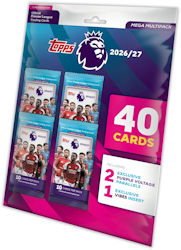
Topps Flagship Premier League 2026/27 Trading Cards Mega Multipack
The Mega Multupack contains 40 cards including 2 exclusive Purple Voltage parallels and an exclusive Vibes Insert.
View product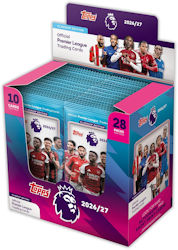
Topps Flagship Premier League 2026/27 Trading Cards Full Box
The Full Box contains 28 packets (10 cards per packet). Each box delivers the full Topps Flagship Premier League 2026/27 collecting experience, packed with stars, rookies, rare inserts, and exciting hits.
View product
As an Amazon Associate I earn from qualifying purchases.