The Scottish Cup
Introduction
The Scottish Cup is Scotland’s leading national knockout competition and one of the oldest tournaments in association football.
Officially known as the Scottish Football Association Challenge Cup, the competition brings together clubs from the Scottish Professional Football League and the wider Scottish football pyramid.
The tournament is currently sponsored by Scottish Gas and known as the Scottish Gas Men’s Scottish Cup.
The competition begins during the opening weeks of the domestic season. Clubs from the Premiership join in the fourth round, while teams from regional and amateur football begin their journeys several months earlier.
The semi-finals and final are normally played at Hampden Park, where the winning captain lifts the oldest surviving trophy in association football.
Origins and History
The Scottish Football Association was formed in March 1873 by eight clubs:
- Queen’s Park
- Clydesdale
- Vale of Leven
- Dumbreck
- Third Lanark
- Eastern
- Granville
- Kilmarnock
The new association decided to organise a knockout competition open to its member clubs. The first Scottish Cup tournament began in October 1873 with 16 participating teams.
Queen’s Park and Clydesdale reached the inaugural final, which was played at the original Hampden Park on 21 March 1874.
Queen’s Park won 2-0 in front of approximately 2,500 spectators to become the first Scottish Cup winners.
The Scottish Cup is the second-oldest association football competition, following the creation of the FA Cup in England. However, the original trophy awarded in 1874 is still used today, giving the competition a unique place in football history.
The World’s Oldest Football Trophy
The Scottish Cup trophy is recognised by Guinness World Records as the oldest surviving trophy in association football.
It stands approximately two feet high and is made principally from silver. The trophy was commissioned from Glasgow gold and silversmiths George Edward & Sons at a cost of £56 and 13 shillings.
Although the FA Cup competition began earlier, its original trophies have been replaced. The Scottish Cup has retained the same piece of silverware since the competition was created in the nineteenth century.
Because of its age and value, the original trophy is carefully protected. The winning captain lifts it during the presentation and victory celebrations, but the club is subsequently provided with a replica to display.
The original Scottish Cup can normally be seen at the Scottish Football Museum at Hampden Park.
Who Enters the Scottish Cup?
All full member clubs of the Scottish Football Association are required to participate in the Scottish Cup.
The competition also includes eligible clubs from:
- Scottish Professional Football League
- Highland Football League
- Lowland Football League
- East of Scotland Football League
- West of Scotland Football League
- South of Scotland Football League
- Midlands Football League
- North of Scotland Football League
- North Caledonian Football League
- Scottish amateur football
Certain league and cup winners may qualify even if they do not otherwise hold full Scottish FA membership.
This broad entry system allows clubs from regional and amateur football to compete in the same tournament as Celtic, Rangers, Aberdeen, Hearts, Hibernian and the other leading professional teams.
Competition Format
The Scottish Cup is played as a straight knockout competition.
For the 2026/27 season, the tournament consists of:
- Three preliminary rounds
- First round
- Second round
- Third round
- Fourth round
- Fifth round
- Quarter-finals
- Semi-finals
- Final
Clubs enter at different stages according to their position in the Scottish football pyramid.
Highland League and Lowland League clubs enter in the first round, together with the teams that progress through the preliminary rounds.
League Two clubs enter during the second round.
Clubs from League One and the Scottish Championship join in the third round.
The 12 Scottish Premiership clubs enter in the fourth round, when 32 teams remain in the competition.
Each tie is decided by a single match. If the scores are level after 90 minutes, an additional 30 minutes is played. A penalty shootout determines the winner if the teams remain level after extra time.
There are no replays following an ordinary drawn match.
The Road to Hampden
The first club drawn in each tie normally receives home advantage until the semi-final stage.
This creates the possibility of leading Premiership teams visiting smaller grounds when they are drawn away against lower-division or regional opposition.
For smaller clubs, hosting one of Scotland’s leading teams can produce a capacity attendance, valuable income and national media coverage. Even when an upset does not follow, the occasion can become one of the most memorable matches in the club’s history.
Both semi-finals are normally played at Hampden Park, providing four clubs with the opportunity to compete at Scotland’s national stadium.
The winners return to Hampden for the final, traditionally played towards the end of May.
Hampden Park and the Scottish Cup
Hampden Park has been closely associated with the Scottish Cup since the first final in 1874.
Three different grounds have carried the Hampden name. The original Hampden hosted the first final, while the second ground began staging finals during the 1880s.
The present Hampden Park opened in 1903 and hosted its first Scottish Cup final the following year. Rangers and Celtic contested that match in front of 64,472 spectators, with Celtic winning 3-2.
Although finals were occasionally staged at Ibrox, Celtic Park and other venues during the early twentieth century, Hampden became the regular final venue from 1925.
The largest Scottish Cup final attendance was recorded in 1937. A crowd of 147,365 watched Celtic defeat Aberdeen 2-1.
The final was played at Celtic Park in 2014 because Hampden was temporarily converted for use during the Commonwealth Games. St Johnstone defeated Dundee United 2-0 to win the trophy for the first time.
Giant-Killings and Cup Runs
The Scottish Cup gives clubs from outside the Premiership the opportunity to face and occasionally defeat leading opposition.
One of the best-known upsets occurred in 1967, when Second Division Berwick Rangers defeated Rangers 1-0 at Shielfield Park. Sammy Reid scored the goal that eliminated the Glasgow club in the first round.
In 2000, Celtic suffered a famous home defeat against Inverness Caledonian Thistle. The First Division club won 3-1 at Celtic Park, producing the newspaper headline: “Super Caley Go Ballistic, Celtic Are Atrocious.”
Gretna reached the 2006 final while competing in the third tier of Scottish football. They drew 1-1 with Hearts before losing the penalty shootout.
In 2015, Inverness Caledonian Thistle defeated Falkirk 2-1 to win the competition for the first time. The victory came only 21 years after the club had been formed through the merger of Caledonian and Inverness Thistle.
These results demonstrate that the Scottish Cup can provide opportunities for clubs well outside the established Premiership powers.
Most Successful Clubs
Celtic are the most successful club in Scottish Cup history.
Their victory in 2026 took them to 43 wins in the competition.
Rangers are the second most successful club, having lifted the trophy 34 times.
Queen’s Park won the first three tournaments and have recorded ten victories in total. Their final success came in 1893, reflecting the club’s dominance during the early development of Scottish football.
Aberdeen and Heart of Midlothian have each won the competition eight times.
Other multiple winners include:
- Hibernian
- Kilmarnock
- Vale of Leven
- Clyde
- St Mirren
- Dundee United
- Motherwell
- Falkirk
- Dunfermline Athletic
- St Johnstone
Twenty-five different clubs have won the Scottish Cup.
Records and Memorable Finals
The Scottish Cup has produced one of the largest recorded victories in senior football.
In September 1885, Arbroath defeated Bon Accord 36-0. John Petrie scored 13 goals, a record for an individual player in a senior British match.
The 1937 final between Celtic and Aberdeen attracted 147,365 spectators, one of the largest crowds ever recorded for a club football match.
The 2012 final produced the first Edinburgh derby final since 1896. Hearts defeated Hibernian 5-1 at Hampden.
Four years later, Hibernian ended a 114-year wait to win the Scottish Cup. David Gray scored an injury-time header as Hibs defeated Rangers 3-2 in the 2016 final.
Celtic won four consecutive Scottish Cups between 2017 and 2020. Their victory over Hearts on penalties in the delayed 2020 final completed a fourth successive domestic treble.
St Johnstone defeated Hibernian in the 2021 final, completing a remarkable cup double after also winning the Scottish League Cup that season.
Aberdeen defeated Celtic on penalties in 2025 after the final finished 1-1, preventing Celtic from retaining the trophy.
European Qualification
The Scottish Cup winners qualify for the UEFA Europa League.
The stage at which they enter depends on Scotland’s position in the UEFA association rankings. For the 2026/27 competition, the winners are expected to enter the first qualifying round of the 2027/28 Europa League.
If the Scottish Cup winners have already qualified for a higher European competition through their Premiership position, the Europa League place is transferred according to UEFA and SPFL qualification rules.
Winning the Scottish Cup can therefore provide a club with national silverware and an important route into European football.
The 2026 Scottish Cup Final
The 2025/26 Scottish Cup final was played between Celtic and Dunfermline Athletic at Hampden Park on 23 May 2026.
Celtic took the lead through Daizen Maeda in the eighteenth minute. Arne Engels added a second goal before half-time.
Substitute Kelechi Iheanacho scored Celtic’s third during the second half before Josh Cooper claimed a consolation goal for Dunfermline.
Celtic won 3-1 to lift the Scottish Cup for a record-extending 43rd time.
The result also completed a domestic league and cup double for Celtic under manager Martin O’Neill.
Dunfermline were appearing in their first Scottish Cup final since losing to Celtic in 2007. Their most recent victory in the competition remains their 1968 final success against Hearts.
Celtic are therefore the current holders of the Scottish Cup.
The 2026/27 Scottish Cup
The 2026/27 Scottish Gas Men’s Scottish Cup began with the first preliminary round during the weekend of 1 August 2026.
The scheduled round dates are:
- Preliminary round one: Weekend of 1 August 2026
- Preliminary round two: Weekend of 22 August 2026
- Preliminary round three: Weekend of 12 September 2026
- First round: Weekend of 3 October 2026
- Second round: Weekend of 24 October 2026
- Third round: Weekend of 28 November 2026
- Fourth round: Weekend of 16 January 2027
- Fifth round: Weekend of 6 February 2027
- Quarter-finals: Weekend of 6 March 2027
- Semi-finals: 17 and 18 April 2027
- Final: Saturday 22 May 2027
The semi-finals and final are scheduled to take place at Hampden Park.
The Continuing Appeal of the Scottish Cup
The Scottish Cup connects every level of the Scottish football pyramid.
For regional and amateur clubs, simply entering the tournament provides an opportunity to participate in one of the world’s oldest football competitions. For lower-division teams, a favourable draw can bring valuable income and the possibility of a famous upset.
For Scotland’s leading clubs, winning the trophy remains one of the principal measures of domestic success.
Every season eventually leads to Hampden, where the winning captain lifts the same trophy first presented in 1874. That direct connection with the origins of Scottish football gives the Scottish Cup a history and character unlike almost any other competition in the game.
Recommended Football Products
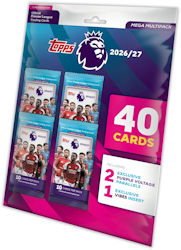
Topps Flagship Premier League 2026/27 Trading Cards Mega Multipack
The Mega Multupack contains 40 cards including 2 exclusive Purple Voltage parallels and an exclusive Vibes Insert.
View product
World Club Football Records 2026
Fully revised and updated, World Club Football Records is a net-bulging collection of standout football records, stats and trivia from around the globe.
View product
Topps Flagship Premier League 2026/27 Trading Cards Online Starter Pack
The Online exclusive Starter Pack is the perfect way to kick off your Topps Flagship Premier League 2026/27 collection, bringing together stars, rookies, inserts, and exciting chase cards in one accessible format.
View product
As an Amazon Associate I earn from qualifying purchases.