The EFL Trophy (Vertu Trophy)
Introduction
The EFL Trophy is a domestic cup competition for clubs from League One and League Two, together with invited under-21 teams representing clubs with leading academy systems.
The competition is currently known as the Vertu Trophy for sponsorship reasons. Like the League Cup, it has carried several different commercial names during its history, but its permanent title is the EFL Trophy.
Matches are generally played during midweek evenings, beginning with a regional group stage. The competition then progresses through a series of knockout rounds before concluding with a final at Wembley Stadium.
For clubs in the third and fourth tiers of English football, the EFL Trophy provides a realistic opportunity to win national silverware. It can also give players and supporters the chance to experience a Wembley final.
Origins and History
The competition developed from the Football League Group Cup, a short-lived tournament introduced during the early 1980s.
It was reorganised as the Associate Members’ Cup for the 1983/84 season. At that time, clubs in the Third and Fourth Divisions were classed as associate members of the Football League, while teams in the top two divisions were full members.
The competition was therefore created specifically for clubs in the lower two divisions of the Football League.
Bournemouth won the first Associate Members’ Cup in 1984. They defeated Hull City 2-1 in a final played at Boothferry Park, Hull’s home ground.
The final had originally been intended for Wembley, but the condition of the Wembley pitch resulted in the match being moved. Bournemouth came from behind to win, with Milton Graham and Paul Morrell scoring their goals.
The competition reached Wembley for the first time the following season. Wigan Athletic defeated Brentford 3-1 in the 1985 final.
Wembley has remained the traditional home of the final, apart from the period during which the original stadium was closed for redevelopment.
Why Is It Called the Vertu Trophy?
The competition’s sponsored name has changed frequently.
Previous titles have included:
- Freight Rover Trophy
- Sherpa Van Trophy
- Leyland DAF Cup
- Autoglass Trophy
- Auto Windscreens Shield
- LDV Vans Trophy
- Johnstone’s Paint Trophy
- Checkatrade Trophy
- Leasing.com Trophy
- Papa Johns Trophy
- Bristol Street Motors Trophy
The competition became known as the Vertu Trophy during the 2024/25 season.
Although these sponsored names are commonly used in television coverage and official EFL communications, supporters may also refer to it as the Football League Trophy or simply the EFL Trophy.
Using the permanent name is particularly useful when discussing the competition’s complete history, as the title sponsor will inevitably change from time to time.
Who Enters the EFL Trophy?
The competition contains 64 teams.
These consist of:
- All 24 League One clubs
- All 24 League Two clubs
- Sixteen invited under-21 academy teams
The invited teams are usually selected from Premier League and Championship clubs operating Category One academies.
Premier League and Championship first teams do not compete. They are represented by development or under-21 sides, while League One and League Two clubs enter their senior teams.
Invited academy teams must comply with competition rules governing the age and experience of their players. EFL clubs must also meet selection requirements intended to ensure they field sufficiently strong teams.
The Introduction of Academy Teams
Under-21 academy sides were introduced into the competition for the 2016/17 season.
The change was intended to provide young players from leading academies with experience of competitive senior football. Matches against League One and League Two opposition expose academy players to experienced professionals and a different style of football from age-group competitions.
The decision was controversial among some EFL supporters. Critics argued that the competition should remain exclusively for lower-division first teams and expressed concern that admitting academy sides could eventually lead to reserve teams entering the English league system.
Some matches involving academy teams attracted very small attendances, with supporters of several EFL clubs choosing to boycott fixtures.
Academy teams have nevertheless remained part of the format. While several have reached the later stages, no invited under-21 side had won the EFL Trophy by the beginning of the 2026/27 competition.
The Group Stage
The EFL Trophy begins with a regional group stage.
The 64 participating teams are divided into 16 groups of four. Eight groups form the northern section and eight form the southern section.
Each group normally includes three League One or League Two clubs and one invited under-21 team.
Every club plays three group matches, facing each of the other teams once. The invited academy side normally plays its group matches away from home.
Teams receive:
- Three points for a victory
- One point for a draw
- No points for a defeat
Every drawn group match is followed by a penalty shootout. The team winning the shootout receives an additional point.
This means a club can collect two points from a drawn match, while the team losing the shootout keeps the standard one point.
The two highest-placed teams in each group qualify for the knockout rounds.
The Knockout Stage
Thirty-two clubs progress from the group stage into the knockout competition.
The remaining rounds are:
- Round of 32
- Round of 16
- Quarter-finals
- Semi-finals
- Final
The draw remains regionalised during the opening knockout rounds, helping to limit travel for clubs and supporters. Regionalisation continues until the quarter-final stage before the northern and southern sections are brought together.
Every knockout tie is decided by a single match.
If a match is level after 90 minutes during the knockout rounds, the winner is normally decided by a penalty shootout without extra time.
The semi-finals are also played as single matches rather than over two legs.
The final is staged at Wembley Stadium. Unlike the earlier knockout rounds, extra time can be played in the final before penalties are used if the scores remain level.
The Difference Between the EFL Trophy and League Cup
The EFL Trophy should not be confused with the League Cup, currently known as the Carabao Cup.
The League Cup is open to all 92 clubs in the Premier League and EFL. Its field therefore includes leading clubs such as Arsenal, Liverpool, Manchester City and Manchester United.
The EFL Trophy is primarily intended for the 48 senior clubs in League One and League Two, supplemented by 16 invited under-21 teams.
Winning the League Cup also provides qualification for the UEFA Conference League. The EFL Trophy does not carry a place in European competition.
Both tournaments are administered by the English Football League and conclude with finals at Wembley, but they serve different levels of the domestic game.
Most Successful Clubs
Bristol City and Peterborough United share the record for the most EFL Trophy victories, with three wins each.
Bristol City lifted the trophy in 1986, 2003 and 2015.
Peterborough won it in 2014 before recording consecutive victories in 2024 and 2025. Their second successive success made them the first club to retain the trophy.
Several clubs have won the competition twice, including:
- Birmingham City
- Blackpool
- Carlisle United
- Luton Town
- Port Vale
- Rotherham United
- Stoke City
- Swansea City
- Wigan Athletic
The list of winners includes clubs that have subsequently competed in the Premier League, as well as teams that have spent much of their history in League One and League Two.
Memorable Finals
The EFL Trophy has produced several particularly well-supported Wembley finals.
In 1988, more than 80,000 spectators watched Wolverhampton Wanderers defeat Burnley 3-0. The attendance demonstrated the enormous support both clubs retained despite competing in the lower divisions.
The competition attendance record was established in 2019, when Portsmouth faced Sunderland at Wembley. A crowd of 85,021 watched the teams draw 2-2 after extra time before Portsmouth won the penalty shootout 5-4.
Salford City won the 2020 final against Portsmouth, although the match was delayed until March 2021 because of the coronavirus pandemic. It was played behind closed doors and was followed the next day by the 2021 final, in which Sunderland defeated Tranmere Rovers.
Bolton Wanderers recorded the largest winning margin in an EFL Trophy final in 2023. Bolton defeated Plymouth Argyle 4-0 in front of 79,389 spectators.
These attendances illustrate how significant the competition can become when well-supported clubs reach Wembley.
The 2026 EFL Trophy Final
The 2025/26 Vertu Trophy final was played between Luton Town and Stockport County at Wembley Stadium on 12 April 2026.
Both clubs were competing in League One and both are traditionally known as the Hatters, producing the slightly unusual spectacle of a Wembley final between two teams with the same nickname.
Stockport took the lead through Adama Sidibeh, but Emilio Lawrence equalised for Luton. Nahki Wells then scored twice as Luton recovered to win 3-1.
The match was watched by 49,517 spectators.
Luton’s victory was their second in the competition, following their success against Scunthorpe United in the 2009 final.
Their route to Wembley was unusual. Luton had initially been eliminated by Swindon Town in the round of 16, but were reinstated after Swindon were removed from the competition for fielding ineligible players.
Luton Town are therefore the current holders of the EFL Trophy.
The 2026/27 EFL Trophy
The 2026/27 competition again features the 48 clubs from League One and League Two, together with 16 invited under-21 teams.
The group stage is being played during the opening months of the season, with the top two clubs from each group progressing.
The scheduled knockout dates are:
- Round of 32: Week beginning 7 December 2026
- Round of 16: Week beginning 11 January 2027
- Quarter-finals: Week beginning 15 February 2027
- Semi-finals: Week beginning 8 March 2027
- Final: Sunday 11 April 2027
The final is scheduled to take place at Wembley Stadium.
European Qualification
Winning the EFL Trophy does not provide qualification for a UEFA competition.
The champions receive the trophy, prize money and the distinction of winning a national cup competition, but no place in the Champions League, Europa League or Conference League.
For most clubs, the main rewards are a Wembley appearance, additional revenue and the opportunity to win silverware.
The Continuing Appeal of the EFL Trophy
The EFL Trophy occupies a distinctive position in English football.
Its group-stage format allows clubs to give opportunities to younger or less frequently selected players, while the later knockout rounds can become an important part of a team’s season.
Attendances during the group stage are sometimes modest, but interest usually increases as clubs move closer to Wembley. When a well-supported team reaches the final, the competition can attract crowds comparable with many major domestic fixtures.
The involvement of academy teams remains a subject of debate, but for League One and League Two clubs the EFL Trophy continues to offer one of their best opportunities to win a national competition.
For the finalists and their supporters, the reward is a day at Wembley and the possibility of lifting a trophy beneath the famous arch.
Recommended Football Products

World Club Football Records 2026
Fully revised and updated, World Club Football Records is a net-bulging collection of standout football records, stats and trivia from around the globe.
View product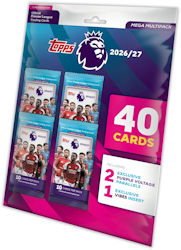
Topps Flagship Premier League 2026/27 Trading Cards Mega Multipack
The Mega Multupack contains 40 cards including 2 exclusive Purple Voltage parallels and an exclusive Vibes Insert.
View product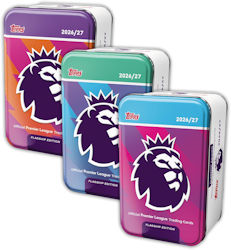
Topps Flagship Premier League 2026/27 Trading Cards Super Tin Bundle
The Super Tin Bundle contains all 3 Super Tins in the collection. Each Super Tin contains 50 cards including 3 On-Fire cards and 2 exclusive Blue Voltage parallels!
View product
As an Amazon Associate I earn from qualifying purchases.