The Scottish League Cup
The Scottish League Cup is one of the three major domestic trophies in Scottish football, alongside the Scottish Premiership and Scottish Cup.
First contested during the 1946/47 season, the competition brings together clubs from across the Scottish Professional Football League. Selected clubs from outside the SPFL may also be invited to participate in its opening group stage.
The competition is currently known as the Premier Sports Cup for sponsorship purposes. Its final is normally played at Hampden Park and, because it takes place in December, it usually provides the first major domestic trophy of the Scottish football season.
Origins and History
The Scottish League Cup was established by the Scottish Football League shortly after the end of the Second World War.
Its original format was influenced by the regional league cup competitions that had been played during the war. Clubs initially competed in groups before advancing to knockout rounds.
The inaugural competition took place in 1946/47. Rangers became the first winners by defeating Aberdeen 4-0 in the final.
The League Cup quickly became an important part of the Scottish football calendar. For many clubs, it offered another realistic opportunity to win a major trophy and play in a showpiece final at Hampden Park.
Although the format has changed several times, the competition has been staged every season since its introduction.
Why Is It Called the Premier Sports Cup?
The official name of the competition is the Scottish League Cup, but sponsorship agreements have resulted in several different names being used over the years.
Previous sponsored names have included:
- The Skol Cup
- The Coca-Cola Cup
- The CIS Insurance Cup
- The Co-operative Insurance Cup
- The Scottish Communities League Cup
- The QTS Scottish League Cup
- The Betfred Cup
- The Premier Sports Cup
The Premier Sports Cup is therefore the current sponsored name rather than a separate competition.
Using the permanent Scottish League Cup name makes it easier to recognise the competition throughout its history, regardless of changes in sponsorship.
Who Enters the Scottish League Cup?
All 42 clubs in the Scottish Professional Football League are eligible to enter the Scottish League Cup.
The competition may also include a small number of invited clubs from outside the SPFL. These places are generally awarded to leading teams from the Highland League and Lowland League.
Clubs taking part in UEFA competitions are normally given a bye through the opening group stage. The remaining SPFL clubs and invited non-league teams begin their campaigns during July.
This gives clubs from the lower divisions an early opportunity to face Premiership opposition.
The Group Stage
The opening stage of the Scottish League Cup consists of eight groups containing five teams.
Each club plays four group matches, facing two opponents at home and two away. The groups were formerly regionalised, although regionalisation has not been used for the 2026/27 competition.
The Scottish League Cup uses an unusual bonus-point system during this stage.
Teams receive:
- Three points for a win
- One point for a draw after 90 minutes
- One additional bonus point for winning the resulting penalty shootout
- No points for a defeat in normal time
Every group match that finishes level after 90 minutes therefore goes directly to penalties. The shootout winner receives two points in total, while the losing team receives one.
This system means that every group match produces a winner of some kind and gives clubs an additional incentive to practise penalty shootouts from the beginning of the season.
The eight group winners and the three runners-up with the best records qualify for the last 16.
The Knockout Rounds
The 11 clubs progressing from the group stage are joined in the last 16 by the five Scottish clubs involved in UEFA competitions.
From that point, the competition becomes a traditional knockout tournament consisting of:
- Last 16
- Quarter-finals
- Semi-finals
- Final
Every tie is decided in a single match.
If a knockout match is level after 90 minutes, extra time is played. A penalty shootout is used if the scores remain level after extra time.
The semi-finals and final are normally staged at Hampden Park in Glasgow, although other venues have occasionally been used when necessary.
The Scottish League Cup Final
The League Cup final is traditionally one of the biggest occasions in the Scottish football calendar.
For much of the competition’s history, the final was played during the first half of the season. The current December date means it remains the first opportunity for a Scottish club to lift a major domestic trophy.
Hampden Park has hosted the great majority of League Cup finals. The national stadium gives clubs from outside Scotland’s traditional leading teams the opportunity to contest a major final in front of a large crowd.
Some finals have required replays, extra time or penalty shootouts. Before penalty shootouts became the standard way to settle a drawn final, clubs could be required to return for a replay.
Most Successful Clubs
Rangers are the most successful club in Scottish League Cup history, having won the trophy 28 times.
Celtic are the second most successful, with 22 victories. Between them, the two Glasgow clubs have won well over half of all Scottish League Cup tournaments.
Other successful clubs include:
- Aberdeen, seven wins
- Heart of Midlothian, four wins
- Dundee, three wins
- East Fife, three wins
- Hibernian, three wins
The list of winners also demonstrates that the League Cup has not been restricted entirely to Scotland’s biggest clubs.
Teams including Raith Rovers, Livingston, Ross County, Kilmarnock, Partick Thistle and St Johnstone have all lifted the trophy.
Famous Scottish League Cup Finals
The competition has produced numerous memorable finals and major surprises.
Celtic 7-1 Rangers, 1957
The 1957 final produced one of the most famous results in Scottish football history.
Celtic defeated Rangers 7-1 at Hampden Park. The occasion became known to Celtic supporters as “Hampden in the Sun” and remains the highest-scoring Old Firm cup final.
Partick Thistle 4-1 Celtic, 1971
Partick Thistle produced one of the greatest cup final shocks in Scottish football when they defeated Celtic 4-1.
Thistle scored four times during the first half against a Celtic side that had dominated Scottish football during the preceding years.
Raith Rovers 2-2 Celtic, 1994
Raith Rovers won their first major trophy by defeating Celtic in a penalty shootout at Ibrox.
The match finished 2-2 after extra time before Raith won the shootout 6-5. The victory also earned the Kirkcaldy club a place in European competition under the rules operating at the time.
Livingston 2-0 Hibernian, 2004
Livingston defeated Hibernian 2-0 to win the first major trophy in the club’s history.
Derek Lilley and Jamie McAllister scored the goals at Hampden Park.
Ross County 2-1 Hibernian, 2016
Ross County secured their first major trophy when Alex Schalk scored a late winning goal against Hibernian.
The victory was a landmark achievement for a club that had only joined the Scottish Football League in 1994.
Celtic 3-3 Rangers, 2024
The 2024/25 final produced a dramatic 3-3 draw after extra time.
Celtic eventually won the penalty shootout 5-4, adding another League Cup to their collection after one of the most eventful finals in the competition’s recent history.
Current Holders
St Mirren are the current Scottish League Cup holders.
They defeated Celtic 3-1 in the 2025/26 Premier Sports Cup final at Hampden Park on 14 December 2025.
Marcus Fraser gave St Mirren an early lead before Reo Hatate equalised for Celtic. Jonah Ayunga then scored twice during the second half to secure a famous victory for Stephen Robinson’s side.
It was St Mirren’s second League Cup triumph. Their previous success came in 2013, when they defeated Heart of Midlothian 3-2 in the final.
The 2025 final was the 80th Scottish League Cup final.
The 2026/27 Scottish League Cup
The 2026/27 group stage involved 40 clubs.
These were the 37 SPFL clubs not competing in Europe, together with:
- Linlithgow Rose, Lowland League champions
- Brora Rangers, Highland League champions
- Brechin City, Highland League runners-up
The clubs were placed into eight groups of five. Unlike some previous seasons, the draw was not regionalised.
Celtic, Heart of Midlothian, Rangers, Motherwell and Hibernian received byes into the last 16 because of their participation in UEFA competitions.
The defending champions, St Mirren, were eliminated in the last 16 after losing 5-1 to Rangers.
The remaining scheduled dates are:
- Quarter-finals: 11 to 13 September 2026
- Semi-finals: 31 October and 1 November 2026
- Final: 13 December 2026
The quarter-final draw paired Rangers with Celtic, while Stenhousemuir were rewarded for their progress with a home match against Heart of Midlothian.
Does the Winner Qualify for Europe?
Winning the Scottish League Cup does not currently provide qualification for a UEFA competition.
This differs from the Scottish Cup, whose winners receive a place in European competition, subject to UEFA licensing requirements.
The League Cup winners instead receive the trophy, prize money and the status of being the first major domestic cup winners of the season.
European qualification has previously been attached to the League Cup, but that is no longer the case.
The Continuing Appeal of the Scottish League Cup
The Scottish League Cup occupies a distinctive place in the domestic football calendar.
Its July group stage gives supporters an early opportunity to watch competitive football, while the penalty bonus-point system makes even drawn matches significant.
The competition also gives lower-league clubs the chance to face Premiership opposition and earn valuable additional income. For clubs outside Scotland’s traditional leading sides, it represents one of the most realistic opportunities to win a major national trophy.
Its history contains famous Old Firm encounters, unexpected finalists and memorable victories for smaller clubs.
Whether it is known as the Scottish League Cup or by its current Premier Sports Cup title, it remains one of the most important and recognisable competitions in Scottish football.
Recommended Football Products

World Club Football Records 2026
Fully revised and updated, World Club Football Records is a net-bulging collection of standout football records, stats and trivia from around the globe.
View product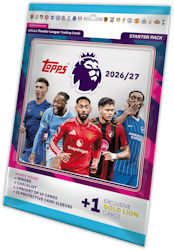
Topps Flagship Premier League 2026/27 Trading Cards Online Starter Pack
The Online exclusive Starter Pack is the perfect way to kick off your Topps Flagship Premier League 2026/27 collection, bringing together stars, rookies, inserts, and exciting chase cards in one accessible format.
View product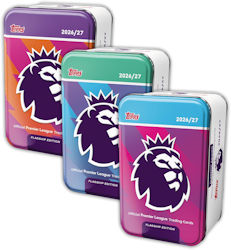
Topps Flagship Premier League 2026/27 Trading Cards Super Tin Bundle
The Super Tin Bundle contains all 3 Super Tins in the collection. Each Super Tin contains 50 cards including 3 On-Fire cards and 2 exclusive Blue Voltage parallels!
View product
As an Amazon Associate I earn from qualifying purchases.