The Welsh Cup
The Welsh Cup is the leading knockout cup competition in Welsh domestic football and one of the oldest national football competitions in the world.
First played during the 1877/78 season, the competition is organised by the Football Association of Wales and gives clubs from across the Welsh football pyramid an opportunity to compete for a major national trophy.
The tournament has an unusually rich history. Its previous winners include the leading clubs in Welsh domestic football, Welsh clubs that now play in the English league system and several clubs based on the English side of the border.
Winning the Welsh Cup also brings the possibility of European football, making it one of the most valuable prizes available to clubs competing in the Welsh domestic system.
Origins and History
The Football Association of Wales was established in 1876, making it one of the oldest national football associations in the world.
The Welsh Cup was introduced for the 1877/78 season. One of its original purposes was to help the FAW identify players who might be suitable for the Welsh national team.
Wrexham became the competition’s first winners and would go on to establish themselves as the most successful club in its history.
Football was initially more firmly established in North Wales than in the south, so many of the earliest participants came from the northern part of the country and nearby English border regions.
As the game grew in South Wales, clubs including Cardiff City, Swansea Town and Newport County became increasingly prominent. Cardiff City became the first club from South Wales to lift the trophy in 1912.
The Welsh Cup has continued for almost every season since its introduction, although it was suspended during periods of the First and Second World Wars.
The FAW Welsh Cup Name
The permanent name of the competition is the Welsh Cup, while the Football Association of Wales frequently refers to it as the FAW Welsh Cup.
For several seasons, the tournament was sponsored by JD Sports and was therefore known as the JD Welsh Cup.
That sponsorship name was still being used when Caernarfon Town won the 2025/26 competition. However, official information for the 2026/27 season refers to the tournament as the FAW Welsh Cup.
Using the permanent Welsh Cup name allows the competition’s history to be presented consistently, regardless of changes in sponsorship.
It should not be confused with the Bute Energy Welsh Cup, which is the principal national knockout competition in Welsh women’s football.
Who Enters the Welsh Cup?
The Welsh Cup is open to eligible clubs from throughout the Welsh football pyramid.
This includes teams from:
- The Cymru Premier
- Cymru North
- Cymru South
- The regional Ardal Leagues
- Lower regional and local leagues
- Eligible grassroots competitions
Clubs enter at different stages according to their position within the pyramid.
Lower-ranked teams begin in the qualifying rounds, while clubs from the upper divisions join the competition later. This system allows smaller community clubs to participate without requiring the leading teams to begin their campaigns during the earliest weeks of the season.
The early qualifying draws are divided into northern and southern sections. This helps to reduce travelling distances and costs for smaller clubs.
Once the competition reaches its later stages, clubs can be drawn against opponents from anywhere in Wales.
The 2026/27 Competition
A record 284 clubs entered the 2026/27 FAW Welsh Cup.
Of those, 232 clubs from the third tier and below entered in the First Qualifying Round. Four additional high-ranked third-tier clubs joined in the Second Qualifying Round.
The 28 lowest-ranked second-tier clubs enter in Round One. The four highest-ranked second-tier teams and all 16 clubs from the expanded Cymru Premier enter in Round Two.
The scheduled round dates for 2026/27 are:
- First Qualifying Round: 24 to 26 July 2026
- Second Qualifying Round: 21 to 23 August 2026
- Round One: 19 and 20 September 2026
- Round Two: 17 and 18 October 2026
- Round Three: 13 November 2026
- Round Four: 12 and 13 December 2026
- Quarter-finals: 29 to 31 January 2027
- Semi-finals: 5 to 7 March 2027
- Final: 18 April 2027
The large entry means that the finalists must survive a long competition stretching from the summer qualifying rounds to the national final the following spring.
How Does the Welsh Cup Work?
The Welsh Cup is a straight knockout competition.
Each tie is decided in a single match, with one club drawn at home and the other away. Matches that finish level after 90 minutes are settled by a penalty shootout.
There are no replays and no two-legged ties in the current format.
The semi-finals are normally held at neutral venues. The FAW also chooses a suitable stadium to host the final, rather than using the same permanent venue every season.
The final has been staged at numerous grounds throughout Wales, including the Racecourse Ground, Ninian Park, Cardiff Arms Park, the Millennium Stadium, Cardiff City Stadium, Park Avenue and Rodney Parade.
Rodney Parade in Newport hosted the men’s final for three consecutive seasons between 2024 and 2026.
English Clubs in the Welsh Cup
One of the most distinctive features of the Welsh Cup’s history is the involvement of clubs from England.
For many years, membership of the competition was not determined entirely by national borders. Clubs from English towns close to Wales were allowed to enter, while leading Welsh clubs playing within the English league system remained regular participants.
English-based winners included Shrewsbury Town, Chester, Hereford United and Wellington Town.
Welsh clubs playing in the English system also enjoyed considerable success. Cardiff City, Swansea City, Wrexham and Newport County all lifted the trophy during different periods.
The situation eventually created complications over European qualification. UEFA rules meant that English clubs could not represent Wales in European competition, even if they won the Welsh Cup.
Clubs competing in the English football pyramid stopped taking part regularly after the 1994/95 season. Wrexham’s victory over Cardiff City in the 1995 final brought the main period of cross-border participation to an end.
The FAW invited some Welsh clubs from the English pyramid to return in 2011/12. Wrexham, Newport County and Merthyr Town accepted, but the experiment lasted for only one season.
The competition is now centred on clubs playing within the Welsh domestic pyramid.
Most Successful Welsh Cup Clubs
Wrexham are the most successful club in Welsh Cup history, having won the trophy 23 times.
Cardiff City are close behind with 22 victories. Their successes included a remarkable sequence in which they appeared in ten consecutive finals between 1967 and 1976, winning seven of them.
Other leading winners include:
- Swansea City, ten wins
- The New Saints, ten wins
- Bangor City, eight wins
- Shrewsbury Town, six wins
- Barry Town, six wins
Wrexham and Cardiff City have not competed regularly since the involvement of English pyramid clubs largely ended in 1995.
This has allowed clubs from the Cymru Premier and the wider Welsh pyramid to establish their own modern history in the competition.
The New Saints have been particularly successful during the 21st century, winning their tenth Welsh Cup in 2025.
Memorable Welsh Cup Finals
The age and unusual history of the Welsh Cup have produced many memorable finals.
Wrexham Become the First Winners
Wrexham won the inaugural competition in 1878, beginning an association with the trophy that would eventually produce a record 23 victories.
The club appeared in 45 of the first 134 Welsh Cup finals.
Flint Town United Win in 1954
Flint Town United lifted the trophy for the first time in 1954 by defeating Chester 2-0 at the Racecourse Ground.
The club would then wait 72 years before appearing in another Welsh Cup final.
Swansea Enter Europe in 1961
Swansea Town defeated Bangor City 3-1 in the 1961 final.
That victory made Swansea the first Welsh club to qualify for European competition. They represented Wales in the European Cup Winners’ Cup during the following season.
Barry Town Shock Cardiff City
Barry Town produced one of the competition’s great surprises by defeating Cardiff City 2-1 in the 1994 final.
Barry were competing in the second tier of Welsh football at the time, while Cardiff were an established Football League club.
The victory completed an extraordinary four-trophy season for Barry and earned the club a place in the European Cup Winners’ Cup.
Wrexham Move Clear at the Top
Wrexham defeated Cardiff City 2-1 in the 1995 final, with Gary Bennett scoring both goals.
The result moved Wrexham ahead of Cardiff in the all-time list of Welsh Cup winners. It was also the final season in which clubs from the English pyramid participated regularly.
The New Saints Win 6-0
The New Saints defeated Bala Town 6-0 in the 2023 final.
It was the largest winning margin in a Welsh Cup final since Wrexham defeated Shrewsbury Town 7-0 in 1931.
Current Holders
Caernarfon Town are the current Welsh Cup holders.
The Cofis won the trophy for the first time by defeating Flint Town United 3-0 at Rodney Parade on 12 April 2026.
Caernarfon took control of the final by scoring three times during the opening 20 minutes.
Sion Bradley opened the scoring before Matty Jones doubled the advantage with a free kick. Adrian Cieslewicz then headed in the third goal to give Flint an enormous task before the match had reached its halfway point.
Caernarfon managed the remainder of the match effectively and kept a clean sheet to complete an historic victory.
It was the club’s first appearance in a Welsh Cup final, having previously been eliminated at the semi-final stage on six occasions.
Caernarfon became the 36th different club to win the competition.
European Qualification
Winning the Welsh Cup normally provides qualification for the UEFA Conference League.
The exact entry round can depend on Wales’ position in the UEFA association rankings and any changes made to the European competition structure.
A club must also hold the appropriate UEFA licence. If the winner does not satisfy the licensing requirements, the European place may be reassigned according to FAW and UEFA regulations.
Welsh Cup winners previously entered the European Cup Winners’ Cup. After that competition was discontinued, the European place transferred to the UEFA Cup and later the UEFA Europa League.
Under the current arrangements, the winners generally enter the qualifying rounds of the UEFA Conference League.
European qualification adds considerable importance to the competition. A club can transform its following season by winning a handful of knockout matches, lifting a national trophy and securing the opportunity to play opponents from elsewhere in Europe.
The Importance of the Welsh Cup
The Welsh Cup connects almost every level of football in Wales.
A small community club can begin in the qualifying rounds and potentially earn a tie against one of the leading teams in the Cymru Premier. These matches can attract larger crowds, generate valuable income and provide players with the opportunity to compete on a national stage.
For the leading clubs, the tournament offers a major trophy and a route into European competition.
Its long history also gives the Welsh Cup a significance that extends beyond the modern domestic game. The list of winners traces the development of football in Wales, from its early concentration in the north to the emergence of the leading South Wales clubs and the eventual creation of a national league system.
The competition has survived wars, changes in league structure, cross-border disputes and the disappearance of the European Cup Winners’ Cup.
With a record entry for 2026/27, the Welsh Cup remains an important link between Welsh football’s earliest years and its modern national game.
Recommended Football Products

Topps Flagship Premier League 2026/27 Trading Cards Online Starter Pack
The Online exclusive Starter Pack is the perfect way to kick off your Topps Flagship Premier League 2026/27 collection, bringing together stars, rookies, inserts, and exciting chase cards in one accessible format.
View product
World Club Football Records 2026
Fully revised and updated, World Club Football Records is a net-bulging collection of standout football records, stats and trivia from around the globe.
View product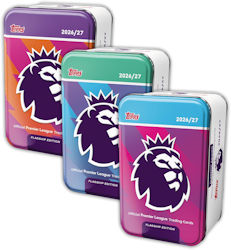
Topps Flagship Premier League 2026/27 Trading Cards Super Tin Bundle
The Super Tin Bundle contains all 3 Super Tins in the collection. Each Super Tin contains 50 cards including 3 On-Fire cards and 2 exclusive Blue Voltage parallels!
View product
As an Amazon Associate I earn from qualifying purchases.