Introduction
The FA Cup, officially known as the Football Association Challenge Cup and currently sponsored as the Emirates FA Cup, is England’s leading domestic knockout football competition. First played during the 1871–72 season, it is the oldest national football competition in the world and remains one of the most recognisable trophies in the game.
Unlike a league competition, where consistency across an entire season determines the champion, the FA Cup is built around individual knockout matches. One outstanding performance, dramatic comeback or unexpected result can change the course of a club’s season. From non-League grounds in the qualifying rounds to the FA Cup Final at Wembley Stadium, the competition connects clubs from across the English football pyramid.
Origins & History
The FA Cup was conceived by Charles W. Alcock, the secretary of the Football Association. His proposal for a challenge cup open to FA-affiliated clubs was approved in July 1871, and the first matches were played later that year.
The inaugural final took place at Kennington Oval on 16 March 1872. Wanderers defeated Royal Engineers 1–0 to become the first winners of the competition.
The early FA Cup was contested largely by amateur clubs, military teams and sides formed by former public-school players. As organised professional football expanded during the late nineteenth century, clubs from the Football League began to dominate.
The competition quickly became an important part of the English football calendar. The final developed into a major national occasion, particularly after it moved to Wembley Stadium in 1923. That first Wembley final, between Bolton Wanderers and West Ham United, became known as the White Horse Final because of the mounted police horse used to help clear spectators from the pitch.
The final was staged at Cardiff’s Millennium Stadium between 2001 and 2006 while Wembley was being rebuilt. It returned to the new Wembley Stadium in 2007.
Competition Format
The FA Cup is a knockout competition involving clubs from the Premier League, the English Football League and eligible divisions of the National League System.
Clubs enter at different stages according to their position in the football pyramid:
- Non-League clubs enter through the extra preliminary, preliminary or qualifying rounds.
- League One and League Two clubs enter in the First Round Proper.
- Premier League and Championship clubs enter in the Third Round Proper.
- The competition continues through the fourth round, fifth round, quarter-finals and semi-finals before the final at Wembley.
From the First Round Proper onwards, ties are decided on the day. If the scores are level after 90 minutes, the match proceeds to extra time and, if necessary, a penalty shootout.
The semi-finals and final are played at Wembley Stadium. The semi-finals are kept apart in the draw, with the two winners returning to Wembley for the final.
Qualifying Rounds and Non-League Football
The qualifying competition is an essential part of the FA Cup’s identity. Hundreds of clubs begin their campaigns before Premier League and EFL teams have entered, sometimes playing several rounds simply to reach the First Round Proper.
For smaller clubs, a successful FA Cup run can provide national recognition and significant financial benefits. Prize money, broadcast fees, increased attendances and a lucrative tie against a larger club can transform a season.
The qualifying rounds also allow supporters to follow the competition from modest local grounds all the way to Wembley. This connection between grassroots football and the professional game is one of the qualities that distinguishes the FA Cup from most major domestic competitions.
Giant-Killings and Famous Cup Runs
The possibility of a lower-ranked club defeating an established professional side has produced many of the FA Cup’s most celebrated moments.
Hereford United’s victory over Newcastle United in 1972 is remembered particularly for Ronnie Radford’s spectacular long-range goal. Sutton United defeated top-flight Coventry City in 1989, while Wrexham famously eliminated reigning league champions Arsenal in 1992.
Other remarkable cup runs have demonstrated that an underdog does not necessarily disappear after one unexpected victory. Lincoln City reached the quarter-finals in 2017 while playing outside the Football League, becoming the first non-League club to reach that stage for more than a century.
The phrase “the magic of the FA Cup” is sometimes overused, but it reflects something genuine. League position, transfer budgets and reputation can suddenly become less important during a single knockout match.
Successful Clubs and Managers
Arsenal are the most successful club in FA Cup history, having won the competition 14 times. Manchester United follow with 13 victories.
Chelsea, Liverpool, Tottenham Hotspur and Manchester City have each enjoyed several successful periods in the competition. Manchester City’s victory in 2026 brought their total to eight FA Cup wins.
Arsène Wenger holds the managerial record with seven FA Cup victories, all achieved with Arsenal. His teams won the trophy in 1998, 2002, 2003, 2005, 2014, 2015 and 2017.
The competition has also played an important part in famous doubles and trebles. Manchester United’s FA Cup triumph in 1999 formed part of their Premier League, FA Cup and UEFA Champions League treble, while Manchester City completed the same combination in 2023.
European Qualification
The FA Cup winners qualify for the following season’s UEFA Europa League.
If the winners have already qualified for the Europa League or Champions League through their Premier League position, the European place normally passes to the next highest eligible club in the league rather than to the losing FA Cup finalists.
The winners also qualify to play in the FA Community Shield, where they traditionally face the Premier League champions at the beginning of the following domestic season. If one club wins both competitions, the Premier League runners-up normally provide the opposition.
Current Holders
Manchester City are the current FA Cup holders after defeating Chelsea 1–0 in the 2026 final at Wembley Stadium.
Antoine Semenyo scored the decisive goal as City secured the trophy for the eighth time. The result also continued the club’s remarkable recent FA Cup record, with Manchester City appearing in four consecutive finals between 2023 and 2026.
Recent FA Cup winners include:
- 2016–17: Arsenal
- 2017–18: Chelsea
- 2018–19: Manchester City
- 2019–20: Arsenal
- 2020–21: Leicester City
- 2021–22: Liverpool
- 2022–23: Manchester City
- 2023–24: Manchester United
- 2024–25: Crystal Palace
- 2025–26: Manchester City
Crystal Palace’s victory in 2025 was especially significant because it delivered the first major trophy in the club’s history.
The 2026–27 FA Cup
The 2026–27 competition began with the Extra Preliminary Round on 8 August 2026, followed by the Preliminary Round on 22 August.
The First Round Proper is scheduled for 7 November 2026, when League One and League Two clubs enter. Premier League and Championship clubs join in the Third Round Proper on 9 January 2027.
The later stages are scheduled as follows:
- Fourth Round Proper: 13 February 2027
- Fifth Round Proper: 6 March 2027
- Quarter-finals: 3 April 2027
- Semi-finals: 24 April 2027
- FA Cup Final: 22 May 2027
Individual fixtures may be moved for television coverage, policing or other scheduling requirements.
Records and Notable Facts
- Arsenal hold the record with 14 FA Cup victories.
- Arsène Wenger is the most successful manager, with seven wins.
- Wanderers were the first winners in 1872.
- Cardiff City became the only non-English club to win the competition when they defeated Arsenal in 1927.
- Tottenham Hotspur won the cup as a Southern League club in 1901, becoming the only non-League winners since the formation of the Football League.
- The largest FA Cup Final winning margin is 6–0, recorded by Bury against Derby County in 1903 and Manchester City against Watford in 2019.
- Wigan Athletic won the FA Cup in 2013 but were relegated from the Premier League during the same season.
- The original FA Cup trophy was stolen in Birmingham in 1895 and was never recovered.
Changes and Controversies
The FA Cup has continually evolved alongside English football. One of the most significant recent changes was the removal of replays from the First Round Proper onwards. Ties that finish level are now decided through extra time and penalties on the same day.
Supporters of the change argue that it helps reduce fixture congestion. Critics believe replays provided smaller clubs with valuable income and created some of the competition’s most memorable occasions.
The scheduling of matches across several days for television coverage has also changed the traditional rhythm of FA Cup weekends. Larger clubs are sometimes criticised for fielding weakened teams, particularly when cup ties fall close to league or European fixtures.
Despite these concerns, the competition continues to attract enormous interest, particularly during the Third Round, when the Premier League and Championship clubs enter.
The Continuing Appeal of the FA Cup
The FA Cup occupies a unique position in English football. It brings together professional clubs, part-time teams and ambitious community sides in one national knockout competition.
Its history provides prestige, but its continuing appeal comes from uncertainty. A club may begin its journey in front of a few hundred spectators during the summer qualifying rounds and end it beneath the Wembley arch the following May.
League football rewards sustained excellence. The FA Cup offers something different: immediate jeopardy, unexpected heroes and the possibility that, for one afternoon at least, reputation will count for nothing.
Recommended Football Products

World Club Football Records 2026
Fully revised and updated, World Club Football Records is a net-bulging collection of standout football records, stats and trivia from around the globe.
View product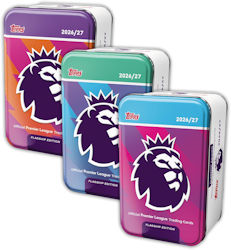
Topps Flagship Premier League 2026/27 Trading Cards Super Tin Bundle
The Super Tin Bundle contains all 3 Super Tins in the collection. Each Super Tin contains 50 cards including 3 On-Fire cards and 2 exclusive Blue Voltage parallels!
View product
Topps Flagship Premier League 2026/27 Trading Cards Online Starter Pack
The Online exclusive Starter Pack is the perfect way to kick off your Topps Flagship Premier League 2026/27 collection, bringing together stars, rookies, inserts, and exciting chase cards in one accessible format.
View product
As an Amazon Associate I earn from qualifying purchases.