Premier League
Crystal Palace
League Position Tracker
Last 5 Results
Crystal Palace Player Stats
Top 10 Attacking Players
#
Player
Goals
Assists
Points
1
Tyrick Mitchell
2
0
6
2
Anan Khalaili
1
0
3
3
Ben Chilwell
1
0
3
4
Jørgen Strand Larsen
1
0
3
5
Daichi Kamada
0
3
3
6
Yéremy Pino Santos
0
2
2
7
Eddie Nketiah
0
1
1
Top 10 Disciplinary Records
#
Player
Yellow
Red
Points
1
Axel Disasi
0
1
3
2
Anan Khalaili
1
0
1
3
Chris Richards
1
0
1
4
Daichi Kamada
1
0
1
Introduction
Crystal Palace Football Club, often simply referred to as Crystal Palace, is a professional football club based in Selhurst, South London. Founded in 1905, the club plays its home matches at Selhurst Park, a stadium renowned for its passionate atmosphere. The club’s identity is deeply rooted in its historical significance within English football, coupled with a loyal and vibrant supporter base. Crystal Palace is known for its resilience and distinctive style of play, marking it as a prominent team in the English Premier League.
History
Crystal Palace FC was established in 1905, primarily to play at the Crystal Palace Exhibition Building in Sydenham, a venue that symbolised Victorian innovation and splendour. The club quickly ascended through the lower leagues of the Football Association, earning a place in the Football League in 1907. During the 1960s, the club’s fortunes changed significantly as they secured their first major honour—the FA Cup semi-final in 1969—but it was not until the 1970s that they truly began to make their mark.
Under the stewardship of manager Malcolm Allison in the early 1970s, Crystal Palace made remarkable strides, reaching the First Division. The club’s journey continued in the 1980s, where they realised greater successes, including a memorable run that saw them finish third in the league in the 1978-79 season. Their back-and-forth nature between divisions further highlighted the competitive spirit of the club.
Stadium
Crystal Palace plays its home games at Selhurst Park, located in the heart of Selhurst, South London. The stadium has a seating capacity of approximately 25,486, making it one of the smaller venues in the Premier League, yet it is cherished for its intimate atmosphere. Opened in 1924, Selhurst Park showcases various stands, including the famous Holmesdale Road Stand which has a vibrant vocal fanbase. The club has undergone numerous renovations to modernise the facilities while preserving its historic charm, including improvements to the West Stand and the addition of new hospitality options, reflecting the club’s ambition and commitment to enhancing the fan experience.
Achievements
Crystal Palace has achieved notable success in English football, with the club winning the FA Cup in 1990, a milestone that etched their name in football history. In addition to their FA Cup final appearances, the team has enjoyed stints in the top tier of English football, with their most successful periods occurring in the late 20th century. The club was also a runner-up in the 1990 FA Cup final and the 2016 EFL Cup final. While often seen as a mid-table team in the Premier League, their resilience and upper mid-table finishes have ensured they remain a competitive presence in English football.
Famous Players & Managers
Over the years, Crystal Palace has been home to numerous legendary players and managers. Notable figures include Sir Geoff Hurst, who played for the club in the 1960s before achieving fame with the England national team. Other iconic players include Mark Bright, a key figure during the club’s successful 1980s campaigns, and the electric forward Wilfried Zaha, who has become synonymous with the club in recent years due to his incredible skill and loyalty.
On the managerial front, Allardyce and Steve Coppell stand out, with Coppell’s tenure in the 1990s being closely associated with the club’s identity and prominent performances. Their impactful leadership has shaped the club’s ethos and paved the way for future successes.
Supporters & Culture
The fanbase of Crystal Palace FC is one of its most defining elements. Known for their unwavering support and camaraderie, the "Palace" fans are celebrated for their spirited chants, particularly at Selhurst Park. The club has cultivated a rich culture, characterised by traditions such as the "Eagles" nickname and the club’s motto, “The Eagle stands tall.”
Rivalries, particularly with nearby clubs like Brighton & Hove Albion, are fiercely contested. These matchups, labelled the “M23 Derby,” are significant events that energise the supporter base and highlight the passionate and often intense emotions associated with club loyalties.
The club’s values centre around inclusivity, community, and resilience, reflecting both its historical roots and modern aspirations. As a cornerstone of the local community, Crystal Palace FC continues to inspire generations of supporters and lovers of football.
Recommended Football Products
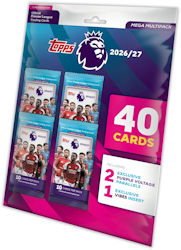
Topps Flagship Premier League 2026/27 Trading Cards Mega Multipack
The Mega Multupack contains 40 cards including 2 exclusive Purple Voltage parallels and an exclusive Vibes Insert.
View product
World Club Football Records 2026
Fully revised and updated, World Club Football Records is a net-bulging collection of standout football records, stats and trivia from around the globe.
View product
Topps Flagship Premier League 2026/27 Trading Cards Online Starter Pack
The Online exclusive Starter Pack is the perfect way to kick off your Topps Flagship Premier League 2026/27 collection, bringing together stars, rookies, inserts, and exciting chase cards in one accessible format.
View productSee all Crystal Palace Football Club products
As an Amazon Associate I earn from qualifying purchases.