Premier League
Brighton & Hove Albion
League Position Tracker
Last 5 Results
Brighton & Hove Albion Player Stats
Top 10 Attacking Players
#
Player
Goals
Assists
Points
1
Pascal Groß
2
3
9
2
Jack Hinshelwood
2
0
6
3
Malick Yalcouyé
2
0
6
4
Maxim De Cuyper
1
3
6
5
Charalampos Kostoulas
1
2
5
6
Lewis Dunk
1
0
3
7
Luka Vušković
1
0
3
8
Yasin Ayari
1
0
3
9
Diego Gómez Amarilla
0
2
2
10
Georginio Rutter
0
1
1
Top 10 Disciplinary Records
#
Player
Yellow
Red
Points
1
Pascal Groß
2
0
2
2
João Pedro Loureiro da Costa
1
0
1
3
Lewis Dunk
1
0
1
4
Maxim De Cuyper
1
0
1
5
Olivier Boscagli
1
0
1
6
Promise David
1
0
1
7
Yasin Ayari
1
0
1
Introduction
Brighton & Hove Albion Football Club, fondly known as the Seagulls, is a professional football club based in the coastal city of Brighton, East Sussex, England. The club’s identity is deeply intertwined with its vibrant seaside location and a rich footballing heritage. Known for its passionate fanbase, Brighton & Hove Albion enjoys a solid reputation in English football, marked by resilience and an ethos of continuous improvement.
History
Founded in 1901, Brighton & Hove Albion started its journey as an amateur club, known initially as Brighton United. The club was established to provide a local outlet for football enthusiasts and quickly adopted the name Brighton & Hove Albion. The early years saw the Seagulls competing in various regional leagues, and by 1920, the club was elected to the Football League’s Third Division.
The post-war period in the 1960s marked a key phase in the club’s growth, culminating in their first significant achievement—promotion to the Second Division in 1963. The 1970s brought even more landmark moments, such as the club’s appearance in the FA Cup final in 1983, where they faced Manchester United in a dramatic match that ended in a draw, leading to a replay, which they lost. Throughout the late 20th century, Brighton faced challenges, including relegation and financial difficulties, but steadfastly maintained its identity and community roots.
Stadium
Brighton & Hove Albion’s home ground, the Amex Stadium, is located in Falmer, just outside the city centre. Officially opened in 2011, this modern venue has a seating capacity of approximately 30,750, making it one of the larger stadiums in the region. The Amex Stadium is known for its vibrant atmosphere, excellent facilities, and proximity to public transport links. Unique features include a state-of-the-art hospitality area and a design that incorporates sustainable practices, reflecting the club’s commitment to community and environmental values.
Achievements
While Brighton & Hove Albion has yet to capture the top-tier league title, the club has experienced notable success throughout its history. Key achievements include winning the FA Cup in 1983 and multiple promotions through the tiers of English football. The club has consistently performed in the Championship, with successful campaigns leading to their promotion to the Premier League for the first time in 2017. Brighton’s recent participation in the top flight has seen them establish themselves as a competitive force, showcasing their determination to build on past successes.
Famous Players & Managers
Brighton & Hove Albion has been home to a number of legendary players and managers who have shaped the club’s history. Notable figures include Bobby Zamora, a prolific striker whose tenure in the early 2000s helped to elevate the club’s status. Another iconic player is Gary Hart, who, after over a decade with the club, became synonymous with Brighton’s ethos of loyalty and commitment.
In terms of managerial influence, figures such as Alan Mullery and Gus Poyet have left a lasting impact, guiding the team through pivotal moments in its history and fostering a winning mentality within the squad.
Supporters & Culture
The fanbase of Brighton & Hove Albion, known for their unwavering support and loyalty, is a significant aspect of the club’s identity. The Seagulls’ supporters are recognised for their passionate chants and vibrant matchday atmosphere, often creating a mosaic of colour and noise within the Amex Stadium.
Traditionally, Brighton enjoys rivalries with clubs such as Crystal Palace and Portsmouth, which stems from geographical proximity and historical competition. The club’s values emphasise inclusivity, community engagement, and integrity, often reflected in its outreach initiatives and support for local causes.
In summary, Brighton & Hove Albion Football Club holds a prominent place in English football, encapsulating the spirit of its coastal city. With a rich history, modern facilities, and a dedicated fanbase, the Seagulls continue to strive for success while remaining true to their roots.
Recommended Football Products

World Club Football Records 2026
Fully revised and updated, World Club Football Records is a net-bulging collection of standout football records, stats and trivia from around the globe.
View product
Topps Flagship Premier League 2026/27 Trading Cards Full Box
The Full Box contains 28 packets (10 cards per packet). Each box delivers the full Topps Flagship Premier League 2026/27 collecting experience, packed with stars, rookies, rare inserts, and exciting hits.
View product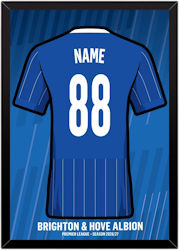
Brighton and Hove Albion Fan Personalised A4 Print
Our Personalised Team Prints are created on demand. This means we design and print using the latest team shirt.
View productSee all Brighton & Hove Albion Football Club products
As an Amazon Associate I earn from qualifying purchases.