Championship
Portsmouth
League Position Tracker
Last 5 Results
Portsmouth Player Stats
Top 10 Attacking Players
#
Player
Goals
Assists
Points
1
A. Segecic
1
1
4
2
E. Adams
1
1
4
3
C. Shaughnessy
1
0
3
4
M. Milovanovic
1
0
3
5
Marezi
1
0
3
6
R. Kavuma-McQueen
1
0
3
7
T. Devlin
1
0
3
8
A. Kamara
0
1
1
9
T. Shade
0
1
1
Top 10 Disciplinary Records
#
Player
Yellow
Red
Points
1
R. R. Shein
1
0
1
2
T. Devlin
1
0
1
Introduction
Portsmouth Football Club, commonly known as Pompey, is a professional football club based in Portsmouth, England. Established in 1898, the club has enjoyed a varied history marked by highs and lows, contributing significantly to its identity and legacy in English football. Portsmouth’s loyal fanbase, known for their passionate support, plays an integral role in cultivating the club’s vibrant culture. The club competes in the EFL League One and is known for its distinct blue and white colours.
History
Portsmouth FC was founded in 1898, gaining admission to the Southern League in 1899. The club’s early years were defined by gradual growth, with notable successes leading to their eventual elevation to the Football League in 1920. Over the decades, Portsmouth carved out a reputation as a formidable force, particularly during the late 1940s and early 1950s.
A defining moment in the club’s history came in 1949 when they secured the First Division title under the management of the legendary Bob Jackson. Portsmouth captured the hearts of fans as they went on to win the FA Cup in both 1939 and 1949, enhancing their status as a club of considerable importance in English football.
The club faced significant challenges in the decades that followed, including relegations and financial difficulties. However, the late 2000s brought a revitalisation, culminating in a memorable FA Cup victory in 2008, providing a compelling chapter in an ever-evolving narrative.
Stadium
Portsmouth plays its home matches at Fratton Park, located in the heart of Portsmouth. Established in 1899, the stadium has undergone numerous renovations, currently boasting a capacity of approximately 20,600. Unique features of Fratton Park include its distinctive Victorian architecture and the passionate acoustics of the South Stand, which often reverberate with chants from the dedicated supporters. The ground not only serves as a competitive venue but also as a social hub for the local community.
Achievements
Throughout its storied history, Portsmouth FC has amassed a number of major trophies. The club has won the FA Cup twice (in 1939 and 2008) and has secured the Football League title on two occasions: in 1949 and 1950. Notably, Pompey also secured the wartime league title during World War II. Further, the club achieved domestic success by winning the FA Charity Shield in 1949.
Although the club has faced adversities, including relegations, their history of triumph reflects a legacy that resonates strongly with supporters and the broader football community.
Famous Players & Managers
Portsmouth has been home to several legendary figures throughout its history. The likes of Jimmy Dickinson, who played for Portsmouth for over 20 years, and the prolific goalscorer Ted McDougall are etched in the club’s lore. More contemporary names include the English international players Niko Kranjčar and Jermain Defoe, whose contributions helped elevate the club to greater heights in the 2000s.
Managers such as Bob Jackson, who led Portsmouth to their 1949 title, and Harry Redknapp, who orchestrated a revival during the 2000s, have also made their mark, shaping the club’s ethos and guiding it through challenging periods.
Supporters & Culture
The passion of Portsmouth’s supporters is a cornerstone of the club’s culture. Known for their unwavering loyalty, fans gather at Fratton Park to create a vibrant atmosphere, characterised by singing and chants that enhance the matchday experience. The club fosters an inclusive environment, drawing in a diverse fanbase from Portsmouth and beyond.
Rivalries, particularly with Southampton—known as the South Coast Derby—add an extra layer of excitement to fixtures and contribute to the club’s rich historical context. Portsmouth’s ethos revolves around resilience, community spirit, and the celebration of football as a unifying force.
In summary, Portsmouth Football Club encapsulates a deep-rooted history interwoven with the passion of its supporters. The club continues to be an influential presence in the football landscape, embodying the spirit of the city and the enduring love for the beautiful game.
Recommended Football Products

Topps Flagship Premier League 2026/27 Trading Cards Online Starter Pack
The Online exclusive Starter Pack is the perfect way to kick off your Topps Flagship Premier League 2026/27 collection, bringing together stars, rookies, inserts, and exciting chase cards in one accessible format.
View product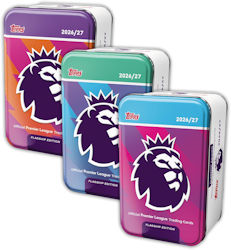
Topps Flagship Premier League 2026/27 Trading Cards Super Tin Bundle
The Super Tin Bundle contains all 3 Super Tins in the collection. Each Super Tin contains 50 cards including 3 On-Fire cards and 2 exclusive Blue Voltage parallels!
View product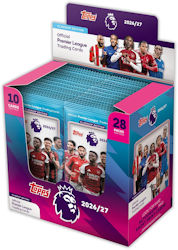
Topps Flagship Premier League 2026/27 Trading Cards Full Box
The Full Box contains 28 packets (10 cards per packet). Each box delivers the full Topps Flagship Premier League 2026/27 collecting experience, packed with stars, rookies, rare inserts, and exciting hits.
View productSee all Portsmouth Football Club products
As an Amazon Associate I earn from qualifying purchases.