The FA Trophy
Introduction
The FA Trophy is the leading knockout competition for clubs competing in the upper levels of English non-league football.
It is open to first teams playing at Steps 1 to 4 of the National League System, ranging from the National League immediately below the EFL to the regional divisions at Step 4.
The competition provides hundreds of non-league clubs with an opportunity to compete for a national trophy and reach a final at Wembley Stadium. For many clubs and supporters, the prospect of playing beneath the Wembley arch is the greatest attraction of the tournament.
In recent seasons, the competition has been sponsored by Isuzu and known officially as the Isuzu FA Trophy. However, its permanent and widely recognised name remains the FA Trophy.
Origins and History
The FA Trophy was created in 1969 for clubs outside the Football League that registered professional players.
Before its introduction, leading semi-professional non-league clubs had little realistic opportunity to reach a Wembley final. The FA Amateur Cup existed for amateur teams, while the FA Cup was increasingly dominated by clubs from the Football League.
The new FA Challenge Trophy gave the strongest non-league clubs a national competition of their own.
The first tournament took place during the 1969/70 season. Northern Premier League champions Macclesfield Town reached the inaugural final, where they faced Telford United at Wembley Stadium.
Macclesfield won 2-0 in front of approximately 28,000 spectators to become the first club to lift the FA Trophy.
The competition quickly established itself as an important part of the non-league calendar. It has since been won by clubs from across England, including teams that later progressed into the English Football League.
Who Can Enter the FA Trophy?
Under the 2026/27 competition rules, the FA Trophy is open to first teams competing at Steps 1 to 4 of the National League System.
These levels include:
- Step 1: The National League
- Step 2: National League North and National League South
- Step 3: The premier divisions of the Northern Premier League, Southern League and Isthmian League
- Step 4: The regional divisions immediately below Step 3
Clubs from the Channel Islands and other offshore associations may also be considered for entry when they compete at an eligible level of the National League System.
Teams enter at different stages depending on their position in the pyramid. Step 4 clubs begin in the earliest qualifying rounds, while clubs from the higher divisions receive exemptions until later in the competition.
National League clubs normally enter during the competition proper, giving successful lower-ranked teams the opportunity to face some of the strongest clubs outside the EFL.
FA Trophy or FA Vase?
The FA Trophy and FA Vase are separate competitions intended for clubs at different levels of the non-league pyramid.
The FA Trophy is primarily for clubs at Steps 1 to 4. These include fully professional National League teams, semi-professional clubs and some sides with a mixture of professional and part-time players.
The FA Vase is generally contested by clubs at Steps 5 and 6. These teams play in regional leagues further down the National League System and are usually classed as amateur or semi-professional.
Promotion or relegation can therefore determine which competition a club enters. A team promoted from Step 5 to Step 4 will normally move from the FA Vase into the FA Trophy.
Both competitions provide their finalists with the opportunity to play at Wembley.
Competition Format
The FA Trophy is played as a straight knockout competition.
The tournament begins with preliminary and qualifying rounds before progressing to the competition proper. Clubs from higher levels of the National League System join in later rounds.
For the 2026/27 season, the competition consists of:
- Preliminary round
- First round qualifying
- Second round qualifying
- Third round qualifying
- First round proper
- Second round proper
- Third round proper
- Fourth round proper
- Fifth round proper
- Sixth round proper
- Semi-finals
- Final
The sixth round proper effectively serves as the quarter-final stage.
Early rounds may be organised geographically. This helps reduce travelling costs for clubs that may have limited financial resources and whose players sometimes combine football with other employment.
Each tie is decided by a single match. The team drawn first normally plays at home.
Under the 2026/27 rules, if a match is level after 90 minutes, the winner is decided by a penalty shootout. There are no regularly scheduled replays.
In the final, an additional 30 minutes may be played if both clubs agree and the arrangement is approved by the Football Association. If no extra time is agreed, or if the scores remain level after extra time, the trophy is decided on penalties.
The Road to Wembley
Reaching Wembley is the defining ambition for clubs entering the FA Trophy.
The final was traditionally played as a standalone fixture, but it is now usually staged alongside the FA Vase final as part of Non-League Finals Day.
This allows supporters to watch two national finals during the same visit to Wembley and provides greater attention for competitions that receive considerably less national coverage than the FA Cup or League Cup.
The Trophy final has occasionally been played away from Wembley. Five finals were staged at Villa Park and one at Upton Park, largely because the original Wembley Stadium was closed for redevelopment.
The competition returned to the new Wembley in 2007. That year, a record crowd of 53,262 watched Stevenage Borough recover from two goals behind to defeat Kidderminster Harriers 3-2.
Financial Importance
The FA Trophy can provide important additional income for non-league clubs.
Teams receive payments from the competition prize fund as they progress through the rounds. Gate receipts can also be particularly valuable when a smaller club is drawn against a well-supported National League side.
For the 2026/27 season, the winners of the final receive £60,000 from the prize fund, while the runners-up receive £30,000. These amounts are in addition to money earned during earlier rounds.
Although the sums are modest compared with those available in professional competitions, they can make a considerable difference to clubs operating with limited budgets.
A successful Trophy run can also increase attendances, attract new supporters and generate greater local and national attention.
Most Successful Clubs
Scarborough, Telford United and Woking share the record for the most FA Trophy victories, with three wins each.
Woking enjoyed a particularly successful period during the 1990s, winning the Trophy in 1994, 1995 and 1997.
Several clubs have won the competition twice, including:
- Altrincham
- Barrow
- Enfield
- Grays Athletic
- Kingstonian
- Macclesfield Town
- Stafford Rangers
- Stevenage Borough
- Wycombe Wanderers
- York City
Some former winners, including Macclesfield Town and Scarborough, have since ceased to exist in their original forms. Successor clubs have subsequently been established by supporters in their local communities.
The varied list of winners reflects the changing nature of non-league football, where clubs regularly move between divisions or progress into the EFL.
Successful Managers
Geoff Chapple is the most successful manager in FA Trophy history.
He guided Woking to three victories during the 1990s before winning the competition twice more with Kingstonian. His fifth success came in 2000, when Kingstonian defeated Kettering Town 3-2 in the final at the old Wembley.
Martin O’Neill also enjoyed considerable success in the competition. He led Wycombe Wanderers to victories in 1991 and 1993 before moving into management at a higher level.
O’Neill subsequently managed Leicester City, Celtic, Aston Villa, Sunderland and the Republic of Ireland, but his FA Trophy victories with Wycombe formed an important part of his early managerial career.
Memorable Finals
Several FA Trophy finals have produced dramatic comebacks and penalty shootouts.
Stevenage Borough’s 3-2 victory over Kidderminster Harriers in 2007 remains one of the most memorable. Kidderminster established a two-goal lead before Stevenage scored three times to win the first Trophy final staged at the rebuilt Wembley.
In 2015, North Ferriby United and Wrexham produced a six-goal final. North Ferriby recovered from two goals behind before the match finished 3-3. They went on to win the penalty shootout 5-4.
Gateshead defeated Solihull Moors on penalties in 2024 after another 2-2 draw at Wembley.
The competition has also produced unexpected winners. Burscough lifted the Trophy in 2003 despite sitting near the bottom of the Northern Premier League during much of that season.
These results illustrate why league position is not always a reliable guide to success in a knockout competition.
The 2026 FA Trophy Final
The 2025/26 FA Trophy final was played between Southend United and Wealdstone at Wembley Stadium on 17 May 2026.
The match remained goalless after 90 minutes and was decided by a penalty shootout.
Southend goalkeeper Collin Andeng-Ndi made two important saves during the shootout. Gus Scott-Morriss then scored the decisive penalty to give Southend a 4-2 victory.
A crowd of 43,306 watched Southend lift the FA Trophy and bring the 2025/26 non-league season to a successful conclusion.
Southend United are therefore the current holders of the FA Trophy.
The 2026/27 FA Trophy
The 2026/27 FA Trophy began with the preliminary round on 15 August 2026.
The qualifying rounds and competition proper are scheduled as follows:
- Preliminary round: 15 August 2026
- First round qualifying: 29 August 2026
- Second round qualifying: 12 September 2026
- Third round qualifying: 26 September 2026
- First round proper: 24 October 2026
- Second round proper: 14 November 2026
- Third round proper: 12 December 2026
- Fourth round proper: 16 January 2027
- Fifth round proper: 6 February 2027
- Sixth round proper: 6 March 2027
- Semi-finals: 3 April 2027
- Final: 16 May 2027
The final is scheduled to be played at Wembley Stadium.
European Qualification
Winning the FA Trophy does not provide qualification for a UEFA competition.
Clubs competing in the Trophy sit below the Premier League and EFL and are not awarded European places through the competition.
The reward is instead a national trophy, prize money and the considerable achievement of winning a final at Wembley.
The Continuing Appeal of the FA Trophy
The FA Trophy gives clubs from across the upper levels of non-league football something rare and valuable: a realistic route to a national final at Wembley.
Its qualifying rounds bring together teams from different regional leagues, while the later stages give smaller clubs the opportunity to test themselves against leading National League opposition.
A successful run can transform a club’s season, bringing additional revenue, larger crowds and memorable away journeys. For the two finalists, it culminates in an occasion normally reserved for clubs from the professional leagues.
The FA Trophy may receive less national attention than England’s larger domestic competitions, but within non-league football it remains one of the most prestigious trophies a club can win.
Recommended Football Products
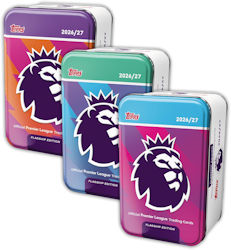
Topps Flagship Premier League 2026/27 Trading Cards Super Tin Bundle
The Super Tin Bundle contains all 3 Super Tins in the collection. Each Super Tin contains 50 cards including 3 On-Fire cards and 2 exclusive Blue Voltage parallels!
View product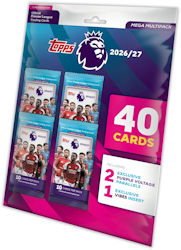
Topps Flagship Premier League 2026/27 Trading Cards Mega Multipack
The Mega Multupack contains 40 cards including 2 exclusive Purple Voltage parallels and an exclusive Vibes Insert.
View product
Topps Flagship Premier League 2026/27 Trading Cards Online Starter Pack
The Online exclusive Starter Pack is the perfect way to kick off your Topps Flagship Premier League 2026/27 collection, bringing together stars, rookies, inserts, and exciting chase cards in one accessible format.
View product
As an Amazon Associate I earn from qualifying purchases.