League One
Wycombe Wanderers
League Position Tracker
Last 5 Results
Wycombe Wanderers Player Stats
Top 10 Attacking Players
#
Player
Goals
Assists
Points
1
C. Woodrow
2
0
6
2
C. Taylor
1
0
3
3
F. Onyedinma
1
0
3
4
A. Morley
0
1
1
5
E. Henderson
0
1
1
Top 10 Disciplinary Records
#
Player
Yellow
Red
Points
1
E. Henderson
3
0
3
2
D. Harvie
1
0
1
3
F. Onyedinma
1
0
1
Introduction
Wycombe Wanderers Football Club, often referred to as "Wanderers," is a professional football club based in High Wycombe, Buckinghamshire, England. Founded in 1887, the club has established itself as a significant figure in English football, known for its resilience and community spirit. With a reputation for being a competitive side in the lower leagues, Wycombe has garnered a loyal fanbase and is cherished within the local community. Their nickname, "The Chairboys," is a nod to the town’s historic chair-making industry.
History
Wycombe Wanderers was founded in 1887 by a group of local young men who initially played matches on a field at the local school. The club joined various local leagues and quickly established itself within the regional football structure.
The club’s early growth was notable, especially during the amateur era, when they participated in the Southern League and earned respect for their competitive nature. A significant milestone came in 1921 when Wycombe became one of the founding members of the Isthmian League, solidifying their status as a key player in semi-professional football.
The club enjoyed a surge in success in the late 20th century, particularly under the management of Martin O’Neill in the 1990s, when they reached the third tier of English football for the first time in their history. The club also became the first team to win the FA Trophy in a penalty shootout in 1991, marking a turning point in their fortunes.
Stadium
Wycombe Wanderers’ home ground is Adams Park, located in the picturesque surroundings of the town. Officially opened in 1990, the stadium has a seating capacity of approximately 10,000, making it a compact yet vibrant venue for football.
Adams Park features a modern design with several distinct stands, including the Frank Adams Stand and the Terrace Stand. One of its unique features is the steep gradient of the pitch, which is said to add an extra challenge for visiting teams. The stadium also boasts various facilities, including hospitality suites and community spaces, which reinforce the club’s connection to the local area.
Achievements
Wycombe Wanderers has a rich history of achievements, notable for a club of its size. The pinnacle of their success came in 2001 when they won the Football League Trophy, marking their first major honour. Further achievements include winning the Conference National title in 1993 and the League Two play-offs in 2018, which resulted in promotion to the Championship for the first time in the club’s history.
Additionally, the club has made significant progress in the FA Cup, reaching the semi-finals in 2001, where they narrowly lost to Liverpool. This run animated the spirit of the club and its supporters, cementing their reputation as giant-killers in knockout football.
Famous Players & Managers
Over the years, Wycombe Wanderers has been home to several legendary figures who have shaped the club’s identity. Notable players include the likes of KeithRyan, who is celebrated for his contributions during the club’s successful era in the 1990s. Another significant player was Sam Vokes, who played an instrumental role in the team’s promotion to the Championship.
The managerial ranks have also seen influential figures such as Martin O’Neill, who led the club through transformative years, and Gareth Ainsworth, who became a club icon both as a player and manager, known for fostering an attacking style of play while embedding strong club values.
Supporters & Culture
The fanbase of Wycombe Wanderers is characterised by its passionate and dedicated supporters who create a spirited atmosphere at Adams Park. The club has strong ties to the local community, with initiatives aimed at engaging youth and promoting inclusivity in sports.
Rivalries mainly include contests against teams such as Oxford United and Reading, which evoke enthusiasm and heightened competition among supporters. The club values a community-oriented ethos, emphasising respect, support for local causes, and inclusivity.
Beyond the pitch, the Chairboys are known for their friendly atmosphere and family-oriented matchday experiences, making attending a game an enjoyable affair for all ages. This blend of history, achievement, and community spirit continues to resonate deeply with its supporters, ensuring Wycombe Wanderers remains a cherished part of the English football landscape.
Recommended Football Products

Topps Flagship Premier League 2026/27 Trading Cards Online Starter Pack
The Online exclusive Starter Pack is the perfect way to kick off your Topps Flagship Premier League 2026/27 collection, bringing together stars, rookies, inserts, and exciting chase cards in one accessible format.
View product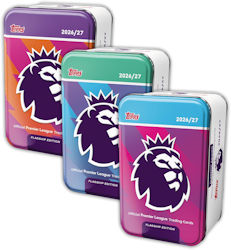
Topps Flagship Premier League 2026/27 Trading Cards Super Tin Bundle
The Super Tin Bundle contains all 3 Super Tins in the collection. Each Super Tin contains 50 cards including 3 On-Fire cards and 2 exclusive Blue Voltage parallels!
View product
World Club Football Records 2026
Fully revised and updated, World Club Football Records is a net-bulging collection of standout football records, stats and trivia from around the globe.
View productSee all Wycombe Wanderers Football Club products
As an Amazon Associate I earn from qualifying purchases.