The League Cup (Carabao Cup)
Introduction
The League Cup is one of the major knockout competitions in English football. Open to clubs from the Premier League and the three divisions of the English Football League, it provides teams from across the professional game with an opportunity to compete for a place in a Wembley final.
The competition is currently known as the Carabao Cup for sponsorship reasons, although many supporters continue to refer to it simply as the League Cup or EFL Cup.
Unlike the FA Cup, the League Cup is not open to non-league clubs. Entry is restricted to teams from the Premier League, Championship, League One and League Two.
The competition begins near the start of the domestic season and concludes with a final at Wembley Stadium. The winners receive the trophy, a place in European competition and one of the first major honours of the English football season.
Origins and History
The League Cup was introduced during the 1960/61 season. It was developed under the guidance of Football League secretary Alan Hardaker, who wanted to create an additional competition for the League’s member clubs.
The increasing availability of floodlights meant matches could be played during midweek evenings, providing clubs with additional fixtures and income. The competition was not immediately embraced by every leading club, but it gradually became an established part of the football calendar.
Aston Villa were the first winners. They faced Rotherham United in a two-legged final, losing the opening match 2-0 before winning the return leg 3-0 after extra time. Villa therefore claimed the inaugural trophy with a 3-2 aggregate victory.
The early finals were played over two legs at the home grounds of the participating clubs. This changed in 1967, when the final was moved to Wembley Stadium.
That first Wembley final produced one of the competition’s most famous results. Third Division Queens Park Rangers recovered from two goals behind to defeat First Division West Bromwich Albion 3-2.
The League Cup has been played every season since its creation and has developed into one of English football’s principal domestic trophies.
Why Is It Called the Carabao Cup?
The official name of the competition is the EFL Cup, but sponsorship arrangements have resulted in several different names being used over the years.
Previous sponsored names have included:
- The Milk Cup
- The Littlewoods Challenge Cup
- The Rumbelows Cup
- The Coca-Cola Cup
- The Worthington Cup
- The Carling Cup
- The Capital One Cup
The competition became known as the Carabao Cup in 2017 following a sponsorship agreement with the energy drinks company Carabao.
The name of the sponsor may change again in the future, which is why the competition is still commonly described as the League Cup. Its history and records continue regardless of the commercial name attached to it.
Who Enters the League Cup?
The League Cup is open to the 92 clubs competing in the Premier League and English Football League.
Most Championship, League One and League Two clubs enter during the opening stages. Premier League clubs that are not participating in European competition normally enter in the second round.
Premier League teams involved in UEFA competitions generally enter in the third round. This later entry helps reduce the number of fixtures faced by clubs also competing in the Champions League, Europa League or Conference League.
The precise structure can be adjusted when an unusually large number of English clubs qualify for Europe. A preliminary round was introduced for the 2026/27 competition to ensure the required number of teams progressed into the main draw.
Competition Format
The League Cup is a knockout competition. A club must win each tie to progress to the next round.
The competition includes:
- A preliminary round when required
- First round
- Second round
- Third round
- Fourth round
- Quarter-finals
- Semi-finals
- Final
The early draws are normally divided into northern and southern sections. This reduces travelling distances, particularly for clubs in the lower divisions.
Most rounds are decided by a single match. If the scores are level after 90 minutes in these rounds, the tie generally proceeds directly to a penalty shootout without extra time.
The semi-finals are played over two legs, with each team playing once at home. The club with the highest aggregate score progresses to the final. Extra time and penalties can be used if the aggregate score remains level after the second leg.
The final is played as a single match at Wembley Stadium. Extra time and a penalty shootout are available if the teams cannot be separated during normal time.
The Wembley Final
The League Cup final has been held at Wembley since 1967, apart from the years when the original stadium was being rebuilt.
Between 2001 and 2007, the final was staged at the Millennium Stadium in Cardiff. It returned to the new Wembley Stadium in 2008.
The final was traditionally played towards the end of February, making the League Cup the first major domestic trophy awarded during the English season. Changes to the football calendar have sometimes resulted in it being held slightly later.
For supporters of clubs that do not regularly reach major finals, the League Cup can provide a memorable opportunity to visit Wembley and compete for national silverware.
Lower-Division Successes
The League Cup has produced several notable victories for clubs outside the top division.
Queens Park Rangers became the first third-tier club to win a major trophy at Wembley when they defeated West Bromwich Albion in 1967.
Two years later, Third Division Swindon Town caused another major surprise by beating Arsenal 3-1 after extra time in the 1969 final.
Sheffield Wednesday were playing in the Second Division when they defeated Manchester United 1-0 in 1991. John Sheridan scored the only goal of the match as Wednesday became the last club from outside the top flight to win the League Cup.
Bradford City provided another remarkable run in 2012/13. The League Two club defeated Premier League opposition including Wigan Athletic, Arsenal and Aston Villa before reaching the final. Their journey ended with a 5-0 defeat against Swansea City, but it remains one of the competition’s greatest cup runs.
Most Successful Clubs
Liverpool are the most successful club in League Cup history, having won the competition ten times.
Their record includes four consecutive victories between 1981 and 1984. Liverpool claimed their tenth League Cup in 2024 by defeating Chelsea 1-0 after extra time.
Manchester City moved to nine victories by winning the competition in 2026. Their record includes four consecutive triumphs between 2018 and 2021, matching Liverpool’s achievement of winning the trophy in four successive seasons.
Manchester United have won the League Cup six times.
Aston Villa and Chelsea have each lifted the trophy five times, while Tottenham Hotspur and Nottingham Forest have recorded four victories apiece.
The list of winners includes clubs from throughout the Premier League and EFL, demonstrating the competition’s ability to produce both established champions and occasional surprise successes.
Memorable Finals and Records
The 1967 final remains one of the most celebrated in League Cup history. Queens Park Rangers trailed West Bromwich Albion 2-0 before scoring three times to complete a remarkable comeback.
Luton Town produced another memorable result in 1988 when they defeated Arsenal 3-2. Arsenal had led 2-1 and were awarded a late penalty, but Luton goalkeeper Andy Dibble saved Nigel Winterburn’s effort. Luton then scored twice to win the first major trophy in the club’s history.
The 2005 final produced one of the competition’s fastest goals when Liverpool’s John Arne Riise scored against Chelsea inside the opening minute. Chelsea recovered to win 3-2 after extra time.
Swansea City recorded the largest winning margin in a League Cup final when they defeated Bradford City 5-0 in 2013.
Penalty shootouts have also played an important role in the competition. Liverpool defeated Birmingham City on penalties in the 2001 final and overcame Chelsea in another shootout in 2022.
European Qualification
The winners of the League Cup qualify for the play-off stage of the UEFA Conference League.
If the winners have already qualified for the Champions League or Europa League through their Premier League position, the Conference League place is normally transferred to the highest-placed Premier League club that has not already qualified for Europe.
The European place can add considerable importance to the competition, particularly for clubs that may not qualify through their final league position.
In 2025/26, Manchester City qualified for the Champions League after also winning the League Cup. Their Conference League place was therefore transferred to the next eligible club in the Premier League table.
The 2026 League Cup Final
The 2026 Carabao Cup final was played between Arsenal and Manchester City at Wembley Stadium on 22 March 2026.
Manchester City won the match 2-0, with Nico O’Reilly scoring both goals. His performance secured City’s ninth League Cup and moved the club to within one victory of Liverpool’s competition record.
It was Manchester City’s first League Cup success since completing four consecutive victories in 2021.
Arsenal were appearing in their first League Cup final since 2018 but were unable to add to their two previous victories in the competition.
The 2026/27 Competition
The 2026/27 Carabao Cup began with a preliminary round before the main first-round fixtures were played between 7 and 9 August 2026.
The second round is scheduled for the week beginning 24 August, with the third round spread across the weeks beginning 7 and 14 September.
The fourth round will take place during the week beginning 26 October, followed by the quarter-finals during the week beginning 14 December.
The semi-final first legs are scheduled for the week beginning 11 January 2027, with the second legs taking place during the week beginning 1 February.
The 2027 Carabao Cup final is scheduled to be played at Wembley Stadium on Sunday 21 March.
The Continuing Appeal of the League Cup
The League Cup gives clubs an early opportunity to win a major trophy and secure European qualification.
Premier League teams sometimes use the opening rounds to provide opportunities for younger players or members of the wider squad. For EFL clubs, matches against leading opposition can bring valuable income, national attention and the possibility of a famous upset.
The competition has also provided the setting for memorable Wembley victories, unexpected finalists and historic achievements by clubs from outside the top division.
Its sponsored name may change periodically, but the League Cup remains an important and distinctive part of the English football season.
Recommended Football Products
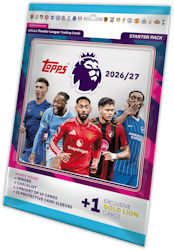
Topps Flagship Premier League 2026/27 Trading Cards Online Starter Pack
The Online exclusive Starter Pack is the perfect way to kick off your Topps Flagship Premier League 2026/27 collection, bringing together stars, rookies, inserts, and exciting chase cards in one accessible format.
View product
World Club Football Records 2026
Fully revised and updated, World Club Football Records is a net-bulging collection of standout football records, stats and trivia from around the globe.
View product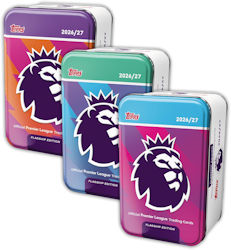
Topps Flagship Premier League 2026/27 Trading Cards Super Tin Bundle
The Super Tin Bundle contains all 3 Super Tins in the collection. Each Super Tin contains 50 cards including 3 On-Fire cards and 2 exclusive Blue Voltage parallels!
View product
As an Amazon Associate I earn from qualifying purchases.