League One
Sheffield Wednesday
League Position Tracker
Last 5 Results
Sheffield Wednesday Player Stats
Top 10 Attacking Players
#
Player
Goals
Assists
Points
1
J. Lowe
4
1
13
2
L. Barry
3
1
10
3
C. Slattery
2
1
7
4
M. Burstow
1
1
4
5
G. Otegbayo
1
0
3
6
B. Bannan
0
1
1
7
K. Morrison
0
1
1
Top 10 Disciplinary Records
#
Player
Yellow
Red
Points
1
C. Slattery
2
0
2
2
B. Bannan
1
0
1
3
B. Mitchell
1
0
1
4
G. Otegbayo
1
0
1
5
S. Swinkels
1
0
1
Introduction
Sheffield Wednesday Football Club, known affectionately as the Owls, is one of the oldest and most storied football clubs in England. Established in 1867, the club is based in Sheffield, South Yorkshire, and is deeply ingrained in the local community. With a rich history and a loyal fanbase, Wednesday boasts a strong reputation in English football, particularly known for its passionate supporters and competitive spirit.
History
Sheffield Wednesday was founded in the wake of the city’s industrial revolution, originally as a cricket club for local steelworkers. As football gained popularity, the club transitioned to focusing on the beautiful game. The name "Wednesday" stems from the day of the week the team was founded. By the late 19th century, the club was making its mark, achieving its first significant success in the FA Cup, winning it in 1896.
The early 20th century saw further growth, with the club winning its first league title in 1903. However, the interwar period was less fruitful, leading to fluctuating fortunes until the post-war era. A notable highlight during this period was the 1935 FA Cup victory, solidifying the club’s status in English football.
Stadium
Sheffield Wednesday plays its home matches at Hillsborough Stadium, located in the Owlerton area of Sheffield. Opened in 1899, the stadium has undergone several renovations and expansions over the years. With a current capacity of approximately 39,732, Hillsborough is renowned for its traditional design and local character. The stadium features an iconic grandstand, which stands as a testament to the club’s long-standing football heritage. Hillsborough has also hosted numerous significant matches, including FA Cup semi-finals and international fixtures, making it a vital part of the club’s identity.
Achievements
Sheffield Wednesday has an impressive list of accomplishments, with significant triumphs in both domestic and international competitions. The club has won the FA Cup three times, securing victories in 1896, 1907, and 1935. In terms of league success, Wednesday has claimed the Football League First Division title four times, with their last triumph occurring in 1930. Additionally, the club lifted the Football League Cup in 1991, further showcasing its competitiveness at the national level.
The club’s participation in European competition is also memorable; they reached the final of the UEFA Cup (now known as the UEFA Europa League) in 1993, where they were narrowly defeated by the Dutch side, Ajax. These achievements highlight the club’s historical significance in the context of English football.
Famous Players & Managers
Over the years, several legendary figures have graced the pitch at Hillsborough, contributing to the club’s illustrious history. Notable players include the likes of Derek Dooley, a prolific forward during the 1950s, and the charismatic Playmaker, David Hirst, who became a fan favourite in the late ’80s and early ’90s. More recently, players like Chris Waddle and an array of talented internationals have adorned the team’s colours.
In terms of management, figures such as Howard Wilkinson, who led the club to its last top-flight title, and Ron Atkinson, known for his impactful tenure in the 1980s, are celebrated within the club’s history. Their contributions have not only brought success but also shaped the culture and ethos of Sheffield Wednesday.
Supporters & Culture
The supporters of Sheffield Wednesday are known for their unwavering loyalty and enthusiasm. The club boasts a diverse fanbase that spans generations, uniting communities and families alike. Matchdays at Hillsborough are vibrant occasions, steeped in tradition and camaraderie among fans.
Rivalries also play a crucial role in the club’s culture, most notably the Steel City Derby against local rivals Sheffield United. This fixture is one of the fiercest in English football, characterised by passionate encounters and a palpable atmosphere.
Sheffield Wednesday upholds values of community, dedication, and resilience, reflecting the industrial heritage of its home city. The club’s motto, "Pride, Passion, and Purpose," encapsulates its mission to represent the spirit of Sheffield and its supporters.
In conclusion, Sheffield Wednesday Football Club stands as a beacon of rich history and tradition in English football. With a passionate fanbase and a commitment to excellence, the club continues to be a prominent figure in the landscape of British sport.
Recommended Football Products

Topps Flagship Premier League 2026/27 Trading Cards Full Box
The Full Box contains 28 packets (10 cards per packet). Each box delivers the full Topps Flagship Premier League 2026/27 collecting experience, packed with stars, rookies, rare inserts, and exciting hits.
View product
Topps Flagship Premier League 2026/27 Trading Cards Mega Multipack
The Mega Multupack contains 40 cards including 2 exclusive Purple Voltage parallels and an exclusive Vibes Insert.
View product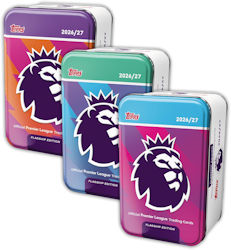
Topps Flagship Premier League 2026/27 Trading Cards Super Tin Bundle
The Super Tin Bundle contains all 3 Super Tins in the collection. Each Super Tin contains 50 cards including 3 On-Fire cards and 2 exclusive Blue Voltage parallels!
View productSee all Sheffield Wednesday Football Club products
As an Amazon Associate I earn from qualifying purchases.