Premier League
Everton
League Position Tracker
Last 5 Results
Everton Player Stats
Top 10 Attacking Players
#
Player
Goals
Assists
Points
1
Ainsley Maitland-Niles
1
0
3
2
James Tarkowski
1
0
3
3
Kiernan Dewsbury-Hall
1
0
3
4
Thierno Barry
1
0
3
5
Tyrique George
1
0
3
6
Harrison Armstrong
0
1
1
7
Hayden Hackney
0
1
1
Top 10 Disciplinary Records
#
Player
Yellow
Red
Points
1
James Garner
2
0
2
2
Brennan Johnson
1
0
1
3
Carlos Alcaraz Durán
1
0
1
4
Harrison Armstrong
1
0
1
5
Kiernan Dewsbury-Hall
1
0
1
6
Merlin Röhl
1
0
1
Introduction
Everton Football Club, established in 1878, is one of the oldest and most storied football clubs in England. Based in Liverpool, the club has developed a rich tradition and a strong identity over its long history. Often referred to as "The Toffees," Everton is known for its loyal fanbase, competitive spirit, and commitment to cultivating local talent. The club has earned a reputation for being both a Premier League fixture and a bastion of community pride.
History
Everton was founded in 1878 under the name St. Domingo’s FC, primarily as a team for members of St. Domingo’s church. The club changed its name to Everton in 1879, reflecting its geographical roots. The club quickly established itself, claiming its first major trophy in 1890 with the FA Cup. The early 20th century saw rapid growth, including a period of success in the 1920s, when Everton won league titles and solidified its place among top clubs in the nation. Key moments in its history include the establishment of Goodison Park in 1892, making it the first stadium in the world purpose-built for football.
Stadium
Everton’s home ground, Goodison Park, is located in the Walton area of Liverpool. The stadium opened its doors in 1892 and has a current capacity of approximately 39,000 spectators. Known for its intimate atmosphere, Goodison Park features three main stands: the Park End, the Gwladys Street End, and the Bullens Road Stand. The stadium has witnessed countless memorable matches and boasts a rich architectural heritage, making it one of the iconic venues in football. Plans for a new stadium at Bramley-Moore Dock are underway, aimed at modernising the club’s facilities while maintaining its historical legacy.
Achievements
Everton has an extensive trophy cabinet, featuring nine league titles and five FA Cups. The club achieved its first league championship in the 1890-91 season and has enjoyed success across multiple eras. Enhanced recognition came with victories in the 1980s when Everton won the league title in 1985 and secured a European Cup Winners’ Cup in the same year. The club’s remarkable consistency has made it one of only a few clubs to have played continuously in the top tier of English football since its formation, a testament to its enduring competitiveness.
Famous Players & Managers
Over the years, Everton has been home to a myriad of footballing legends. Notable players include Dixie Dean, who is revered for scoring 383 goals for the club in just 433 appearances during the 1920s and 1930s. More contemporary icons include Alan Ball, who made a significant impact in the 1960s, and more recently, players such as Wayne Rooney, who emerged from the club’s youth system to become one of England’s most decorated strikers. In terms of management, figures like Howard Kendall, who led the club to multiple titles during the 1980s, and David Moyes, known for stabilising the club in the Premier League, are celebrated for their substantial contributions to Everton’s legacy.
Supporters & Culture
The Everton fanbase, known as the "Toffees," is one of the most passionate in English football. The supporters share a deep connection with the club, often gathering in good numbers at Goodison Park and participating in a rich tradition of songs and chants. The club is also known for its close ties to the community and commitment to charitable initiatives, including the Everton in the Community programme, which aims to improve the lives of local residents. Everton’s long-standing rivalry with Liverpool, known as the Merseyside Derby, adds an extra dimension to the club’s identity, with matches often displaying intense competition and community pride.
In summary, Everton Football Club stands as a significant pillar in the history of English football, marked by a legacy of achievements, community engagement, and an unwavering fanbase. Its enduring presence in the footballing world continues to be a source of pride for supporters and a testament to the club’s rich heritage.
Recommended Football Products
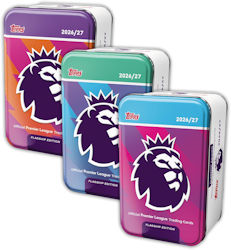
Topps Flagship Premier League 2026/27 Trading Cards Super Tin Bundle
The Super Tin Bundle contains all 3 Super Tins in the collection. Each Super Tin contains 50 cards including 3 On-Fire cards and 2 exclusive Blue Voltage parallels!
View product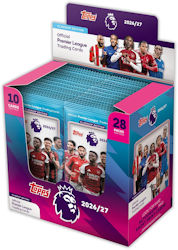
Topps Flagship Premier League 2026/27 Trading Cards Full Box
The Full Box contains 28 packets (10 cards per packet). Each box delivers the full Topps Flagship Premier League 2026/27 collecting experience, packed with stars, rookies, rare inserts, and exciting hits.
View product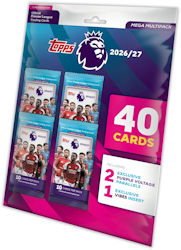
Topps Flagship Premier League 2026/27 Trading Cards Mega Multipack
The Mega Multupack contains 40 cards including 2 exclusive Purple Voltage parallels and an exclusive Vibes Insert.
View productSee all Everton Football Club products
As an Amazon Associate I earn from qualifying purchases.