EFL League One
Introduction
EFL League One is the third level of men’s league football in England, sitting below the EFL Championship and above EFL League Two. Despite its name, it occupies the third tier because the Premier League sits outside the three divisions administered by the English Football League.
The competition contains a mixture of former top-flight clubs, ambitious regional teams, recently relegated Championship sides and clubs continuing their rise through the football pyramid. Its 46-match season produces promotion races, play-off battles and relegation contests that can remain undecided until the final weekend.
For some clubs, League One is a route back towards the Premier League. For others, reaching the division represents an important achievement in its own right. This variety of histories, resources and ambitions helps make League One one of the most unpredictable competitions in English football.
Origins and History
The name League One was introduced in 2004, but the division’s place in English football can be traced through several earlier versions of the Football League.
The Football League established a Third Division in 1920, initially consisting mainly of clubs from the Southern League. A northern section was added the following year, creating Third Division North and Third Division South. These regional divisions continued until 1958, when they were reorganised into national Third and Fourth Divisions.
When the leading First Division clubs left the Football League to form the Premier League in 1992, the divisions below were renamed. The old Third Division became the Football League Second Division, although it remained the third level of the national league system.
Another reorganisation followed in 2004. The First Division became the Championship, the Second Division became League One and the Third Division became League Two. Luton Town became the first champions under the League One name, winning the division in 2004–05.
The Football League adopted the EFL identity in 2016, establishing EFL League One as the competition’s official name.
League Format
League One contains 24 clubs. Each team plays every other club twice, once at home and once away.
This produces 46 league matches for every club and 552 regular-season fixtures across the division. The season normally runs from August until May.
- Win: 3 points
- Draw: 1 point
- Defeat: 0 points
Clubs are ranked primarily by the number of points they have earned. If teams finish level on points, goal difference and goals scored are used to separate them, followed by the additional criteria contained in the EFL regulations.
The long season places considerable demands on players and managers. League fixtures are combined with matches in the FA Cup, EFL Cup and EFL Trophy, while postponements and rearranged games can create congested periods later in the campaign.
Promotion and the League One Playoffs
Three League One clubs are promoted to the EFL Championship at the end of each season.
The teams finishing first and second earn automatic promotion. The clubs placed third, fourth, fifth and sixth enter the League One play-offs to determine the third promoted team.
The semi-final pairings are:
- Third place against sixth place
- Fourth place against fifth place
Each semi-final is played over two legs, with the winner decided by the aggregate score. Extra time and penalties may be required if the teams remain level after the second leg.
The two successful semi-finalists then meet in the League One Play-Off Final at Wembley Stadium. The final must be decided on the day, with extra time and a penalty shootout used if necessary.
Unlike the Championship, which expanded its play-offs to six participating clubs from 2026–27, League One retains the traditional four-team format.
Relegation to League Two
The four clubs finishing at the bottom of League One are relegated to EFL League Two. This is one more relegation place than in either the Premier League or Championship.
They are replaced by four promoted League Two clubs. The top three teams in League Two receive automatic promotion, while the clubs finishing fourth to seventh compete for the final place through the League Two play-offs.
The four relegation places can keep a large number of League One clubs involved in the battle for survival. A relatively small gap may separate mid-table security from serious danger, particularly during the closing weeks of the season.
Relegation brings reduced income and exposure, while escaping League Two can prove difficult. Some relegated clubs return quickly, but others face several seasons in the fourth tier or fall even further through the football pyramid.
Memorable Clubs and Campaigns
League One has produced dominant champions, unexpected promotion winners and several remarkable rebuilding stories.
Luton Town won the first League One title in 2004–05. Leicester City followed a few years later, responding to relegation from the Championship by winning the division in 2008–09.
Norwich City achieved a similar immediate recovery in 2009–10. After beginning the season with a 7–1 home defeat against Colchester United, Norwich recovered to win the title with 95 points.
Wolverhampton Wanderers collected 103 points in 2013–14, setting a League One record that stood for more than a decade. Sheffield United reached 100 points in 2016–17, while Plymouth Argyle won an exceptionally competitive 2022–23 title race with 101 points.
Coventry City were declared champions in 2019–20 after the regular season was curtailed during the COVID-19 pandemic. Final positions were calculated using an unweighted points-per-game system.
Portsmouth won the title in 2023–24, ending a 12-year absence from the Championship. Birmingham City then produced a record-breaking 2024–25 campaign, earning 111 points and recording 34 victories. Both totals established new records for a single English Football League season.
Lincoln City became League One champions in 2025–26 with 103 points, earning promotion to the second tier for the first time in 65 years.
Notable Players and Managers
League One has provided a platform for prolific goalscorers, experienced professionals and young players preparing for careers at a higher level.
Jordan Rhodes scored 36 league goals for Huddersfield Town in 2011–12, the highest individual total recorded during a League One season since the competition adopted its current name. Other prominent goalscorers have included Billy Sharp, Rickie Lambert, Craig Mackail-Smith, Simon Cox, Ivan Toney and Jonson Clarke-Harris.
The division has also played an important role in the development of players who later competed in the Premier League or international football. Harry Maguire developed at Sheffield United, Dele Alli emerged at Milton Keynes Dons, James Maddison began his career with Coventry City and Ivan Toney established himself as a prolific Football League striker with Peterborough United.
Managers including Nigel Pearson, Chris Hughton, Gus Poyet, Kenny Jackett, Chris Wilder, Mark Robins, Steven Schumacher, John Mousinho, Chris Davies and Michael Skubala have led clubs to League One titles.
Success often requires a balance between technical ability and the resilience needed to negotiate a crowded, physically demanding season.
Cup Competitions
League One clubs compete in three major domestic cup competitions.
They enter the FA Cup in the first round proper, giving them the opportunity to face teams from across the football pyramid. A successful run can generate substantial income and occasionally produce a high-profile meeting with Premier League opposition.
League One clubs also enter the EFL Cup, where they may meet Championship or Premier League teams during the early rounds.
The EFL Trophy is primarily contested by clubs from League One and League Two, alongside invited under-21 teams from higher divisions. The competition offers a possible route to a Wembley final, although the inclusion of academy sides has remained controversial among some supporters.
Financial Pressure and Broadcasting
League One clubs operate with a wide range of budgets. Recently relegated Championship teams may retain larger squads and greater commercial income, while other clubs depend more heavily on gate receipts, local sponsorship and player development.
Promotion to the Championship can significantly increase broadcasting income, attendances and commercial opportunities. This encourages ambitious investment, but overspending in pursuit of promotion can place a club’s long-term financial health at risk.
Under the EFL’s domestic broadcasting agreement running from 2024–25 to 2028–29, 248 League One matches are available for live broadcast each season through Sky Sports and Sky Sports+.
The increased coverage allows more supporters to watch their clubs, but changes to traditional kick-off times can create difficulties for travelling fans.
Criticism and Controversy
League One’s competitive balance is part of its attraction, but the division also faces several recurring concerns.
- Financial differences between clubs can be considerable.
- Teams may overspend while pursuing promotion.
- Four relegation places leave many clubs vulnerable.
- The 46-match season creates fixture congestion and heavy physical demands.
- Broadcast selections can inconvenience supporters.
- Ownership disputes and financial breaches have caused instability at some clubs.
- The involvement of higher-division academy teams in the EFL Trophy remains unpopular with some fans.
The movement of clubs between divisions can also create sudden financial pressure. A team relegated from the Championship must reduce its costs, while a newly promoted League Two side may need to strengthen without abandoning the approach that earned promotion.
League One Champions by Season
League One Champions by Season
| Season | Champions |
|---|---|
| 2004–05 | Luton Town |
| 2005–06 | Southend United |
| 2006–07 | Scunthorpe United |
| 2007–08 | Swansea City |
| 2008–09 | Leicester City |
| 2009–10 | Norwich City |
| 2010–11 | Brighton & Hove Albion |
| 2011–12 | Charlton Athletic |
| 2012–13 | Doncaster Rovers |
| 2013–14 | Wolverhampton Wanderers |
| 2014–15 | Bristol City |
| 2015–16 | Wigan Athletic |
| 2016–17 | Sheffield United |
| 2017–18 | Wigan Athletic |
| 2018–19 | Luton Town |
| 2019–20 | Coventry City |
| 2020–21 | Hull City |
| 2021–22 | Wigan Athletic |
| 2022–23 | Plymouth Argyle |
| 2023–24 | Portsmouth |
| 2024–25 | Birmingham City |
| 2025–26 | Lincoln City |
League One Facts and Records
- First champions under the League One name: Luton Town, 2004–05
- Highest points total: Birmingham City, 111 in 2024–25
- Most victories in one EFL season: Birmingham City, 34 in 2024–25
- Most goals by a player in one League One season: Jordan Rhodes, 36 for Huddersfield Town in 2011–12
- Most goals by a team in one League One season: Peterborough United, 106 in 2010–11
- Regular-season matches: 552
- League matches played by each club: 46
- Automatic promotion places: 2
- League One play-off places: 4
- Relegation places: 4
- First League One season decided using points per game: 2019–20
The Enduring Appeal of League One
EFL League One brings together clubs with vastly different histories, resources and expectations. Former top-flight teams may share the division with clubs experiencing third-tier football for the first time, while promotion and relegation continually reshape the competition.
Its long schedule rewards consistency, squad depth and resilience. A strong start provides no guarantee of promotion, while a late run of form can transform a season that once appeared destined for disappointment.
From traditional grounds and regional rivalries to dramatic play-off matches at Wembley, League One retains a strong identity within English football. It is more than a staging point between the Championship and League Two. It is a fiercely contested national competition with its own history, records and memorable campaigns.
Recommended Football Products

World Club Football Records 2026
Fully revised and updated, World Club Football Records is a net-bulging collection of standout football records, stats and trivia from around the globe.
View product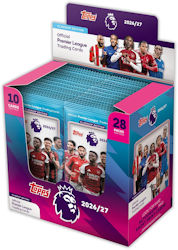
Topps Flagship Premier League 2026/27 Trading Cards Full Box
The Full Box contains 28 packets (10 cards per packet). Each box delivers the full Topps Flagship Premier League 2026/27 collecting experience, packed with stars, rookies, rare inserts, and exciting hits.
View product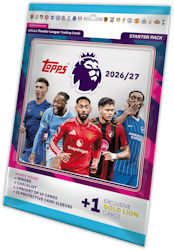
Topps Flagship Premier League 2026/27 Trading Cards Online Starter Pack
The Online exclusive Starter Pack is the perfect way to kick off your Topps Flagship Premier League 2026/27 collection, bringing together stars, rookies, inserts, and exciting chase cards in one accessible format.
View product
As an Amazon Associate I earn from qualifying purchases.