Introduction
The National League is the fifth level of men’s league football in England. It sits immediately below EFL League Two and forms the highest division of the National League System, commonly known as non-league football.
Despite that description, many National League clubs operate on a full-time professional basis. The division regularly includes former Football League teams, ambitious semi-professional clubs and teams that have climbed through the regional leagues.
The National League provides the bridge between the English Football League and the divisions below. Its champions earn automatic promotion to League Two, while another club can rise through the play-offs. At the opposite end, four teams are relegated into National League North or National League South.
Only two promotion places are available, making the National League particularly difficult to escape. Clubs can accumulate impressive points totals and still face the uncertainty of the play-offs.
Origins and History
The competition was established in 1979 as the Alliance Premier League. It brought leading clubs from the Northern Premier League and Southern League together in a single national division immediately below the Football League.
Before its creation, the strongest non-league clubs competed in separate regional competitions. The Alliance Premier League established a clearer national structure and strengthened calls for direct promotion into the Football League.
Altrincham became the competition’s first champions in 1979–80 and retained the title the following season. However, winning the league did not initially guarantee promotion. Clubs seeking Football League membership had to apply through a voting system involving existing league teams.
Automatic promotion and relegation between the competition and the Football League were introduced for the 1986–87 season. Scarborough became the first club promoted under the new arrangement.
The division later became known as the Football Conference and then Conference Premier. In 2004, the creation of Conference North and Conference South established a three-division structure beneath it.
The competition adopted the National League name in 2015. Cheltenham Town became the first champions under the new identity, winning the division in 2015–16.
League Format
The National League contains 24 clubs. Each team plays every other club twice, once at home and once away.
This produces 46 league matches for each club and 552 regular-season fixtures across the division. The season normally runs from August until April, followed by the promotion play-offs.
- Win: 3 points
- Draw: 1 point
- Defeat: 0 points
Clubs are ranked primarily by the number of points they have earned. If teams finish level on points, goal difference and goals scored are used to separate them, followed by the additional criteria contained in the competition rules.
The division’s national footprint creates demanding travel requirements. Clubs may face long midweek journeys while also competing in the FA Cup, FA Trophy and other competitions.
Promotion to EFL League Two
Two National League clubs are promoted to EFL League Two at the end of each season.
The team finishing first is crowned champion and receives automatic promotion. The clubs placed second to seventh enter the promotion play-offs to determine the second promoted team.
The champions avoid the uncertainty of the play-offs, making first place particularly valuable. A club finishing second can collect an exceptional number of points and still fail to win promotion.
Promoted clubs must satisfy the EFL’s membership, financial and stadium requirements. Promotion brings access to greater central funding, increased exposure and the prestige associated with Football League membership.
For clubs returning after relegation, promotion may end years of frustration. For newcomers, it can represent the first EFL membership in their history.
The National League Play-Offs
Six clubs compete in the National League play-offs.
The teams finishing second and third advance directly to the semi-finals. The clubs placed fourth to seventh enter two single-match eliminators:
- Fourth place plays seventh place
- Fifth place plays sixth place
Each eliminator is staged at the ground of the higher-placed club. The winners progress to single-match semi-finals against the teams that finished second and third.
The higher-placed clubs receive home advantage in the semi-finals. If a match is level after 90 minutes, extra time and penalties can be used to determine the winner.
The two semi-final winners meet in the National League Promotion Final. The winner receives the second promotion place in EFL League Two.
This format rewards the teams finishing second and third while allowing clubs as low as seventh to remain in contention for promotion.
Relegation to National League North and South
The four clubs finishing at the bottom of the National League are relegated to National League North or National League South.
Their destination is determined geographically rather than by a fixed connection between finishing positions and divisions. The Football Association allocates clubs to the North or South competition while attempting to maintain a workable geographical balance.
The four relegated clubs are replaced by:
- The National League North champions
- The National League North play-off winners
- The National League South champions
- The National League South play-off winners
Relegation can create significant financial and logistical consequences. Clubs may lose national exposure, face reduced broadcasting income and encounter a different set of regional opponents.
Returning is not straightforward. National League North and South each contain ambitious clubs, former EFL teams and well-supported sides seeking promotion of their own.
Memorable Clubs and Campaigns
The National League has produced remarkable promotion stories, record-breaking seasons and fierce title races.
Cheltenham Town became the first champions under the National League name in 2015–16. Lincoln City followed in 2016–17, combining their title-winning campaign with a memorable run to the FA Cup quarter-finals.
Leyton Orient won the division in 2018–19 after recovering from financial problems that had threatened the club’s future. Barrow were declared champions in 2019–20 after the regular season was curtailed during the COVID-19 pandemic and positions were determined using points per game.
Sutton United earned their first promotion to the EFL by winning the 2020–21 title. Stockport County followed in 2021–22, ending an 11-year absence from the Football League.
The 2022–23 campaign produced one of the most extraordinary title races in the competition’s history. Wrexham collected a record 111 points, while runners-up Notts County earned 107. Notts County eventually joined Wrexham in League Two by winning the play-offs.
Chesterfield won the title in 2023–24, followed by Barnet in 2024–25. York City became champions in 2025–26, securing a return to the EFL after a decade outside the Football League.
Notable Players and Managers
The National League has featured experienced professionals, prolific non-league goalscorers and players beginning journeys towards the highest levels of the game.
Jamie Vardy scored regularly for Fleetwood Town before moving directly from non-league football to Leicester City. Andre Gray impressed with Luton Town before establishing himself in the Championship and Premier League.
Macaulay Langstaff scored 42 league goals for Notts County in 2022–23, setting a National League single-season record. Other notable goalscorers have included Ricky Miller, Paul Mullin, Ollie Palmer, James Norwood, Danny Rowe and Ollie Pearce.
Managers including Gary Johnson, Danny Cowley, John Still, Martin Allen, Phil Parkinson, Paul Cook, Dean Brennan and Stuart Maynard have led clubs to National League success.
The division presents managers with an unusual combination of challenges. Some clubs possess EFL-sized budgets and support, while others operate with smaller squads and limited resources. Recruitment must account for quality, fitness, travel and the relentless nature of a 46-match season.
Cup Competitions
National League clubs enter the FA Cup in the fourth qualifying round. Victory at that stage earns a place in the first round proper alongside clubs from League One and League Two.
A successful FA Cup run can provide valuable prize money and broadcasting income. It can also produce high-profile fixtures against clubs from the Premier League or Championship during the later rounds.
National League clubs compete in the FA Trophy, the leading knockout competition for teams from the first four levels of the National League System. Its final is traditionally staged at Wembley.
A selection of clubs also participates in the National League Cup, a midweek competition involving National League first teams and under-21 sides from Premier League 2.
Financial Pressure and Broadcasting
National League clubs operate with considerable financial differences. Some retain the infrastructure, support and commercial income of established EFL teams, while others have progressed from regional football with more modest resources.
National travel, professional playing squads and stadium requirements create substantial costs. Clubs may spend heavily in pursuit of one of only two promotion places, increasing the risk of financial difficulty if promotion is not achieved.
Gate receipts, local sponsorship, commercial partnerships and cup runs remain important sources of income. Well-supported clubs can attract crowds comparable with teams in League Two and, occasionally, League One.
A long-term broadcasting agreement with DAZN began in 2024 and runs until 2031. The arrangement makes National League matches available across television, mobile and online platforms in the UK and internationally.
Criticism and Controversy
Several issues continue to generate debate around the National League:
- Only two clubs are promoted to League Two.
- Four clubs are relegated into National League North or South.
- Financial differences between clubs can be substantial.
- Some teams spend heavily in pursuit of promotion.
- Stadium requirements may complicate promotion from the regional divisions.
- Broadcast selections can inconvenience travelling supporters.
- Long-distance journeys create significant costs.
- Financial problems and ownership disputes have threatened several historic clubs.
The National League has campaigned for three promotion places between itself and League Two. Supporters of the proposal argue that three-up, three-down would create a fairer connection between the EFL and the wider football pyramid.
Opponents may be concerned about the effect on League Two clubs, but the standard and increasingly professional nature of the National League has ensured that the debate remains active.
National League Champions Since 2015
National League Champions Since 2015
| Season | Champions |
|---|---|
| 2015–16 | Cheltenham Town |
| 2016–17 | Lincoln City |
| 2017–18 | Macclesfield Town |
| 2018–19 | Leyton Orient |
| 2019–20 | Barrow |
| 2020–21 | Sutton United |
| 2021–22 | Stockport County |
| 2022–23 | Wrexham |
| 2023–24 | Chesterfield |
| 2024–25 | Barnet |
| 2025–26 | York City |
National League Facts and Records
- Original competition founded: 1979
- Original name: Alliance Premier League
- First champions: Altrincham, 1979–80
- Automatic promotion to the Football League introduced: 1986–87
- First automatically promoted champions: Scarborough
- National League name introduced: 2015
- First champions under the National League name: Cheltenham Town, 2015–16
- Latest champions: York City, 2025–26
- Most points in one season: Wrexham, 111 in 2022–23
- Most goals by a player in one season: Macaulay Langstaff, 42 for Notts County in 2022–23
- Most top-division National League titles: Barnet, four
- Regular-season matches: 552
- League matches played by each club: 46
- Automatic promotion places: 1
- Play-off places: 6
- Relegation places: 4
The Enduring Appeal of the National League
The National League occupies one of the most fascinating positions in English football. It is officially part of the non-league system, yet many of its clubs possess professional squads, substantial support and long Football League histories.
Its single automatic promotion place places enormous value on winning the championship. The play-offs offer a second route into League Two, but they can be unforgiving for clubs that have performed consistently across 46 matches.
At the other end of the table, relegation into regional football can reshape a club’s finances, travel and future ambitions.
The mixture of former EFL teams, established non-league clubs and ambitious newcomers gives the division a distinctive identity. It is both the summit of non-league football and the final step on the road into the English Football League.
Recommended Football Products

World Club Football Records 2026
Fully revised and updated, World Club Football Records is a net-bulging collection of standout football records, stats and trivia from around the globe.
View product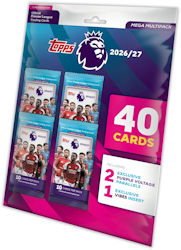
Topps Flagship Premier League 2026/27 Trading Cards Mega Multipack
The Mega Multupack contains 40 cards including 2 exclusive Purple Voltage parallels and an exclusive Vibes Insert.
View product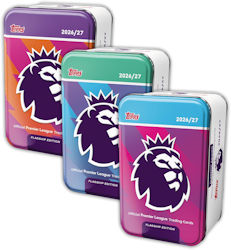
Topps Flagship Premier League 2026/27 Trading Cards Super Tin Bundle
The Super Tin Bundle contains all 3 Super Tins in the collection. Each Super Tin contains 50 cards including 3 On-Fire cards and 2 exclusive Blue Voltage parallels!
View product
As an Amazon Associate I earn from qualifying purchases.