Big Deals, Major Rebuilds and the UK Football Verdict
The summer transfer window has delivered more than a collection of expensive signings. Across English football, established teams have been reshaped, familiar partnerships broken up and substantial responsibility handed to a new generation of players.
Manchester City’s midfield overhaul, Chelsea’s extensive trading and major changes at Aston Villa and Newcastle United have dominated the headlines. Elsewhere, Liverpool secured a marquee attacking addition, Manchester United rebuilt their midfield and Tottenham strengthened across several positions.
This report covers the main business in men’s football following the English deadline on Tuesday 1 September. Scotland’s window closes at 5pm BST on Thursday 3 September, so the Scottish section represents a snapshot of confirmed transfers rather than a final accounting of the window. Transfer deadline details.
Another extraordinary summer of spending
Premier League clubs spent approximately £3.46 billion, according to Reuters, setting another summer record. Enzo Fernández’s move from Chelsea to Manchester City provided the most expensive individual headline, with the reported £125 million fee matching the British transfer record. Reuters’ spending report.
Four deals illustrate the scale of the market:
| Player | Transfer | Reported fee |
|---|---|---|
| Enzo Fernández | Chelsea to Manchester City | £125m |
| Morgan Rogers | Aston Villa to Chelsea | £117m |
| Elliot Anderson | Nottingham Forest to Manchester City | £116m |
| Bradley Barcola | Paris Saint-Germain to Liverpool | Up to £123m |
The first three figures were reported by Reuters. Barcola’s package includes potential add-ons, as detailed by Sky Sports.
These are reported figures, not a uniform set of officially disclosed payments. Guaranteed fees and maximum packages should not be treated as directly interchangeable.
The striking feature is how much of the headline business involved Premier League clubs buying from one another. Those transactions do more than strengthen the purchaser: they leave another English club needing to replace an important player, often within the same crowded market.
Manchester City: a new midfield takes shape
City’s summer was defined by substantial change in the centre of the pitch.
Fernández joined Elliot Anderson and Ayyoub Bouaddi in a reconstructed midfield, while Iliman Ndiaye arrived from Everton and Allan came in from Palmeiras to expand the attacking options.
The departures were equally significant. Rodri moved to Barcelona, Bernardo Silva joined Real Madrid and Tijjani Reijnders headed to Al-Qadsiah. Nico González joined Newcastle, while Savinho and Omar Marmoush moved to Tottenham. This was a change in the composition of the squad, not simply an exercise in adding depth. Premier League deadline-day review.
Our assessment is that City have given themselves considerable scope to develop a different midfield combination. The immediate challenge is replacing the understanding and control that experienced players provide. Even exceptional individual talent needs a functioning structure around it.
City will attract attention because of the money involved, but the more revealing test will be how quickly the new midfield establishes reliable relationships.
Chelsea: Rogers leads another extensive reshuffle
Morgan Rogers was Chelsea’s headline arrival, joining from Aston Villa alongside goalkeeper Emiliano Martínez.
Chelsea also recruited Maxence Lacroix, Marco Palestra and Valentín Barco, while Geovany Quenda arrived following an agreement reached previously. Jordan Henderson and Danny Welbeck added experience to a group containing several younger acquisitions.
The outgoing list was substantial. Alongside Fernández’s departure, Andrey Santos joined Manchester United, Nicolas Jackson moved to Villa and Liam Delap signed for Nottingham Forest. Alejandro Garnacho joined Villa on loan, while Tosin Adarabioyo moved permanently to Tottenham and Mykhailo Mudryk joined Spurs on loan. Chelsea’s confirmed summer business.
Rogers gives Chelsea a major new attacking option, but the window should be judged across the whole team. Replacing Fernández’s contribution while accommodating new players in several positions is a significant task.
Our view is that Chelsea’s strongest argument for a successful window lies in the range of their additions. The uncertainty is whether that variety translates into a settled side quickly enough.
Arsenal: reinforcement through the spine
Arsenal strengthened midfield and defence with Bruno Guimarães from Newcastle and Ezri Konsa from Aston Villa.
Piero Hincapié’s loan became permanent, Christos Tzolis arrived from Club Brugge and Illan Meslier joined on a free transfer from Leeds United. The additions offered a combination of Premier League experience, defensive continuity and another attacking option. Arsenal’s summer transfer list.
Guimarães and Konsa are particularly notable because neither needs an introduction to the demands of English football. That does not eliminate the adjustment period, but it changes the nature of the risk compared with recruiting players unfamiliar with the league.
Our assessment is that Arsenal’s business prioritised improving the quality and flexibility of an established squad. The important measure will be whether those options help sustain performances through rotation, injuries and a demanding fixture schedule.
Liverpool: Barcola provides the headline addition
Liverpool completed the signing of Bradley Barcola from Paris Saint-Germain on a long-term contract. His arrival supplied the major attacking deal that had occupied much of the closing stages of the window. Liverpool’s signing announcement.
Víctor Muñoz also joined, while Jérémy Jacquet arrived following an agreement reached earlier in the year. Ronald Araújo came from Barcelona on loan, adding another defensive option. Liverpool’s recruitment therefore extended beyond the most expensive name, addressing both the attacking and defensive groups. Liverpool’s summer transfer summary.
Barcola’s fee will inevitably shape expectations. It should not, however, turn every early appearance into a verdict on the entire investment.
Our view is that Liverpool’s window offers considerable attacking promise. The broader assessment must also consider defensive availability and balance, rather than assuming that a major forward signing resolves every area of the team.
Manchester United: midfield becomes the priority
Manchester United concentrated significant attention on midfield, bringing in Andrey Santos, Youri Tielemans and Carlos Baleba.
The three arrivals gave United a substantially different set of options in one department, making midfield reconstruction the clearest theme of their recruitment. Manchester United’s summer arrivals.
Rather than assessing the signings as isolated names, the useful question is how their responsibilities will be divided. Who advances possession? Who protects the defence when the team attacks? Which combinations provide control against stronger opponents?
Our assessment is that United’s business has a recognisable purpose. Its success will depend on the balance of the partnerships, not simply whether the three newcomers all feature together.
The window provides an opportunity to establish a more dependable midfield structure. Turning that opportunity into consistent performances is the next stage.
Tottenham: significant changes across the team
Tottenham’s recruitment extended through midfield, defence and attack.
Sandro Tonali, Mateus Fernandes and Jan Paul van Hecke were among the additions, alongside experienced arrivals including Andy Robertson and Marcos Senesi. Spurs also recruited Savinho from Manchester City and brought in Omar Marmoush on a season-long loan containing an obligation to buy. Tottenham’s major summer additions.
The distinction between Marmoush’s arrangement and an ordinary temporary loan matters: an obligation creates a different longer-term commitment from an optional purchase.
Our view is that Tottenham’s window should be assessed as a broad squad rebuild. There are new combinations to establish throughout the side, with considerable competition for places.
That creates possibilities, but also places a premium on clear selection and defined roles. The value of a deeper squad depends on how effectively it is used.
Aston Villa: replacing an established core
Villa experienced one of the most consequential summers of change.
Ollie Watkins left for Al-Hilal after six years at the club, removing an established focal point from the attack. Reuters’ confirmation of Watkins’ departure.
Rogers, Martínez, Konsa and Tielemans also departed, while Nicolas Jackson arrived permanently from Chelsea and reunited with Unai Emery. The reported Jackson agreement comprises an initial £47.5 million with further potential payments. Reuters’ Jackson report.
Ibrahim Mbaye and Taylor Harwood-Bellis completed the sequence of ten summer arrivals, adding another young attacking option and defensive reinforcement. Villa’s closing transfer business.
Our assessment is that Villa face a particularly demanding integration job. Replacing several established players at once means reconstructing partnerships as well as filling positions.
There is scope for the new group to develop, but judging every arrival against the player who departed would overlook the scale of the collective change.
Newcastle United: a different squad profile
Newcastle’s window brought major departures, including Bruno Guimarães, Sandro Tonali and Anthony Gordon.
Matias Fernández-Pardo arrived from Lille in a deal reported at approximately £51 million, becoming another important addition to a reshaped squad. His arrival followed recruitment including Nico González, Amar Dedić and younger players such as Bazoumana Touré and Sean Steur. Sky Sports’ Newcastle transfer report.
The scale of the departures makes simple spending comparisons unhelpful. Newcastle are replacing players who occupied significant roles, so the task extends beyond matching the number of bodies in the squad.
Our view is that this window carries substantial development potential alongside immediate uncertainty. The newcomers need opportunities to establish themselves, but league fixtures offer little breathing space.
How effectively Newcastle distribute the responsibilities previously carried by senior figures will be an important early indicator.
Beyond the biggest deals
Nottingham Forest responded to Anderson’s departure with business including Liam Delap, Ousmane Diomande and Xaver Schlager.
Everton added Hayden Hackney, Christian Nørgaard and Brennan Johnson, while Leeds recruited James Trafford and Harry Wilson. Brighton’s changes included Pascal Struijk and Luka Vušković following the departures of Baleba and Van Hecke.
The promoted clubs were also active. Ipswich’s additions included Daizen Maeda, Abdul Fatawu and Exequiel Palacios, while Coventry recruited players including Ethan Pinnock, Aurèle Amenda and Taiwo Awoniyi. Premier League club-by-club transfer overview.
Hull’s volume of business was particularly striking: six deadline-day arrivals took their summer total to 18. Premier League deadline-day review.
For the promoted sides, our assessment is that recruitment must now support a stable first-choice team. Additional depth is valuable, but the number of signings alone says little about whether a squad is ready for the division.
EFL: ambition, experience and the loan market
The EFL’s closing business provided plenty of interest beyond the Premier League spending.
Burnley secured Reo Hatate permanently from Celtic for an undisclosed fee, adding an experienced Japan international to their midfield. Burnley’s Hatate announcement.
Largie Ramazani also joined Burnley from Leeds on a season-long loan with an obligation to make the transfer permanent. Burnley’s Ramazani announcement.
Wrexham signed Callum O’Hare from Sheffield United, another noteworthy addition as they seek to strengthen their promotion challenge. O’Hare transfer report.
Elsewhere, Preston recruited Johnny Kenny from Celtic, Charlton borrowed Oliver Skipp from Leicester and Middlesbrough brought in Amario Cozier-Duberry on loan from Brighton.
Further down the divisions, Dane Scarlett joined Leyton Orient permanently, Tommy Setford moved to Stevenage on loan and Dujuan Richards joined AFC Wimbledon temporarily. Confirmed EFL deadline-day deals.
These moves illustrate why a transfer review should extend beyond headline fees. For an EFL club, a successful loan or an experienced permanent addition can materially change the season without attracting national attention.
Scotland: substantial business, with the deadline still to come
Celtic’s confirmed recruitment included Kasper Høgh, Haissem Hassan, Camilo Durán and Mika Baur, alongside loan additions including Oliver Sørensen and Sam Johnstone.
The departures of Maeda to Ipswich and Hatate to Burnley also made replacing established contributions an important part of the summer.
Rangers’ additions included Lawrence Shankland, Dan Neil, Ivor Pandur and Ben Godfrey. Jack Butland departed for Hull, while James Tavernier left at the end of his contract.
There was activity elsewhere too. Hibernian recruited Jason Kerr and borrowed Nathan Lowe, while St Mirren brought in Calvin Ramsay on loan and Louis Jackson permanently. Scottish Premiership confirmed transfers.
Our assessment remains provisional until the Scottish deadline has passed. The business already completed nevertheless points to significant changes in several squads, with experienced departures making the contribution of new arrivals especially important.
UKFootball verdict: spending is only the starting point
The defining feature of summer 2026 is the number of clubs making substantial changes simultaneously.
For supporters, that creates excitement and uncertainty in equal measure. A team can look stronger in individual positions while temporarily becoming less cohesive. Conversely, a relatively modest signing can solve a problem that expensive recruitment elsewhere leaves untouched.
Our verdict is that the most useful early measures will be practical ones: whether new players have clear roles, whether the team remains balanced when possession is lost, and whether rotation preserves performance rather than disrupting it.
Transfer fees establish expectations. Results, availability and the quality of the football will determine whether those expectations were justified.
The window has supplied the names. The season will provide the verdict.
Recommended Football Products

Topps Flagship Premier League 2026/27 Trading Cards Super Tin Bundle
The Super Tin Bundle contains all 3 Super Tins in the collection. Each Super Tin contains 50 cards including 3 On-Fire cards and 2 exclusive Blue Voltage parallels!
View product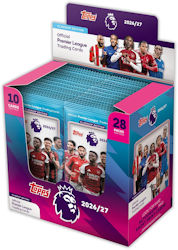
Topps Flagship Premier League 2026/27 Trading Cards Full Box
The Full Box contains 28 packets (10 cards per packet). Each box delivers the full Topps Flagship Premier League 2026/27 collecting experience, packed with stars, rookies, rare inserts, and exciting hits.
View product
Topps Flagship Premier League 2026/27 Trading Cards Online Starter Pack
The Online exclusive Starter Pack is the perfect way to kick off your Topps Flagship Premier League 2026/27 collection, bringing together stars, rookies, inserts, and exciting chase cards in one accessible format.
View product
As an Amazon Associate I earn from qualifying purchases.