Championship
Southampton
League Position Tracker
Last 5 Results
Southampton Player Stats
Top 10 Attacking Players
#
Player
Goals
Assists
Points
1
C. Larin
4
0
12
2
F. Azaz
1
2
5
3
L. Scienza
1
2
5
4
R. Manning
1
1
4
5
D. Mubama
1
0
3
6
K. Schlotterbeck
1
0
3
7
T. Fellows
1
0
3
8
Welington
1
0
3
9
C. Bragg
0
1
1
10
F. Downes
0
1
1
Top 10 Disciplinary Records
#
Player
Yellow
Red
Points
1
F. Downes
2
0
2
2
J. Bree
2
0
2
3
R. Manning
2
0
2
4
C. Larin
1
0
1
5
D. Mubama
1
0
1
6
N. Wood
1
0
1
7
T. Fellows
1
0
1
Introduction
Southampton Football Club, nicknamed "The Saints," is a professional football club based in Southampton, England. Known for its rich history and a distinctive identity linked to the city’s maritime heritage, the club has established itself as a prominent member of English football. Renowned for its commitment to youth development and community engagement, Southampton FC has a reputation for nurturing talent and promoting attractive, attacking football.
History
Founded in 1885, Southampton FC began its journey as St. Mary’s Church of England Young Men’s Association Football Club, primarily to serve the local community. In 1897, the club adopted its current name and joined the Southern League. Early milestones include winning the Southern League title in the 1896-97 season and becoming one of the founder members of the Football League Second Division in 1892.
Throughout the early 20th century, the club experienced fluctuations in performance and spent time in both lower and upper divisions. The period post-World War II marked significant growth, with the club achieving promotion to the First Division in 1966, the highest tier of English football at that time. Southampton’s trajectory continued to rise, with notable accomplishments throughout the 1970s, including an FA Cup victory in 1976 against Manchester United.
Stadium
Southampton FC plays its home matches at St. Mary’s Stadium, located in the city centre, near the River Itchen. Opened in 2001, the stadium has a seating capacity of approximately 32,384, making it one of the larger venues in southern England. Named after the patron saint of sailors, the stadium features modern facilities and a design that enables an intimate atmosphere, allowing fans to be closely involved in the action on the pitch. Additionally, the stadium has extensive hospitality services and community facilities, reflecting the club’s commitment to local engagement.
Achievements
Over the years, Southampton FC has secured several significant trophies. The pinnacle of the club’s history came with its unforgettable FA Cup triumph in 1976, where they defeated Manchester United 1-0 at Wembley Stadium. More recently, the club has experienced a resurgence in the Premier League, consistently finishing in respectable positions and often qualifying for European competitions. Southampton’s youth academy has also garnered acclaim, producing top talents who have excelled both domestically and internationally. The club’s commitment to developing homegrown players has been a source of pride and a fundamental aspect of its philosophy.
Famous Players & Managers
Southampton FC has been home to numerous legendary figures, both players and managers, who have left an indelible mark on the club’s identity. Notable players include Matt Le Tissier, a gifted forward known for his incredible goal-scoring ability and loyalty to the club throughout his 16-year career. Other significant names include Alan Shearer, who started his career at Southampton before achieving legendary status at Blackburn Rovers and Newcastle United.
In terms of management, players like Ted Bates and more recently, Mauricio Pochettino have played pivotal roles in shaping the club’s success and identity. Pochettino’s tenure saw a transformation of the team into one that competes at the highest level, merging youth with experience and establishing Southampton as a force in the Premier League.
Supporters & Culture
The fanbase of Southampton FC is known for its passionate and loyal support, with a strong sense of community and identity that celebrates the club’s heritage. Home matches at St. Mary’s create a vibrant atmosphere, underpinned by traditional chants and unwavering encouragement from supporters. The club’s values centre around inclusivity, progress, and youth development, as demonstrated by its community outreach initiatives.
Rivalries unfold most notably with Portsmouth FC, known as the South Coast Derby, which evokes fierce local pride and passion. The tradition and culture surrounding matches foster a strong sense of belonging among supporters, reinforcing the club’s community-centric ethos.
In conclusion, Southampton Football Club stands as a testament to enduring values within football. With a rich history, dedicated fanbase, and commitment to youth development, the club has cemented its place in the heart of English football.
Recommended Football Products
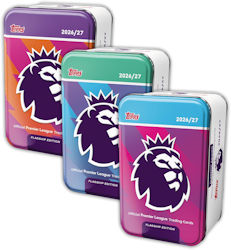
Topps Flagship Premier League 2026/27 Trading Cards Super Tin Bundle
The Super Tin Bundle contains all 3 Super Tins in the collection. Each Super Tin contains 50 cards including 3 On-Fire cards and 2 exclusive Blue Voltage parallels!
View product
Topps Flagship Premier League 2026/27 Trading Cards Mega Multipack
The Mega Multupack contains 40 cards including 2 exclusive Purple Voltage parallels and an exclusive Vibes Insert.
View product
Topps Flagship Premier League 2026/27 Trading Cards Online Starter Pack
The Online exclusive Starter Pack is the perfect way to kick off your Topps Flagship Premier League 2026/27 collection, bringing together stars, rookies, inserts, and exciting chase cards in one accessible format.
View productSee all Southampton Football Club products
As an Amazon Associate I earn from qualifying purchases.