Championship
Blackburn Rovers
League Position Tracker
Last 5 Results
Blackburn Rovers Player Stats
Top 10 Attacking Players
#
Player
Goals
Assists
Points
1
A. Gudjohnsen
2
1
7
2
Oladapo Afolayan
1
1
4
3
R. Morishita
1
1
4
4
Ryoya Morishita
1
0
3
5
S. McLoughlin
1
0
3
6
T. Cantwell
1
0
3
7
H. Pickering
0
1
1
8
Harry Pickering
0
1
1
9
O. Afolayan
0
1
1
Top 10 Disciplinary Records
#
Player
Yellow
Red
Points
1
T. Atcheson
2
1
4
2
S. Morsy
3
0
3
3
A. Forshaw
2
0
2
4
S. McLoughlin
2
0
2
5
T. Cantwell
2
0
2
6
A. Gudjohnsen
1
0
1
7
H. Pickering
1
0
1
8
J. Garrett
1
0
1
9
O. Afolayan
1
0
1
10
Tom Atcheson
1
0
1
Introduction
Blackburn Rovers Football Club, established in 1875, is one of England’s oldest professional football clubs, based in Blackburn, Lancashire. Renowned for its rich history, the club has a storied identity deeply woven into the fabric of English football. Commonly referred to as "Rovers," the club’s colours are blue and white, symbolising their long-standing tradition in the sport. With a passionate fanbase, Blackburn Rovers maintain a reputation for resilience and heritage, playing a crucial role in the development of football in the UK.
History
Blackburn Rovers was founded on November 5, 1875, initially as a cricket club before transitioning to football. The club quickly became affiliated with the newly established Football Association, participating in the first-ever FA Cup in 1871. In 1888, Rovers became one of the 12 founding members of the Football League, marking a significant milestone in the club’s early growth.
The club’s early success culminated in their first FA Cup victory in 1884. The late 19th century was a golden era for Rovers, as they claimed three more FA Cups by 1890. The crowning achievement came in 1995 when Blackburn Rovers won the Premier League, a title that significantly enhanced their place in football history.
Stadium
Ewood Park, the home ground of Blackburn Rovers, is located in Blackburn. Opened in 1882, the stadium has a current capacity of approximately 31,000 and has undergone several renovations to enhance its facilities. Unique features of Ewood Park include its historic architecture and modern amenities. The Jack Walker Stand, named after the club’s notable benefactor, showcases a blend of tradition and modernity, symbolising the club’s enduring legacy.
Achievements
Blackburn Rovers boasts a prestigious trophy cabinet, with their major accomplishments including three FA Cups (1884, 1885, 1886) and a historic league title win in 1995 under the management of Kenny Dalglish. The club also secured the Football League Championship title in 2018-19, illustrating its capacity for resurgence and competitiveness. Blackburn Rovers were crowned champions during the inaugural Premier League season in 1992-93, further solidifying their status in English football history.
Famous Players & Managers
Over the years, Blackburn Rovers has been home to many legendary players and managers. Among the most notable is Jack Walker, a local businessman whose investment helped propel the club to Premier League glory in the 90s. Players such as Alan Shearer, who began his illustrious career at Rovers before moving to Newcastle United, and the talented midfielder Damien Duff, are celebrated figures in the club’s history. Additionally, managers like Don Mackay, who led the club during its early successes, and Kenny Dalglish, who engineered a triumphant era in the 1990s, have made indelible impacts on the team’s identity and success.
Supporters & Culture
Blackburn Rovers boasts a passionate fanbase known for their unwavering support, both at home matches in Ewood Park and during away games. The fans engage fervently with the club, adopting various traditions, including the stirring rendition of "Blaydon Races," a song that resonates throughout the stadium on match days. The rivalry with Burnley, known as the East Lancashire Derby, adds another layer to the club’s culture. This fierce competition highlights the deep-rooted local ties and rivalries that are characteristic of English football. The club values community engagement and fosters a strong relationship with the town of Blackburn, ensuring that the club remains an integral part of the local fabric.
In summary, Blackburn Rovers Football Club stands as a prominent fixture in English football, enriched by a heritage of achievements, passionate supporters, and a commitment to its community. As the club continues its journey, its identity, shaped by history and tradition, remains steadfast and inspiring for future generations of football fans.
Recommended Football Products
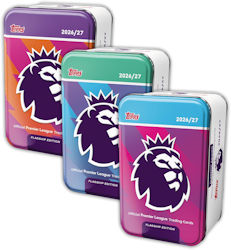
Topps Flagship Premier League 2026/27 Trading Cards Super Tin Bundle
The Super Tin Bundle contains all 3 Super Tins in the collection. Each Super Tin contains 50 cards including 3 On-Fire cards and 2 exclusive Blue Voltage parallels!
View product
World Club Football Records 2026
Fully revised and updated, World Club Football Records is a net-bulging collection of standout football records, stats and trivia from around the globe.
View product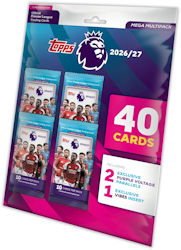
Topps Flagship Premier League 2026/27 Trading Cards Mega Multipack
The Mega Multupack contains 40 cards including 2 exclusive Purple Voltage parallels and an exclusive Vibes Insert.
View productSee all Blackburn Rovers Football Club products
As an Amazon Associate I earn from qualifying purchases.