The EFL Championship
Introduction
The EFL Championship is the second level of men’s league football in England, sitting immediately below the Premier League and above EFL League One. Contested by 24 clubs, it combines historic teams, ambitious challengers, recently relegated Premier League sides and clubs fighting to establish themselves at a higher level.
With a demanding 46-match regular season, intense promotion battles and the drama of the play-offs, the Championship is widely regarded as one of the strongest and most competitive second-tier leagues in world football. Its clubs attract substantial crowds, its matches are broadcast internationally, and promotion can transform the sporting and financial future of a club.
Origins and History
Although the Championship name was introduced in 2004, the competition forms part of a much longer second-tier history.
The Football League created a Second Division in 1892 following its expansion and absorption of clubs from the Football Alliance. It remained the second level of English football until 1992, when the leading First Division clubs resigned from the Football League to form the Premier League.
Following that separation, the old Second Division was renamed the Football League First Division, although it continued to represent the second tier. A further reorganisation in 2004 created the names used today: the Championship, League One and League Two.
The Football League adopted the EFL name in 2016, making EFL Championship the competition’s official title. Sponsorship has added different commercial names over the years, but the Championship identity has remained in place since the beginning of the 2004–05 season.
Sunderland became the first champions under the new name, winning the division in 2004–05.
League Format
The EFL Championship contains 24 clubs. Each team plays every other club twice, once at home and once away, producing 46 league matches for each club and 552 regular-season fixtures across the division.
The season normally runs from August until May.
- Win: 3 points
- Draw: 1 point
- Defeat: 0 points
Clubs are ranked primarily by the number of points they have earned. If teams finish level on points, goal difference and goals scored are used to separate them, followed by further criteria established in the EFL regulations.
The size of the division means Championship clubs play eight more league matches than Premier League teams. Midweek fixtures, holiday matches and rearranged games create a demanding schedule in which squad depth, recovery and consistency can be just as important as individual quality.
Promotion and the Championship Play-Offs
Three Championship clubs are promoted to the Premier League at the end of each season.
The teams finishing first and second earn automatic promotion. From the 2026–27 season, the clubs finishing third to eighth enter an expanded six-team Championship play-off.
The teams finishing third and fourth progress directly to the semi-finals. The remaining four clubs contest two single-match eliminators:
- Fifth place plays eighth place
- Sixth place plays seventh place
Each eliminator is hosted by the higher-placed club. The winners advance to the semi-finals, where they face the teams that finished third and fourth.
The semi-finals are played over two legs, with the second leg hosted by the higher-placed team. The winners are determined by the aggregate score, with extra time and penalties available if required.
The two successful semi-finalists then meet in the Championship Play-Off Final at Wembley Stadium. The winner earns the third and final promotion place in the Premier League.
Because promotion brings access to Premier League broadcasting and commercial revenue, the final is one of the most financially significant matches in club football. For supporters, however, its importance is more immediate: one match can end years of frustration or deliver an unexpected return to the top flight.
Relegation to League One
The three clubs finishing at the bottom of the Championship are relegated to EFL League One. They are replaced by three promoted League One teams.
The top two clubs in League One receive automatic promotion, while a third rises through the League One play-offs. This movement connects the Championship to the wider English football pyramid and ensures that the composition of the division changes every season.
Relegation can have serious consequences. Clubs must adjust to lower income, reduced exposure and the difficulty of escaping a competitive League One. Some recover quickly, while others experience prolonged decline or further relegation.
Memorable Clubs and Campaigns
The Championship has produced numerous dominant title-winning campaigns, unexpected promotion challenges and dramatic final days.
Reading set an exceptional standard in 2005–06 by collecting 106 points, the highest total achieved in the Championship era. Sunderland, Newcastle United, Wolverhampton Wanderers, Norwich City, Burnley, Leicester City and Leeds United have each won the division more than once since the 2004 reorganisation.
Newcastle won the Championship in both 2009–10 and 2016–17, responding to Premier League relegation with an immediate return on each occasion. Leicester won the division in 2013–14 before becoming Premier League champions only two years later, then claimed another Championship title in 2023–24.
Leeds ended a 16-year absence from the Premier League by winning the Championship under Marcelo Bielsa in 2019–20. They returned to the division several years later and captured another title in 2024–25.
Coventry City became champions in 2025–26, completing a remarkable journey back to the Premier League after years that had included financial problems, stadium uncertainty and a spell in League Two.
Famous Players and Managers
The Championship has featured established internationals, experienced professionals, prolific goalscorers and young players beginning their rise towards the highest level.
Aleksandar Mitrović produced one of the competition’s greatest individual seasons for Fulham in 2021–22, scoring 43 league goals as his club won the title. Other notable Championship goalscorers have included Rickie Lambert, Jordan Rhodes, Billy Sharp, Ross McCormack, Teemu Pukki and Jamie Vardy.
The division has also helped develop players who later became prominent in the Premier League or international football. Its physical demands, crowded schedule and competitive balance provide a challenging environment for emerging talent.
Managers including Steve Coppell, Rafael Benítez, Sean Dyche, Marcelo Bielsa, Marco Silva, Vincent Kompany, Enzo Maresca and Frank Lampard have led teams to Championship success. Their approaches have ranged from patient rebuilding projects to immediate promotion campaigns built around squads recently relegated from the Premier League.
Financial Pressure and Broadcasting
The Championship occupies an unusual financial position. Its leading clubs can attract large crowds and significant commercial support, but their income remains far below the amounts available in the Premier League.
This gap makes promotion enormously valuable and can encourage clubs to spend heavily in pursuit of it. At the same time, teams relegated from the Premier League may receive parachute payments designed to help them adjust to reduced income. Critics argue that these payments can give recently relegated clubs an advantage over established Championship teams.
The competition nevertheless has substantial broadcasting appeal. Under the EFL’s domestic agreement with Sky Sports running from 2024–25 to 2028–29, hundreds of Championship matches are available for live broadcast each season.
Greater coverage has increased access for supporters, particularly those unable to attend matches, but it has also resulted in more fixtures being moved away from traditional Saturday afternoon kick-off times.
Criticism and Controversy
The Championship’s competitiveness is part of its appeal, but it also creates significant pressure.
- Clubs may take considerable financial risks in pursuit of promotion.
- Parachute payments can create an uneven financial landscape.
- The 46-match schedule places heavy demands on players.
- Frequent changes of manager can make long-term planning difficult.
- Broadcast selections can inconvenience travelling supporters.
- Financial breaches and ownership problems have led to points deductions and uncertainty at several clubs.
The gap between the Premier League and Championship remains one of the central debates in English football. Relegated clubs must reduce costs quickly, while promoted teams face the challenge of strengthening sufficiently without placing their long-term future at risk.
Championship Champions by Season
Championship Champions by Season
| Season | Champions |
|---|---|
| 2004–05 | Sunderland |
| 2005–06 | Reading |
| 2006–07 | Sunderland |
| 2007–08 | West Bromwich Albion |
| 2008–09 | Wolverhampton Wanderers |
| 2009–10 | Newcastle United |
| 2010–11 | Queens Park Rangers |
| 2011–12 | Reading |
| 2012–13 | Cardiff City |
| 2013–14 | Leicester City |
| 2014–15 | Bournemouth |
| 2015–16 | Burnley |
| 2016–17 | Newcastle United |
| 2017–18 | Wolverhampton Wanderers |
| 2018–19 | Norwich City |
| 2019–20 | Leeds United |
| 2020–21 | Norwich City |
| 2021–22 | Fulham |
| 2022–23 | Burnley |
| 2023–24 | Leicester City |
| 2024–25 | Leeds United |
| 2025–26 | Coventry City |
Championship Facts and Records
- First champions under the Championship name: Sunderland, 2004–05
- Highest points total: Reading, 106 points in 2005–06
- Most goals by a player in one Championship season: Aleksandar Mitrović, 43 for Fulham in 2021–22
- Most goals by a team in one Championship season: Fulham, 106 in 2021–22
- Regular-season matches: 552
- League matches played by each club: 46
- Automatic promotion places: 2
- Championship play-off places: 6
- Relegation places: 3
- Football League play-offs first introduced: 1987
The Enduring Appeal of the Championship
The EFL Championship brings together the history of the Football League, the ambition of clubs seeking Premier League football and the uncertainty created by promotion and relegation.
A season can feature former English champions, clubs recovering from difficult years, emerging players, experienced managers and teams defying expectations. The length of the campaign rarely allows success to be achieved by reputation alone.
From packed traditional grounds and demanding midweek fixtures to final-day promotion battles and the Championship Play-Off Final at Wembley, the division offers a distinctive form of football drama. For some clubs it is a route to the Premier League. For others it is a fiercely contested competition worthy of attention in its own right.
Recommended Football Products

Topps Flagship Premier League 2026/27 Trading Cards Online Starter Pack
The Online exclusive Starter Pack is the perfect way to kick off your Topps Flagship Premier League 2026/27 collection, bringing together stars, rookies, inserts, and exciting chase cards in one accessible format.
View product
World Club Football Records 2026
Fully revised and updated, World Club Football Records is a net-bulging collection of standout football records, stats and trivia from around the globe.
View product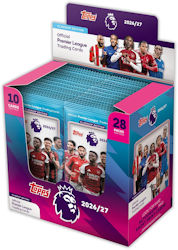
Topps Flagship Premier League 2026/27 Trading Cards Full Box
The Full Box contains 28 packets (10 cards per packet). Each box delivers the full Topps Flagship Premier League 2026/27 collecting experience, packed with stars, rookies, rare inserts, and exciting hits.
View product
As an Amazon Associate I earn from qualifying purchases.