The National League
Scunthorpe United
League Position Tracker
Last 5 Results
Scunthorpe United Football Club
Introduction
Scunthorpe United Football Club is one of the most recognisable football institutions in Lincolnshire. Known as “The Iron”, the club’s identity is inseparable from the steelmaking heritage of its home town and the claret-and-blue colours worn by generations of players.
Founded in 1899, Scunthorpe spent more than seven decades as a Football League club and rose as high as the second tier of English football. The club has also earned a reputation for discovering and developing talent, with Kevin Keegan and Ray Clemence among the future internationals who began their professional careers in North Lincolnshire.
Scunthorpe’s modern history has contained extraordinary contrasts. The club won promotion to the Championship twice during a successful period in the 2000s, but later suffered a succession of relegations and serious financial difficulties. By 2023, its continued existence and occupation of Glanford Park were both in doubt.
A locally led rescue secured the football club and protected its stadium for the community. Since then, Scunthorpe have begun climbing back through the divisions, reconnecting with supporters and rebuilding an organisation that had come perilously close to disappearing. That recovery has added another chapter to a history already defined by resilience.
History
Scunthorpe United was formed in 1899 and initially competed in regional football. In 1910, the club amalgamated with North Lindsey United and became Scunthorpe & Lindsey United. It turned professional in 1912 and joined the Midland League, where it spent much of the period before admission to the Football League.
The club was elected to the Football League in 1950 as part of an expansion of the Third Division North. Its first league match ended in a goalless draw with Shrewsbury Town at the Old Show Ground. Scunthorpe adapted well to league football and gradually established itself as one of the division’s stronger clubs.
The first great achievement arrived in 1957–58. Managed by Ron Suart, Scunthorpe & Lindsey United won the Third Division North championship and earned promotion to the Second Division. At the end of the season, “& Lindsey” was dropped from the name, leaving the club with the title it uses today.
Scunthorpe remained in the second tier for six seasons. The high point came in 1961–62, when the Iron finished fourth in the Second Division, narrowly missing promotion to the top flight. It remains the highest league position in the club’s history. Relegation followed in 1964, and another demotion in 1968 returned Scunthorpe to the fourth tier.
For much of the following three decades, the club moved between the third and fourth levels. Promotions were secured in 1971–72 and 1982–83, although both stays in the higher division lasted only one season. Scunthorpe reached Wembley for the first time in 1992, losing the Fourth Division play-off final to Blackpool after a penalty shootout.
The Iron returned to Wembley in 1999 and enjoyed a happier outcome. Alex Calvo-Garcia scored the only goal against Leyton Orient in the Division Three play-off final, earning promotion and creating one of the most celebrated moments in the club’s history.
A particularly successful era began under Brian Laws. Scunthorpe finished second in League Two in 2004–05, gaining automatic promotion with a side containing influential figures such as Andy Crosby, Peter Beagrie, Steve Torpey and a young Billy Sharp.
When Laws left in 2006, physiotherapist Nigel Adkins was appointed manager. The apparently unconventional choice proved inspired. Scunthorpe won the League One title in 2006–07, finishing the season with 91 points as Sharp scored 30 league goals. The achievement returned the club to the second tier for the first time in more than four decades.
Although relegated after one Championship season, the Iron immediately challenged for promotion again. In 2009, they defeated Millwall 3–2 in a dramatic League One play-off final at Wembley. Jonathan Forte, Matt Sparrow and Martyn Woolford scored the goals as captain Cliff Byrne lifted the trophy. Scunthorpe then completed two further seasons in the Championship before being relegated in 2011.
Another promotion came in 2013–14. Under Russ Wilcox, the Iron finished second in League Two after the manager began his tenure with a remarkable 28-match unbeaten league run. Scunthorpe subsequently became an established League One club and reached the play-offs in 2017 and 2018.
The decline that followed was rapid. Relegation to League Two came in 2019, followed by the end of Scunthorpe’s 72-year Football League membership in 2022. A second successive relegation in 2023 dropped the club into National League North.
Results on the pitch were overshadowed by an ownership and stadium crisis. David Hilton acquired the club from Peter Swann in January 2023, but withdrew his funding later that year amid a dispute over Glanford Park. Plans were announced to move home matches to Gainsborough Trinity, while unpaid bills, debts and a winding-up petition increased fears that the club might fold.
Local businesswoman and lifelong supporter Michelle Harness completed a takeover in October 2023. A community-backed arrangement, supported by North Lincolnshire Council, subsequently placed Glanford Park in the ownership of the not-for-profit New Show Ground Community Interest Company. The agreement protected the stadium for community use and allowed Scunthorpe United to remain at home.
Scunthorpe finished second in National League North in both 2023–24 and 2024–25. The first campaign ended with a play-off defeat against Boston United, but the following season brought redemption. Andy Butler’s team defeated Chester 2–1 after extra time in the 2025 promotion final at the Attis Arena, returning the Iron to the National League.
Stadium
Scunthorpe United played at the Old Show Ground from the club’s formation until 1988. The ground witnessed the club’s election to the Football League, the 1957–58 championship season and its years in the Second Division. Its record attendance was 23,935 for an FA Cup tie against Portsmouth in January 1954.
In 1988, Scunthorpe moved to Glanford Park. It was the first new purpose-built Football League stadium opened in England for more than three decades and became an early example of the compact out-of-town grounds subsequently adopted by numerous clubs.
The stadium holds approximately 9,000 spectators and consists of four enclosed stands close to the playing surface. Its record attendance is 9,077, set when Manchester United visited for a League Cup tie in September 2010. The road leading to the ground was named Jack Brownsword Way in honour of the club’s record appearance holder.
A sponsorship agreement signed in January 2024 renamed the stadium the Attis Arena, although many supporters continue to call it Glanford Park. Its future had been one of the central issues during the club’s ownership crisis, making its acquisition by a community interest company especially significant. The arrangement means that the stadium is protected for the benefit of the club, its supporters and the wider community rather than being held for private development.
Achievements
Scunthorpe United’s major honours and notable achievements include:
- Football League Third Division North champions: 1957–58
- Football League One champions: 2006–07
- Football League Two runners-up: 2004–05 and 2013–14
- Fourth Division promotions: 1971–72 and 1982–83
- Division Three play-off winners: 1998–99
- League One play-off winners: 2008–09
- National League North promotion final winners: 2024–25
- Football League Trophy runners-up: 2008–09
- Highest league position: fourth in the Second Division, 1961–62
- Seventy-two consecutive seasons in the Football League between 1950 and 2022
The club has achieved promotion at Wembley twice, defeating Leyton Orient in 1999 and Millwall in 2009. It also reached the Football League Trophy final in 2009, losing 3–2 after extra time to Luton Town.
Famous Players & Managers
Few players are more closely associated with Scunthorpe United than Jack Brownsword. The dependable left-back joined the club before its election to the Football League and remained until 1965. He made 597 Football League appearances for the Iron, a club record, and was an important member of the side that won the Third Division North championship.
Steve Cammack is Scunthorpe’s record Football League goalscorer. Across two spells during the late 1970s and 1980s, the centre-forward scored 110 league goals and became one of the most prolific players in the club’s history.
Scunthorpe also provided an important starting point for two Liverpool and England greats. Goalkeeper Ray Clemence began his professional career at the Old Show Ground before moving to Liverpool in 1967. Kevin Keegan joined Scunthorpe in 1968 and made more than 120 league appearances before Bill Shankly brought him to Anfield in 1971.
England cricketer Ian Botham also represented the Iron as a footballer, making 11 Football League appearances between 1980 and 1985. Other notable figures include Graham Alexander, Matt Elliott, Peter Beagrie, Andy Crosby, Steve Torpey, Paul Hayes, Gary Hooper, Andy Keogh and Paddy Madden.
Alex Calvo-Garcia holds a particularly warm place in the club’s story. The Spanish midfielder became a cult hero after arriving in 1996 and scored the winning goal in the 1999 play-off final. Billy Sharp enjoyed an exceptional two-season spell, scoring 56 goals in 95 appearances and leading the scoring charts across all four English divisions during the 2006–07 campaign.
Among the club’s most important managers, Ron Suart delivered the 1957–58 championship, while Brian Laws oversaw several spells in charge and built the side promoted from League Two in 2005. Nigel Adkins led Scunthorpe to the League One title and later promotion through the play-offs, establishing himself as one of the most successful managers in the club’s history.
Russ Wilcox guided the Iron back into League One in 2014 following his record-breaking unbeaten start. Former Scunthorpe defender Andy Butler became manager in 2024 and led the club to promotion from National League North the following year.
Supporters & Culture
Scunthorpe United’s nickname and identity are rooted in the town’s steel industry. “The Iron” reflects the generations of local people who worked in and around Scunthorpe’s steelworks, while the club’s claret-and-blue colours have become familiar symbols of North Lincolnshire football.
That industrial connection remains prominent. British Steel has supported the club at various points and returned as the principal front-of-shirt partner for the 2026–27 season, reinforcing the relationship between the football team, the town and its most famous industry.
Scunthorpe’s principal rivalries are with other clubs from Lincolnshire and the Humber region. Matches against Grimsby Town traditionally carry the greatest edge, while fixtures involving Lincoln City, Doncaster Rovers and Hull City have also attracted strong interest when the clubs have occupied the same division.
The Iron Trust, formally established in 2012, gives supporters a democratic voice and works to protect the long-term interests of the club. Fans played an especially important part during the crisis of 2023, raising money, supporting club staff and campaigning to preserve professional football at Glanford Park.
Attendances remained impressive after relegation from the Football League. More than 8,000 supporters attended a National League North match against Chester in March 2025, demonstrating that the club’s following had endured despite successive relegations and uncertainty away from the pitch.
The survival of Scunthorpe United was ultimately a community effort. Supporters, local businesses, club staff and the council all contributed to keeping the Iron at Glanford Park. For many fans, the recovery therefore represents more than improved results. It is the restoration of an institution that belongs to the town.
The Club Today
Scunthorpe United compete in the National League, the fifth tier of English football. Their first season following promotion from National League North produced an impressive fifth-place finish in 2025–26. The Iron defeated Southend United in the opening round of the play-offs before their attempt to secure consecutive promotions ended in the semi-finals.
Andy Butler remains first-team manager and signed a new three-year contract in February 2026. His connection with Scunthorpe stretches back to his playing career, when he came through the club’s system and was named player of the season in 2004–05. His teams have helped restore optimism while retaining a strong connection between the squad and the supporters.
Off the field, the club is chaired and co-owned by Michelle Harness as part of the locally led ownership group that took control in 2023. Glanford Park is protected through the New Show Ground CIC, and a ten-year lease secured for the training ground in 2026 provided further stability for the football operation.
The rebuilding process is not complete. Scunthorpe remain outside the Football League and must operate sustainably after the problems that almost destroyed the club. Nevertheless, the contrast with the uncertainty of 2023 is striking.
The Iron once again have a secure home, committed local leadership and a team capable of competing towards the upper end of the National League. For supporters who feared that Scunthorpe United might cease to exist, every match at Glanford Park is evidence of how far the club has already travelled.
Recommended Football Products
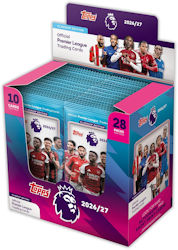
Topps Flagship Premier League 2026/27 Trading Cards Full Box
The Full Box contains 28 packets (10 cards per packet). Each box delivers the full Topps Flagship Premier League 2026/27 collecting experience, packed with stars, rookies, rare inserts, and exciting hits.
View product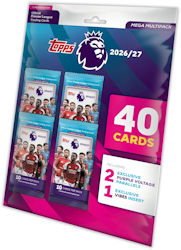
Topps Flagship Premier League 2026/27 Trading Cards Mega Multipack
The Mega Multupack contains 40 cards including 2 exclusive Purple Voltage parallels and an exclusive Vibes Insert.
View product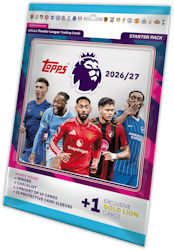
Topps Flagship Premier League 2026/27 Trading Cards Online Starter Pack
The Online exclusive Starter Pack is the perfect way to kick off your Topps Flagship Premier League 2026/27 collection, bringing together stars, rookies, inserts, and exciting chase cards in one accessible format.
View product
As an Amazon Associate I earn from qualifying purchases.