Premier League
Sunderland
League Position Tracker
Last 5 Results
Sunderland Player Stats
Top 10 Attacking Players
#
Player
Goals
Assists
Points
1
Wilson Isidor
1
1
4
2
Enzo Le Fée
1
0
3
3
Nilson Angulo
1
0
3
4
Granit Xhaka
0
1
1
5
Habib Diarra
0
1
1
Top 10 Disciplinary Records
#
Player
Yellow
Red
Points
1
Reinildo Mandava
0
1
3
2
Daniel Ballard
2
0
2
3
Granit Xhaka
2
0
2
4
Brian Brobbey
1
0
1
5
Luke O'Nien
1
0
1
6
Nilson Angulo
1
0
1
7
Noah Sadiki
1
0
1
8
Nordi Mukiele
1
0
1
Introduction
Sunderland Football Club, commonly referred to as Sunderland AFC, is a professional football club located in Sunderland, Tyne and Wear, England. Established in 1879, the club boasts a rich history and a passionate fanbase, known for their unwavering loyalty and support. Sunderland, nicknamed "The Black Cats," has developed a reputation as one of the oldest and most storied clubs in English football, frequently associated with resilience and a strong sense of community.
History
Sunderland AFC was founded in 1879 by a group of local cricketers who sought to form a football team to play during the winter months. The club quickly gained traction, joining the Football League in 1890 as one of its founding members. Early successes included winning the FA Cup in 1937, which marked the beginning of a defining era for the club.
The club’s golden age began in the early 20th century, with significant accomplishments in the First Division, including clinching the title in 1892, 1893, 1904, and 1913. Sunderland became one of the first clubs to achieve national prominence, and in the 1930s, they established themselves as a dominant force in English football, winning multiple league titles. However, their fortunes fluctuated over the decades, with periods of relegation and promotion that defined the club’s resilience.
Stadium
Sunderland AFC plays its home matches at the Stadium of Light, located on the banks of the River Wear. Opened in 1997, the stadium has a seating capacity of approximately 49,000, making it one of the largest football venues in England. The design of the stadium incorporates modern amenities while paying homage to the club’s rich heritage, featuring a striking cantilever roof and excellent sightlines. The Stadium of Light is noted for its lively atmosphere during matchdays, as fans rally to support their team, creating an electrifying environment.
Achievements
Sunderland AFC has a decorated history, with numerous notable achievements. The club has won the English top-flight league title six times, the FA Cup two times, and the Community Shield on several occasions. Their most significant triumph came in the FA Cup final of 1973 when they defeated Leeds United in a stunning performance, securing the trophy as a second division team—a feat engraved in the club’s folklore. The club has also enjoyed success in various league cups, showcasing their competitive spirit across domestic competitions.
Famous Players & Managers
Sunderland has been home to a number of legendary players and managers who have left an indelible mark on the club’s history. Among those who graced the pitch for Sunderland, the likes of Kevin Phillips are celebrated for their scoring prowess, notably winning the Premier League Golden Boot in 2000. Other notable figures include the likes of George Holley, a prolific striker in the 1920s, and more recently, players like Jermain Defoe and Peter Crouch helped bring international attention to the club.
Managers such as Bob Stokoe, who led the club to the FA Cup victory in 1973, and more recent figures like Roy Keane, whose tenure revitalised the club in the mid-2000s, have played crucial roles in shaping Sunderland’s identity and success.
Supporters & Culture
Sunderland AFC boasts a dedicated fanbase known for their intensity and commitment. The supporters, often referred to as "Mackems," have fostered a vibrant culture surrounding the club, characterised by passionate chants, elaborate displays, and a fervent sense of community. The club’s value system promotes unity, integrity, and perseverance, reflecting the city’s industrial heritage.
Rivalries play a significant role in Sunderland’s culture, with matches against local adversaries such as Newcastle United—known as the Tyne-Wear derby—being particularly fierce and celebrated in the football calendar. This rivalry encapsulates the deep-rooted pride and passion prevalent within the club’s fanbase, contributing to the vibrant tapestry of English football.
In conclusion, Sunderland AFC stands as a club rich in history, culture, and community spirit. With a legacy of achievements and a devoted fanbase, the Black Cats continue to represent the city of Sunderland with pride and resilience.
Recommended Football Products
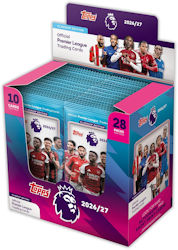
Topps Flagship Premier League 2026/27 Trading Cards Full Box
The Full Box contains 28 packets (10 cards per packet). Each box delivers the full Topps Flagship Premier League 2026/27 collecting experience, packed with stars, rookies, rare inserts, and exciting hits.
View product
Topps Flagship Premier League 2026/27 Trading Cards Online Starter Pack
The Online exclusive Starter Pack is the perfect way to kick off your Topps Flagship Premier League 2026/27 collection, bringing together stars, rookies, inserts, and exciting chase cards in one accessible format.
View product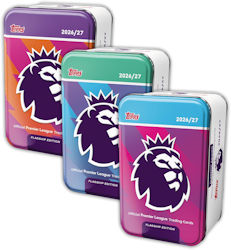
Topps Flagship Premier League 2026/27 Trading Cards Super Tin Bundle
The Super Tin Bundle contains all 3 Super Tins in the collection. Each Super Tin contains 50 cards including 3 On-Fire cards and 2 exclusive Blue Voltage parallels!
View productSee all Sunderland Football Club products
As an Amazon Associate I earn from qualifying purchases.