Championship
Bolton Wanderers
League Position Tracker
Last 5 Results
Bolton Wanderers Player Stats
Top 10 Attacking Players
#
Player
Goals
Assists
Points
1
S. Dalby
2
0
6
2
T. Gale
1
1
4
3
Atsuki Ito
1
0
3
4
Gaizka Larrazabal
1
0
3
5
Sam Dalby
1
0
3
6
Thierry Gale
1
0
3
7
X. Simons
1
0
3
8
J. McAtee
0
1
1
9
Kyliane Dong
0
1
1
10
Max Conway
0
1
1
Top 10 Disciplinary Records
#
Player
Yellow
Red
Points
1
J. Sheehan
1
1
4
2
A. Famewo
1
0
1
3
C. Forino
1
0
1
4
G. Larrazabal
1
0
1
5
J. McAtee
1
0
1
6
R. Hardie
1
0
1
7
T. Gale
1
0
1
Introduction
Bolton Wanderers Football Club, founded in 1874, is a professional football club based in Bolton, Greater Manchester, England. Nicknamed "The Trotters," the club has earned a name rooted in a proud heritage, having traversed the peaks and troughs of English football. Known for their resilience and community spirit, Bolton Wanderers hold a unique place in the hearts of their supporters and are recognised for their rich history within the fabric of English football.
History
Bolton Wanderers was established following a meeting of local cricketers in 1874, initially as a cricket club. The transition to football soon followed, and they joined the Football League in its inaugural season in 1888. Early on, the club experienced notable success, including winning their first FA Cup in 1923, a match famously remembered as the "White Horse Final," where an enormous crowd witnessed the club beat West Ham United at Wembley Stadium.
The 20th century brought mixed fortunes for the Wanderers, marked by periods of high achievement interspersed with struggles. The club enjoyed significant success in the 1920s and 30s, becoming known as a formidable side and frequently competing in the upper tiers of the Football League. However, the subsequent decades saw a decline, with Bolton fluctuating between divisions.
Stadium
Bolton Wanderers play their home matches at the University of Bolton Stadium, located in Horwich, Greater Manchester. Opened in 1997, the stadium has a capacity of around 28,000 spectators. A notable feature is its design; the stadium boasts a modern layout with a distinctive cantilever roof, allowing unobstructed views from all seats. The venue serves not only as a football stadium but also as a location for concerts and other events, reflecting the club’s commitment to engaging with the local community.
Achievements
Throughout its long history, Bolton Wanderers has garnered multiple accolades. The club has won the FA Cup four times, with victories in 1923, 1926, 1930, and 1958, showcasing its historical strength in knockout competitions. Additionally, they claimed the English league title in 1929 and enjoyed success in the now-defunct Football League Cup, winning it in 1983. The club’s most recent notable achievement came during the late 1990s and early 2000s, when they secured promotion to the Premier League and established themselves as a competitive force in England’s top flight.
Famous Players & Managers
Bolton Wanderers has been home to numerous legendary players and managers who have left an indelible mark on the club’s history. Among the most celebrated is Nat Lofthouse, a prolific striker during the 1940s and 1950s, who scored 285 goals for the club and became an iconic figure. Other notable players include the likes of Jay-Jay Okocha, who brought flair and creativity to the team in the early 2000s, and Kevin Davies, known for his leadership and goal-scoring ability.
In terms of management, the influence of figures such as Bill Ridding, who guided the club to early successes, and Sam Allardyce, whose tenure in the early 2000s saw a resurgence in Premier League performance, cannot be understated.
Supporters & Culture
The fanbase of Bolton Wanderers is characterised by its loyalty and passion. Known as the "Trotters," supporters have witnessed the club’s highs and lows, creating a deep bond with the team. Match days at the University of Bolton Stadium are marked by vibrant traditions, with fans donning the club’s famous white shirts and chanting songs that have been passed down through generations.
Rivalries play a significant role in the club’s culture, particularly with local sides such as Manchester City and Blackburn Rovers. These matches are often eagerly anticipated, fostering a sense of camaraderie among supporters while igniting competitive spirits.
Bolton Wanderers is built on values of community, inclusiveness, and respect, epitomising the spirit of the town. The club’s initiatives, such as community outreach programmes and youth development, reflect its commitment to nurturing the next generation while honouring its storied past.
In conclusion, Bolton Wanderers Football Club remains a focal point in English football, embodying tradition, resilience, and a deep sense of local pride. As it continues to navigate the ever-changing landscape of football, the club’s identity remains firmly rooted in its rich history and dedicated fanbase.
Recommended Football Products
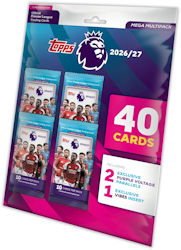
Topps Flagship Premier League 2026/27 Trading Cards Mega Multipack
The Mega Multupack contains 40 cards including 2 exclusive Purple Voltage parallels and an exclusive Vibes Insert.
View product
Topps Flagship Premier League 2026/27 Trading Cards Online Starter Pack
The Online exclusive Starter Pack is the perfect way to kick off your Topps Flagship Premier League 2026/27 collection, bringing together stars, rookies, inserts, and exciting chase cards in one accessible format.
View product
World Club Football Records 2026
Fully revised and updated, World Club Football Records is a net-bulging collection of standout football records, stats and trivia from around the globe.
View productSee all Bolton Wanderers Football Club products
As an Amazon Associate I earn from qualifying purchases.