Key: GK = Goalkeeper; CB = Centre-back; RB = Right-back; LB = Left-back; DM = Defensive midfielder; CM = Central midfielder; AM = Attacking midfielder; RW = Right winger; LW = Left winger; ST = Striker; (L) = On loanPremier League
Aston Villa
League Position Tracker
Last 5 Results
Aston Villa Current Squad
# Player Pos Age Nationality G A YC RC 1 Zion Suzuki GK 24 Japan 0 0 0 0 2 Matty Cash RB 29 Poland 0 0 3 0 3 Victor Lindelöf CB 32 Sweden 0 0 0 0 4 Taylor Harwood-Bellis CB 24 England 0 0 0 0 5 Tyrone Mings CB 33 England 0 0 1 0 6 Ross Barkley CM 32 England 0 0 0 0 7 John McGinn CM 32 Scotland 1 2 2 0 8 Boubacar Kamara DM 26 France 0 1 0 0 10 Emiliano Buendía AM 29 Argentina 0 0 0 0 11 Nicolas Jackson ST 25 Senegal 2 0 2 0 13 Matteo Ruggeri LB 24 Italy 0 0 0 0 14 Pau Torres CB 29 Spain 0 0 0 0 16 Andrés García (L) RB 23 Spain 0 0 0 0 17 Alejandro Garnacho LW 22 Argentina 0 0 0 0 18 Tammy Abraham ST 29 England 0 0 0 0 19 Ibrahim Mbaye RW 18 Senegal 0 0 0 0 19 Samuel Iling-Junior (L) LW 23 England 0 0 0 0 20 Jamaldeen Jimoh-Aloba AM 20 England 0 0 0 0 22 Ian Maatsen LB 24 Netherlands 0 0 1 0 24 Amadou Onana DM 25 Belgium 0 0 0 0 26 Lamare Bogarde DM 22 Netherlands 0 0 0 0 27 Leon Goretzka CM 31 Germany 0 0 0 0 28 Zépiqueno Redmond (L) ST 20 Netherlands 0 0 0 0 29 Aaron Wan-Bissaka RB 28 DR Congo 0 0 0 0 29 Evann Guessand (L) RW 25 Ivory Coast 0 0 0 0 32 Kosta Nedeljković (L) RB 20 Serbia 0 0 0 0 35 João Gomes CM 25 Brazil 0 1 1 1 39 Brian Madjo ST 17 England 0 0 0 0 40 Marco Bizot GK 35 Netherlands 0 0 0 0 42 James Wright GK 21 England 0 0 0 0 44 Johan Manzambi CM 21 Switzerland 2 2 0 0 45 Triston Rowe (L) RB 20 England 0 0 0 0 47 Alysson RW 20 Brazil 0 0 0 0 48 Modou Kéba Cissé CB 21 Senegal 0 0 0 0 48 Oliwier Zych (L) GK 22 Poland 0 0 0 0 49 Bradley Burrowes (L) RW 18 England 0 0 0 0 51 Kadan Young (L) LW 20 England 0 0 0 0 52 Sam Proctor (L) GK 19 England 0 0 0 0 53 George Hemmings CM 19 England 0 0 0 0 54 Aidan Borland (L) CM 19 Scotland 0 0 0 0 58 Tommi O’Reilly (L) AM 22 England 0 0 0 0 59 Josh Feeney (L) CB 21 England 0 0 0 0 62 Ben Broggio (L) LW 19 England 0 0 0 0 74 Luka Lynch (L) RW 19 England 0 0 0 0 Joe Gauci (L) GK 26 Australia 0 0 0 0 Kane Taylor (L) CM 21 England 0 0 0 0 Lino Sousa (L) LB 21 England 0 0 0 0 Yasin Özcan (L) CB 20 Turkey 0 0 0 0
Aston Villa Player Stats
Top 10 Attacking Players
#
Player
Goals
Assists
Points
1
Johan Manzambi
2
2
8
2
Nicolas Jackson
2
0
6
3
John McGinn
1
2
5
4
Emiliano Buendía Stati
1
1
4
5
Alysson Edward Franco da Rocha dos Santos
1
0
3
6
Boubacar Kamara
0
1
1
7
Joao Gomes
0
1
1
Top 10 Disciplinary Records
#
Player
Yellow
Red
Points
1
Joao Gomes
1
1
4
2
Matty Cash
3
0
3
3
Alysson Edward Franco da Rocha dos Santos
2
0
2
4
John McGinn
2
0
2
5
Nicolas Jackson
2
0
2
6
Emiliano Buendía Stati
1
0
1
7
Ian Maatsen
1
0
1
8
Tyrone Mings
1
0
1
Introduction
Aston Villa Football Club, commonly referred to as Villa, is one of the oldest and most prestigious football clubs in England, with a rich history and a passionate fanbase. Founded in 1874, the club is based in Birmingham, West Midlands. Renowned for its claret and blue colours, Aston Villa has built a reputation as a competitive force in English football and has a significant place in the sport’s heritage. The club’s motto, "Prepared," reflects its commitment to excellence and ambition.
History
Aston Villa was founded in 1874 by members of the Villa Cross Wesleyan Chapel in Handsworth, Birmingham. Initially, the club was formed as a cricket team, but as football gained popularity, it adapted to the rising sport. Villa joined the Football League in its inaugural season in 1888. The club quickly distinguished itself, winning its first FA Cup in 1887 and becoming a founding member of the Football League.
One of the most significant moments in the club’s history came in 1982 when Aston Villa, under the management of Ron Saunders, won the European Cup, triumphing over Bayern Munich in the final. This victory marked Villa’s entry into the elite echelon of European football clubs.
Stadium
Aston Villa plays its home matches at Villa Park, located in the Witton area of Birmingham. Opened in 1897, the stadium has a seating capacity of approximately 42,000, making it one of the largest in the country. Villa Park is known for its rich atmosphere and historical significance, hosting numerous important matches, including FA Cup finals and international fixtures. The stadium features impressive stands, including the North Stand and the Holte End, which is famed for its vocal support. Unique features include the iconic Villa Park façade and the ability to create an intimate yet grand atmosphere on match days.
Achievements
Aston Villa’s trophy cabinet reflects its illustrious history. The club has won the English top division title seven times, with its most recent league title secured in the 1980-81 season. Villa has also been successful in domestic cup competitions, winning the FA Cup on seven occasions and the League Cup five times. The pinnacle of the club’s achievements occurred in 1982 when they lifted the European Cup, marking a high point in Villa’s European exploits.
In recent years, Villa has consistently worked towards reclaiming its former status among Europe’s elite, aiming to return to the top tier of English football and compete vigorously in domestic and European competitions.
Famous Players & Managers
Over the decades, Aston Villa has been home to numerous legendary players and managers who have significantly impacted the club’s legacy. Among these, legends such as Brian Little, Gordon Cowans, and Dwight Yorke are celebrated for their contributions on the pitch. More recent stars include Jack Grealish and Gabriel Agbonlahor, who have become symbols of loyalty and talent.
In terms of management, figures like Ron Saunders, who guided the club to its European glory, and Graham Taylor, renowned for his managerial prowess in the 1980s and 1990s, have left a lasting legacy. Their tactical acumen and leadership have shaped the club’s identity and success over the years.
Supporters & Culture
Aston Villa boasts a dedicated and diverse fanbase, with supporters known for their unwavering loyalty and passion. The club’s fan culture is characterised by traditions, such as the singing of the "Villa Anthem" on match days, which unites fans in shared pride. Rivalries with clubs like Birmingham City — known as the Second City Derby — and West Bromwich Albion bring added intensity to matches, fostering a competitive spirit.
The club values inclusivity and community, actively engaging with its supporters and promoting various initiatives aimed at strengthening the bond between the club and its fanbase. Aston Villa remains committed to championing not just football excellence but also social responsibility and community development.
In conclusion, Aston Villa Football Club is not just a football club; it is a significant piece of English sporting history, with a rich heritage, passionate supporters, and a pursuit of excellence both on and off the pitch.
Recommended Football Products
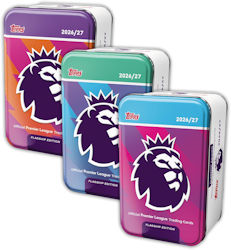
Topps Flagship Premier League 2026/27 Trading Cards Super Tin Bundle
The Super Tin Bundle contains all 3 Super Tins in the collection. Each Super Tin contains 50 cards including 3 On-Fire cards and 2 exclusive Blue Voltage parallels!
View product
Hy-Pro Officially Licensed Aston Villa F.C. Football
OFFICIALLY LICENSED MERCHANDISE – Hy-Pro are proud to showcase this officially licensed Aston Villa Football. Show off your love for Aston Villa with this premium ball.
View product
World Club Football Records 2026
Fully revised and updated, World Club Football Records is a net-bulging collection of standout football records, stats and trivia from around the globe.
View productSee all Aston Villa Football Club products
As an Amazon Associate I earn from qualifying purchases.