Key: GK = Goalkeeper; CB = Centre-back; RB = Right-back; LB = Left-back; LWB = Left wing-back; DM = Defensive midfielder; CM = Central midfielder; AM = Attacking midfielder; RW = Right winger; LW = Left winger; CF = Centre-forward; SS = Second striker; (L) = On loanPremier League
Manchester United
League Position Tracker
Last 5 Results
Manchester United Current Squad
# Player Pos Age Nationality G A YC RC 1 Senne Lammens GK 24 Belgium 0 0 0 0 2 Diogo Dalot RB 27 Portugal 0 0 0 0 3 Noussair Mazraoui RB 28 Morocco 0 0 0 0 4 Matthijs de Ligt CB 27 Netherlands 0 0 0 0 5 Harry Maguire CB 33 England 0 1 2 0 6 Lisandro Martínez CB 28 Argentina 0 0 0 0 7 Mason Mount AM 27 England 0 0 0 0 8 Bruno Fernandes AM 32 Portugal 0 0 0 0 9 Marcus Rashford LW 28 England 0 0 0 0 10 Matheus Cunha SS 27 Brazil 0 0 0 0 11 Joshua Zirkzee CF 25 Netherlands 0 0 0 0 12 Karl Darlow GK 35 Wales 0 0 0 0 13 Patrick Dorgu LWB 21 Denmark 0 1 1 0 15 Leny Yoro CB 20 France 0 0 0 0 16 Amad RW 24 Ivory Coast 0 0 0 0 17 Andrey Santos DM 22 Brazil 0 0 0 0 18 Youri Tielemans CM 29 Belgium 0 0 0 0 19 Bryan Mbeumo RW 27 Cameroon 2 1 1 0 20 Carlos Baleba DM 22 Cameroon 0 0 0 0 22 Tom Heaton GK 40 England 0 0 0 0 23 Luke Shaw LB 31 England 0 1 1 0 24 Andre Onana (L) GK 30 Cameroon 0 0 0 0 25 Manuel Ugarte DM 25 Uruguay 0 0 0 0 26 Ayden Heaven CB 20 England 0 0 0 0 30 Benjamin Šeško CF 23 Slovenia 1 0 0 0 31 Shea Lacey RW 19 England 0 0 0 0 32 Chido Obi (L) CF 18 Denmark 0 0 0 0 34 Elyh Harrison (L) GK 20 England 0 0 0 0 36 Ethan Wheatley (L) CF 20 England 0 0 0 0 37 Kobbie Mainoo CM 21 England 0 1 0 0 38 Jack Fletcher AM 19 England 0 0 0 0 39 Tyler Fletcher CM 19 Scotland 0 0 0 0 41 Harry Amass LB 19 England 0 0 0 0 42 Sekou Kone (L) DM 20 Mali 0 0 0 0 44 Dan Gore (L) CM 21 England 0 0 0 0 45 Dermot Mee GK 23 Northern Ireland 0 0 0 0 48 Finley McAllister (L) CM 20 England 0 0 0 0 52 William Murdock (L) GK 19 Northern Ireland 0 0 0 0 62 Jayce Fitzgerald (L) CM 19 England 0 0 0 0 64 Jack Moorhouse (L) CM 20 Republic of Ireland 0 0 0 0 67 Jacob Devaney (L) DM 19 Republic of Ireland 0 0 0 0 Altay Bayindir (L) GK 28 Turkey 0 0 0 0 Solomon Honor (L) GK 20 England 0 0 0 0
Manchester United Player Stats
Top 10 Attacking Players
#
Player
Goals
Assists
Points
1
Bruno Borges Fernandes
3
1
10
2
Bryan Mbeumo
2
1
7
3
Matheus Santos Carneiro da Cunha
1
2
5
4
Benjamin Sesko
1
0
3
5
Harry Maguire
0
1
1
6
Kobbie Mainoo
0
1
1
7
Luke Shaw
0
1
1
8
Patrick Dorgu
0
1
1
Top 10 Disciplinary Records
#
Player
Yellow
Red
Points
1
Harry Maguire
2
0
2
2
Bryan Mbeumo
1
0
1
3
Diogo Dalot Teixeira
1
0
1
4
Luke Shaw
1
0
1
5
Patrick Dorgu
1
0
1
Introduction
Manchester United Football Club, commonly referred to as Manchester United or simply United, is one of the most iconic football clubs in the world. Established in 1878, the club is based in Old Trafford, Greater Manchester, England. Known for its rich heritage and competitive spirit, Manchester United boasts a reputation as one of the leading teams in English football and has a massive global fanbase. The club’s emblem, featuring the legendary Red Devil, encapsulates its fierce competitive nature and enduring commitment to success.
History
Manchester United was founded in 1878 as Newton Heath LYR Football Club, originally representing the locomotive works of the Lancashire and Yorkshire Railway (LYR). The club struggled in its early years but underwent a significant transformation in 1902 when it was saved from financial difficulties by local brewery owner John Henry Davies, who rebranded it to Manchester United.
The club enjoyed its first substantial success in the 1908–09 season when they won their first league title. The post-World War II era witnessed further growth under the management of Matt Busby, who led the club to its first European title in 1968. The tragic Munich Air Disaster in 1958, which claimed the lives of eight players, is a pivotal moment in the club’s history, deeply affecting the football community and leading to major changes in the club’s operations and recruitment.
Stadium
Manchester United’s home ground, Old Trafford, is located approximately two miles southwest of Manchester city centre. Opened in 1910, Old Trafford has a capacity of about 74,140, making it the largest club football stadium in the UK. Known as the "Theatre of Dreams," it features a distinctive red-brick façade and celebrated old-school architecture. Old Trafford has hosted numerous significant matches, including World Cup games and the UEFA Champions League finals, and it remains an enduring symbol of the club’s legacy.
Achievements
Manchester United is one of the most decorated clubs in English football history. The club has won 20 English league titles, with their most recent triumph in the 2012–13 season. United also boasts multiple FA Cup victories, having lifted the trophy 12 times. Their accomplishments on the European stage are highlighted by three UEFA Champions League titles (1968, 1999, and 2008) and a FIFA Club World Cup triumph. Additionally, Manchester United has claimed the UEFA Europa League title, further bolstering its reputation as a powerhouse in domestic and international football.
Famous Players & Managers
Over the years, Manchester United has been home to many legendary figures who have left an indelible mark on the club’s history. Sir Bobby Charlton, who played for the club from 1956 to 1973, is a celebrated icon, known for his incredible goal-scoring record and his role in the 1966 World Cup-winning England team. Another monumental figure is Sir Alex Ferguson, the club’s manager from 1986 to 2013, who is often regarded as one of the greatest football managers of all time. Under his stewardship, United experienced a golden era, marked by numerous domestic and international successes.
More recent legends include Ryan Giggs, the club’s all-time appearance holder, and Cristiano Ronaldo, whose two stints at the club significantly contributed to its worldwide fame.
Supporters & Culture
Manchester United’s fanbase is one of the largest and most passionate in the world, with millions of supporters across various continents. The club’s followers are known for their unwavering loyalty, unique chants, and vibrant matchday culture, which captures the spirit of the team. The famous "Red Devils" moniker and chant of "Glory Glory Man United" epitomise the club’s rich traditions.
Rivalries define the culture at Manchester United, with encounters against Liverpool and Manchester City being particularly fiercely contested. These matches are surrounded by a rich history of competition, which heightens fan anticipation and engagement.
Manchester United stands for values such as ambition, respect, and the commitment to developing talent, both on and off the pitch. This ethos is reflected in initiatives to support local communities, promote youth development, and maintain a diverse and inclusive fan environment.
In summary, Manchester United Football Club embodies a unique blend of rich history, legendary achievements, and a vibrant supporter culture. Its ongoing dedication to excellence continues to inspire generations of football fans globally.
Recommended Football Products
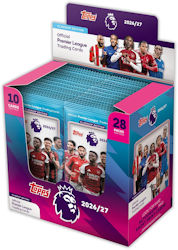
Topps Flagship Premier League 2026/27 Trading Cards Full Box
The Full Box contains 28 packets (10 cards per packet). Each box delivers the full Topps Flagship Premier League 2026/27 collecting experience, packed with stars, rookies, rare inserts, and exciting hits.
View product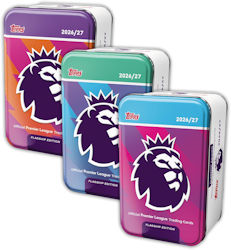
Topps Flagship Premier League 2026/27 Trading Cards Super Tin Bundle
The Super Tin Bundle contains all 3 Super Tins in the collection. Each Super Tin contains 50 cards including 3 On-Fire cards and 2 exclusive Blue Voltage parallels!
View product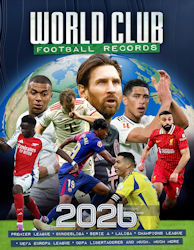
World Club Football Records 2026
Fully revised and updated, World Club Football Records is a net-bulging collection of standout football records, stats and trivia from around the globe.
View productSee all Manchester United Football Club products
As an Amazon Associate I earn from qualifying purchases.