League Two
Tranmere Rovers
League Position Tracker
Last 5 Results
Tranmere Rovers Player Stats
Top 10 Attacking Players
#
Player
Goals
Assists
Points
1
D. Jones
2
0
6
2
Z. Okoro
2
0
6
3
T. Ince
1
1
4
4
Charlie Whitaker
1
0
3
5
J. Ironside
1
0
3
6
Jordan Davies
1
0
3
7
Tom Ince
1
0
3
8
Bobby Faulkner
0
1
1
9
J. Senior
0
1
1
10
J. Slater
0
1
1
Top 10 Disciplinary Records
#
Player
Yellow
Red
Points
1
B. Faulkner
1
1
4
2
J. Slater
2
0
2
3
L. McGee
2
0
2
4
T. Ince
2
0
2
5
Charlie Whitaker
1
0
1
6
J. Davies
1
0
1
7
Joe Ironside
1
0
1
8
Joel Senior
1
0
1
9
N. Smith
1
0
1
10
Nathan Smith
1
0
1
Introduction
Tranmere Rovers Football Club, commonly referred to as Tranmere, is a professional football club based in Birkenhead, Merseyside, England. Founded in the late 19th century, the club has a rich history and is known for its passionate fanbase and competitive spirit. The club’s identity is closely intertwined with its regional roots, often seen as a representative of the local community. Tranmere Rovers are nicknamed "The Rovers" and play their home matches at Prenton Park, where they create an electric atmosphere that reflects their strong supporter culture.
History
Tranmere Rovers FC was founded in 1884 by a group of local cricketers who sought to establish a football club during the off-season. Initially, the club played in various local leagues before joining the Football League in 1921. Throughout its history, Tranmere has experienced notable highs and lows, including several promotions and relegations. One of the club’s pivotal moments came in 1990 when they reached the second tier of English football for the first time in their history. During the 1990s, the club enjoyed a golden era, marked by impressive performances in cup competitions and its memorable journey to the final of the FA Cup in 2000.
Stadium
Prenton Park, the home of Tranmere Rovers, is situated on Prenton Road West and has a capacity of approximately 16,500 spectators. Opened in 1912, the stadium has undergone numerous renovations to enhance the fan experience. Unique features of Prenton Park include the Johnny King Stand, named after one of the club’s legendary managers, and the recent addition of modern facilities and hospitality areas. The ground’s intimate atmosphere allows fans to be close to the action, fostering a sense of community and belonging.
Achievements
Tranmere Rovers has a commendable list of achievements, most notably several league titles and cup runs that have captured the imagination of their supporters. The club has won the Football League Division Three (now known as League Two) title multiple times, along with victories in the lower tiers of English football. One of the most significant achievements came in 1989 when Tranmere won the Football League Trophy, notably defeating Bristol Rovers 4-2 in the final. More recently, their journey to the FA Cup final in 2000, where they faced Manchester United, solidified their status as a competitive club in English football.
Famous Players & Managers
Over the years, Tranmere Rovers has been home to several legendary players and managers who have left an indelible mark on the club. Notable figures include striker Ian Muir, one of the club’s all-time leading scorers, and influential midfielder Ronnie Moore, who later became the club’s manager. Another key figure is John Aldridge, who enjoyed a successful spell as a player and has been revered for his contributions on and off the pitch. Managers such as Johnny King, who led the club to significant success in the late 1980s and early 1990s, are valued for their dedication and tactical prowess.
Supporters & Culture
Tranmere Rovers boasts a devoted fanbase that plays a critical role in the club’s culture. The supporters are known for their unwavering loyalty, often filling the stands at Prenton Park regardless of the team’s performance. Traditions such as singing the club anthem, "You’ll Never Walk Alone," resonate deeply with fans, creating a sense of unity. Furthermore, Tranmere has established rivalries with nearby clubs, particularly with Wrexham and Chester, adding an extra layer of excitement to local derbies. Community engagement is also a hallmark of the club, with initiatives aimed at involving supporters and addressing local issues, reinforcing the club’s values of inclusivity and togetherness.
In conclusion, Tranmere Rovers Football Club represents a significant part of the Merseyside football landscape, built on a legacy of resilience, community spirit, and passionate support. As the club continues to navigate the challenges of modern football, its rich history and strong local ties ensure that it remains a cherished institution for generations to come.
Recommended Football Products
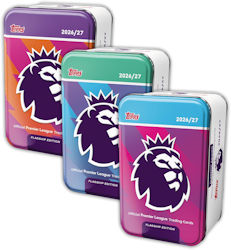
Topps Flagship Premier League 2026/27 Trading Cards Super Tin Bundle
The Super Tin Bundle contains all 3 Super Tins in the collection. Each Super Tin contains 50 cards including 3 On-Fire cards and 2 exclusive Blue Voltage parallels!
View product
Topps Flagship Premier League 2026/27 Trading Cards Online Starter Pack
The Online exclusive Starter Pack is the perfect way to kick off your Topps Flagship Premier League 2026/27 collection, bringing together stars, rookies, inserts, and exciting chase cards in one accessible format.
View product
Topps Flagship Premier League 2026/27 Trading Cards Mega Multipack
The Mega Multupack contains 40 cards including 2 exclusive Purple Voltage parallels and an exclusive Vibes Insert.
View productSee all Tranmere Rovers Football Club products
As an Amazon Associate I earn from qualifying purchases.